
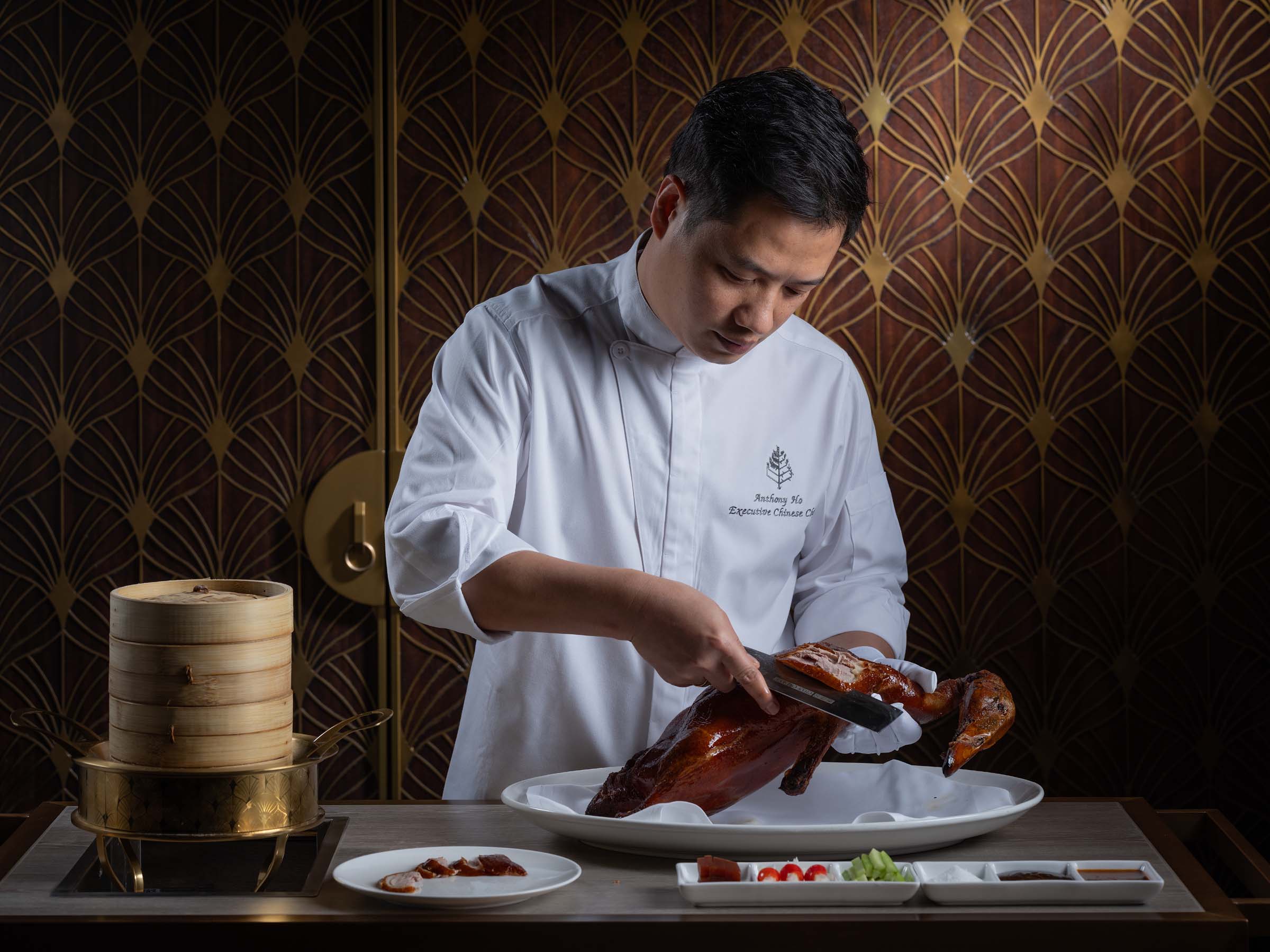
Executive Chef Anthony Ho performs table-side duck carving at his restaurant Zi Yat Heen located in the Four Seasons Macau.
Zi Yat Heen Menu Shoot
Story and Photographs by David Hartung
Photographing cuisine for a printed menu is both challenging, rewarding, and even fun. Such was the case for a recent shoot where we produced a visual menu for the acclaimed Zi Yat Heen Cantonese Restaurant located in the Four Seasons Macau.
My brief for this project was fairly simple and straight forward. The client requested that we shoot around 20 images of the restaurant’s cuisine and an additional couple of images featuring the chef.
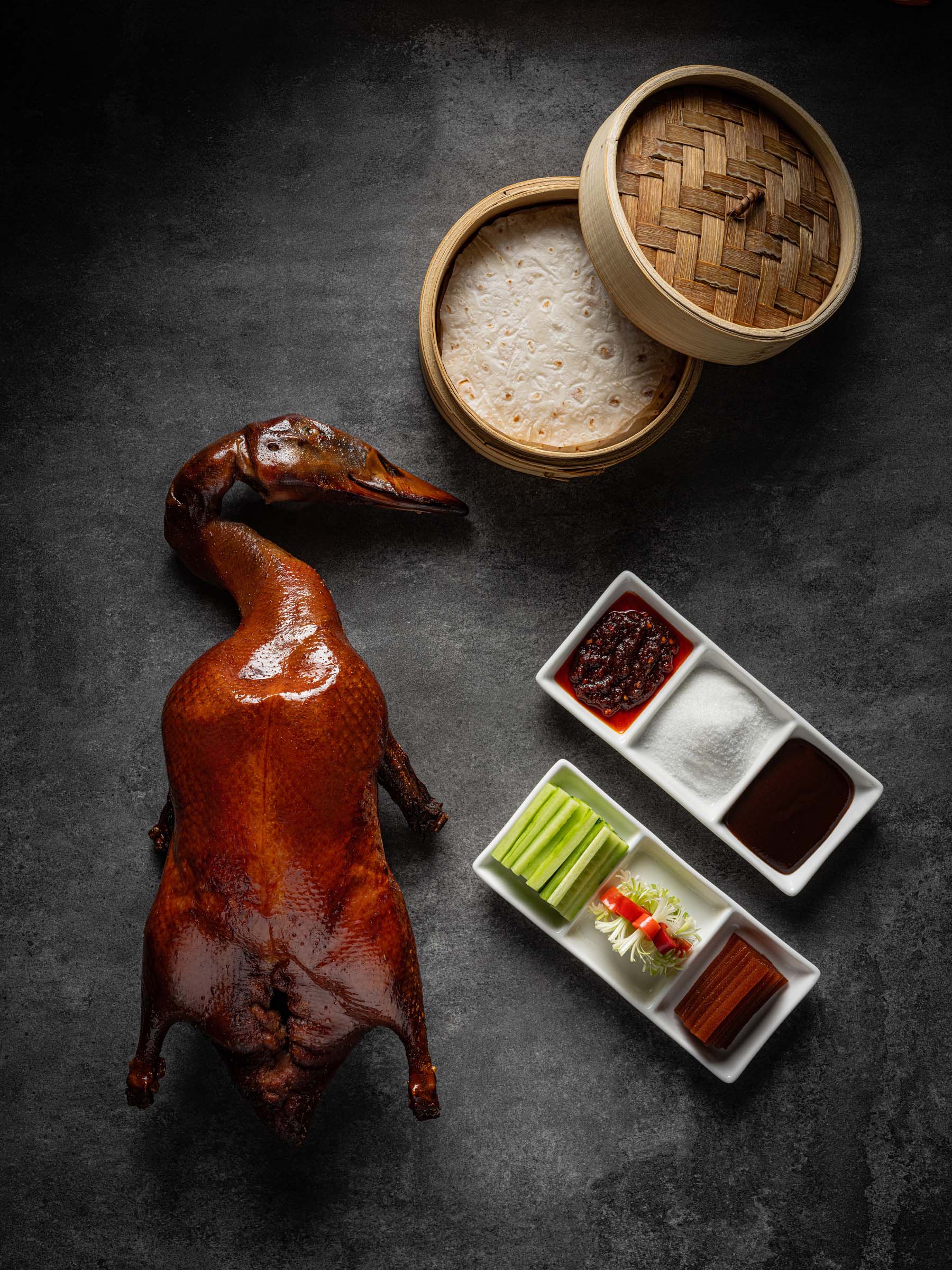
We budgeted three days for the shoot which may seem like an ample amount of time but when one considers all the time and adjustments that go into each shot that time is quickly devoured. Plate selection may get changed, actual plating of the cuisine is sometimes altered and various elements are changed, and there’s often long discussions as to whether the duck or fish head should be photographed. I always advocate for leaving the head on but some are a bit squemish and say it should be removed. The point I usually make is that this menu is mainly for Chinese clientale and they are not only familiar with seeing the heads of these various creatures, they expect it. This is usually enough to convince most clients.
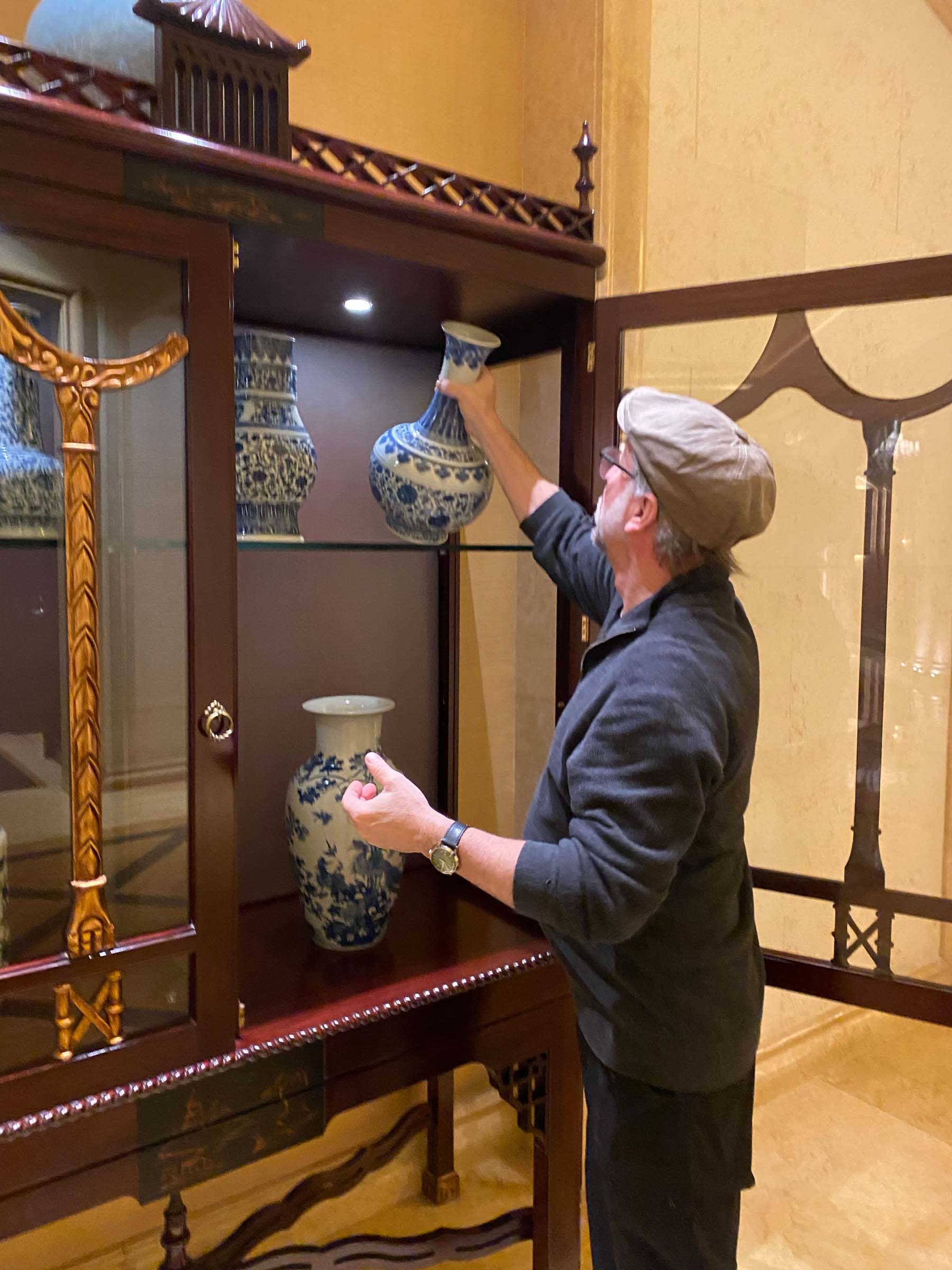
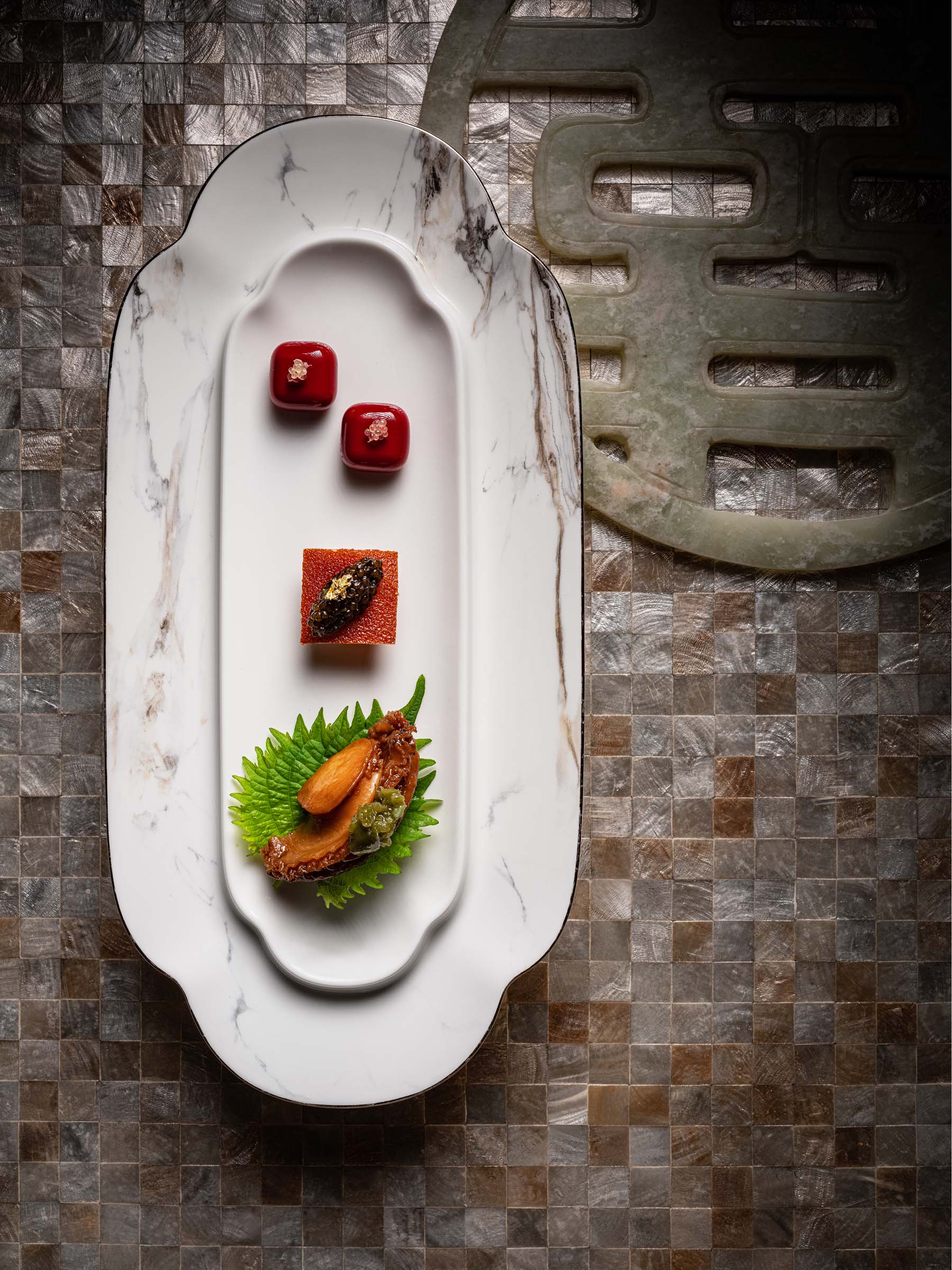
One of the first things I do on any shoot is scout the venue for potential shoot locations as well as props or supports I can use for the dishes. My goal is to bring in aspects of the restaurant to help tell the story of the cuisine. The last thing I want to do is shoot a plate of food on a white tablecloth.
Some clients want this, and that’s fine, but any photographer can shoot that. It’s just not very interesting. So, while the equipment is being set-up I’ll wander about looking for anything that looks interesting. I try to find props and locations that will add to the photo without distracting from the food. My goal is to always make the food look appealing and draw the viewer in. I’m not looking to create an image where the viewer is more involved with the photograph than the actual food. If someone looks at the photo and says, “That looks delicious!” I will feel that I’ve done my job properly.
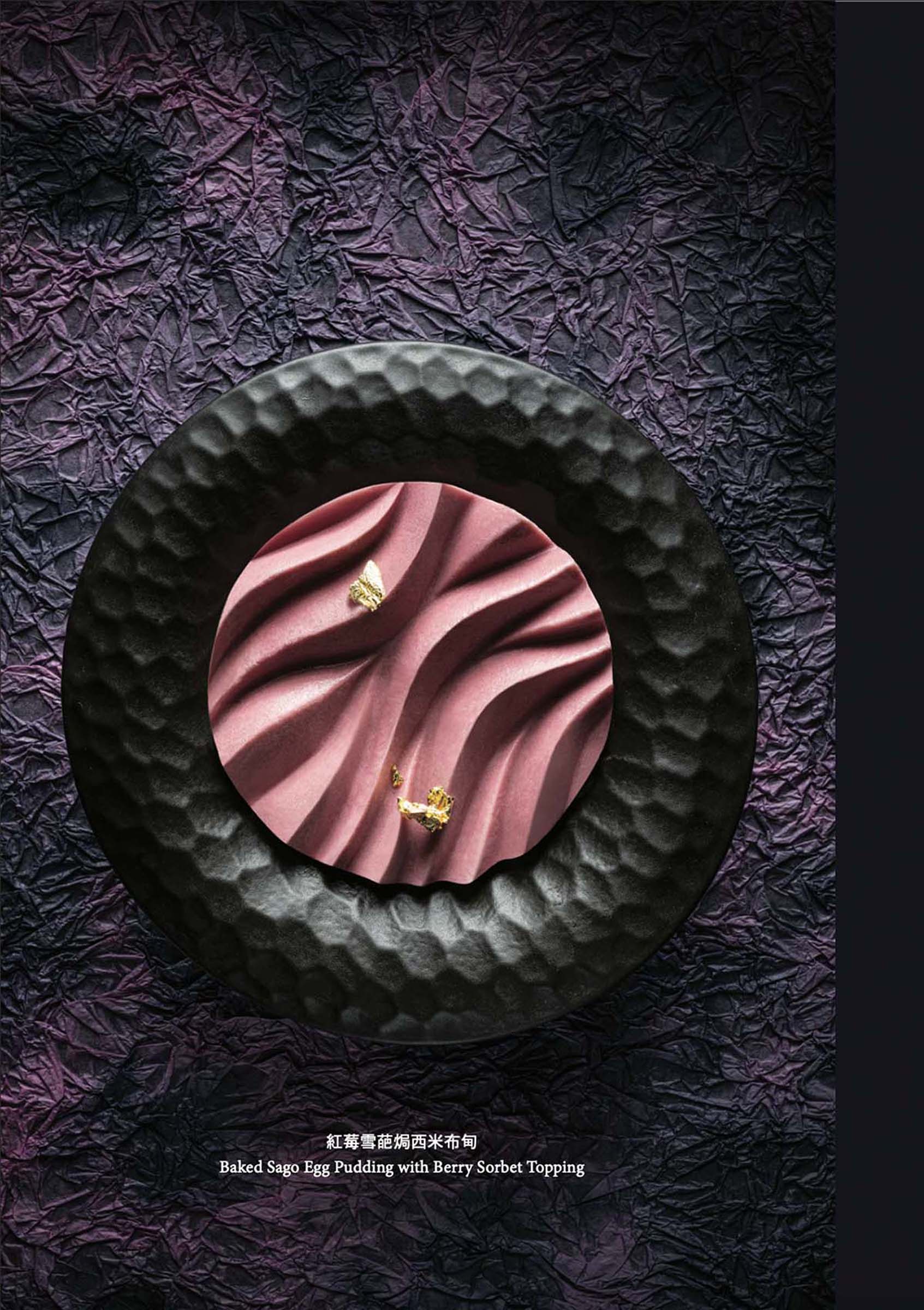
Since we were working during restaurant operation times we had to do most of the shots in one of their private rooms. This creates some restrictions for me so I had to rely on some of my own props and backgrounds. I’m constantly looking for new materials to bring on shoots and often try to find handmade paper whenever I visit another country.
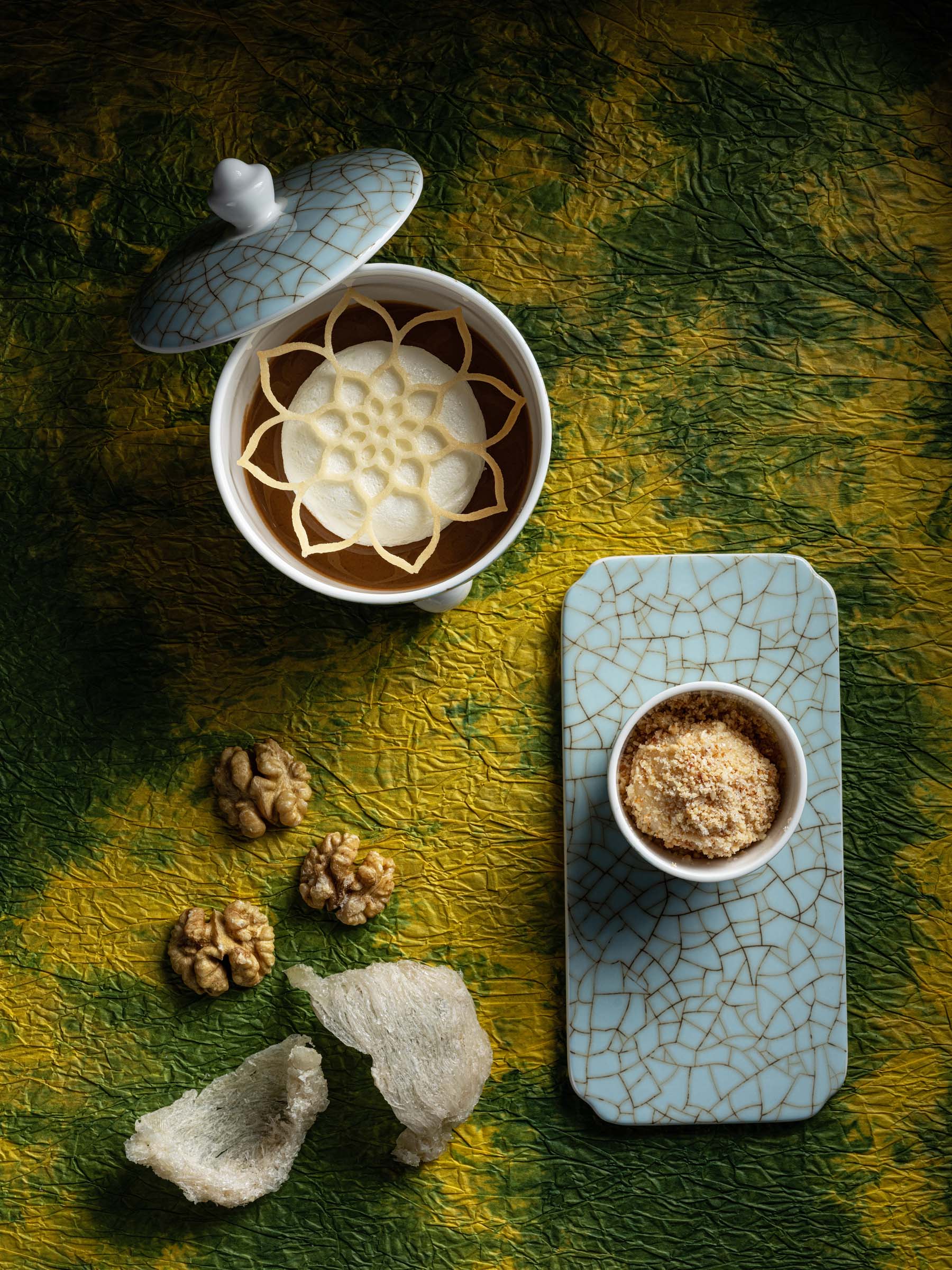
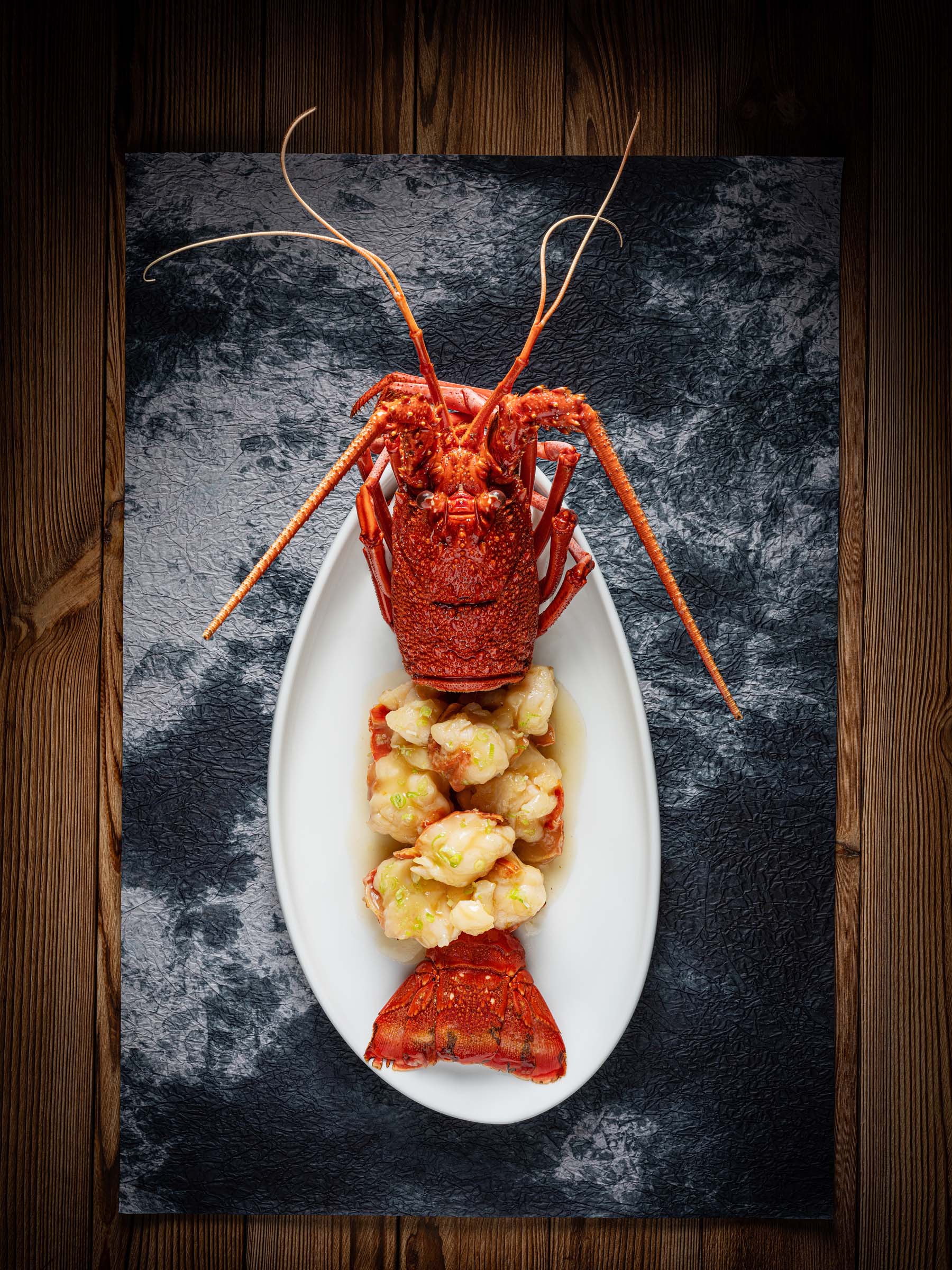
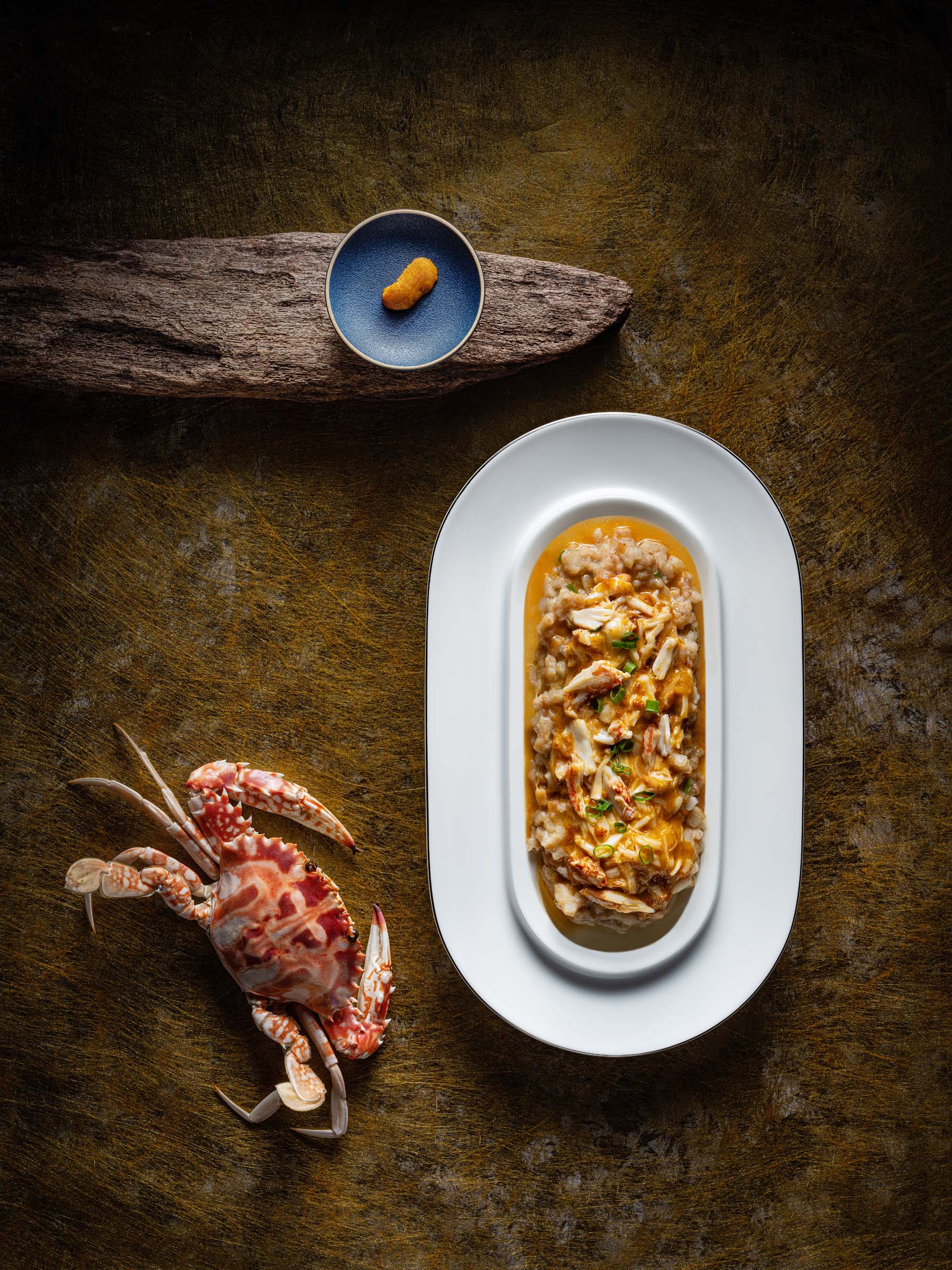
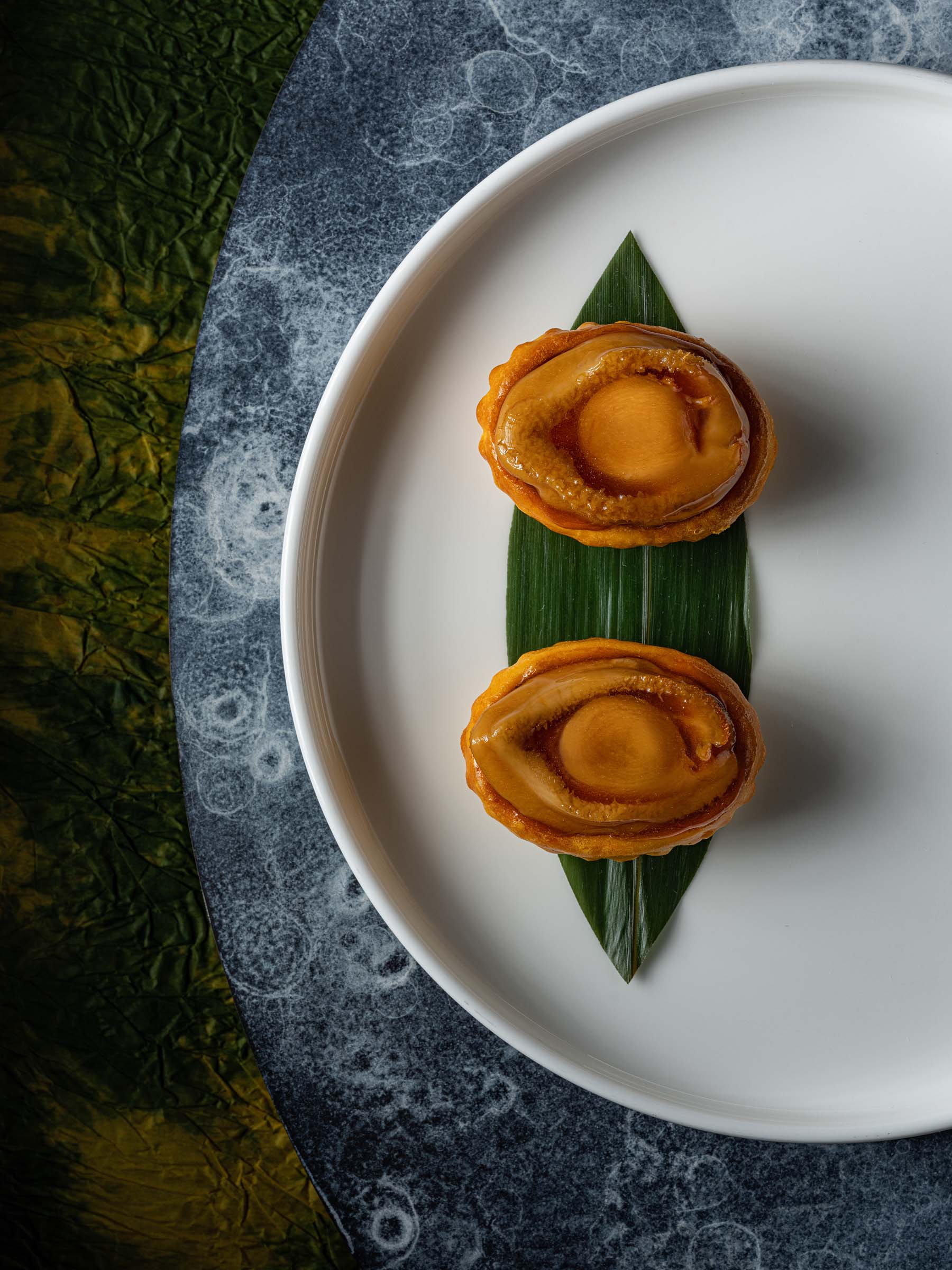
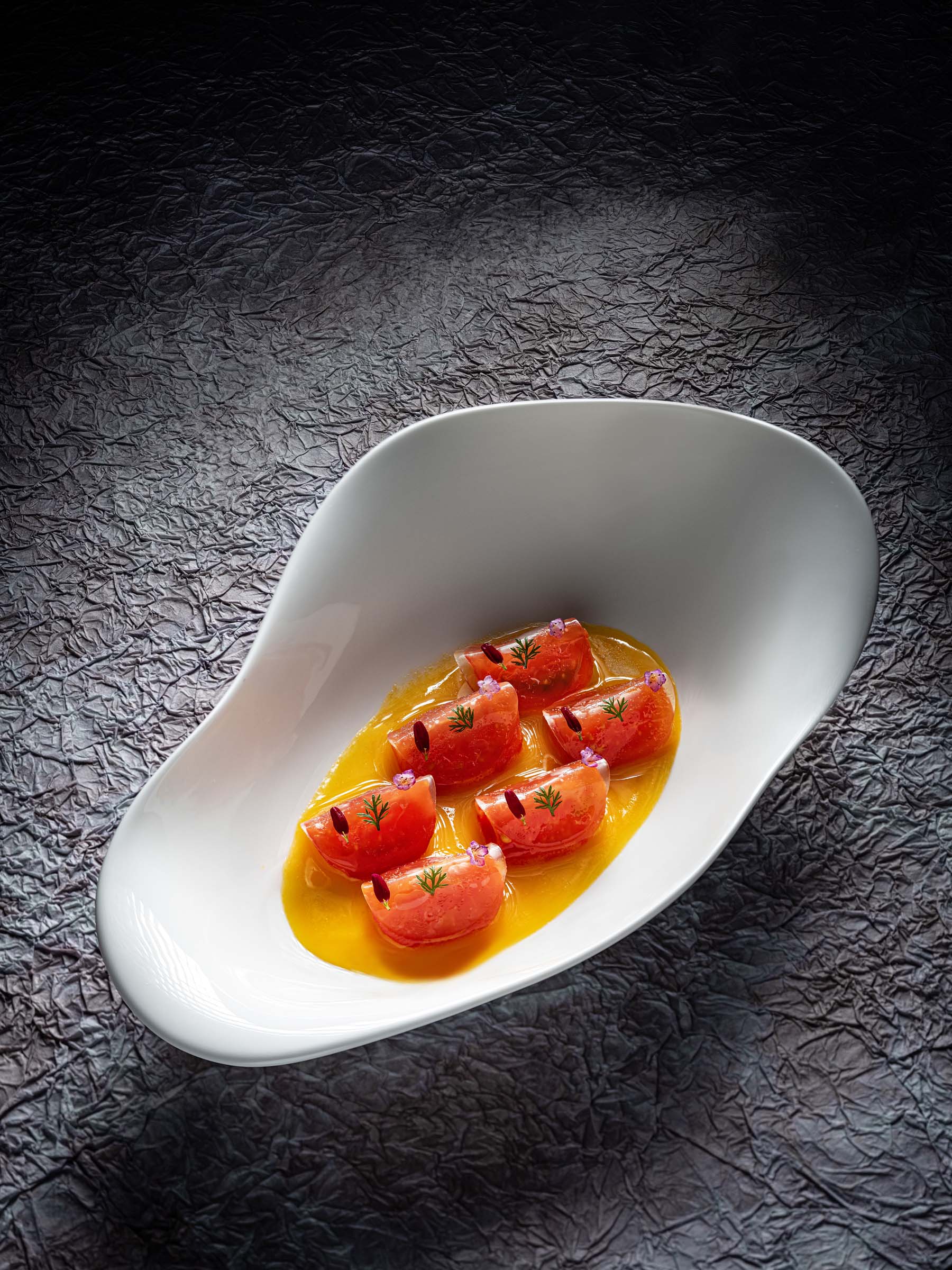
There are moments in between service hours when I can venture out of the private dining room and use a location within the main dining areas.
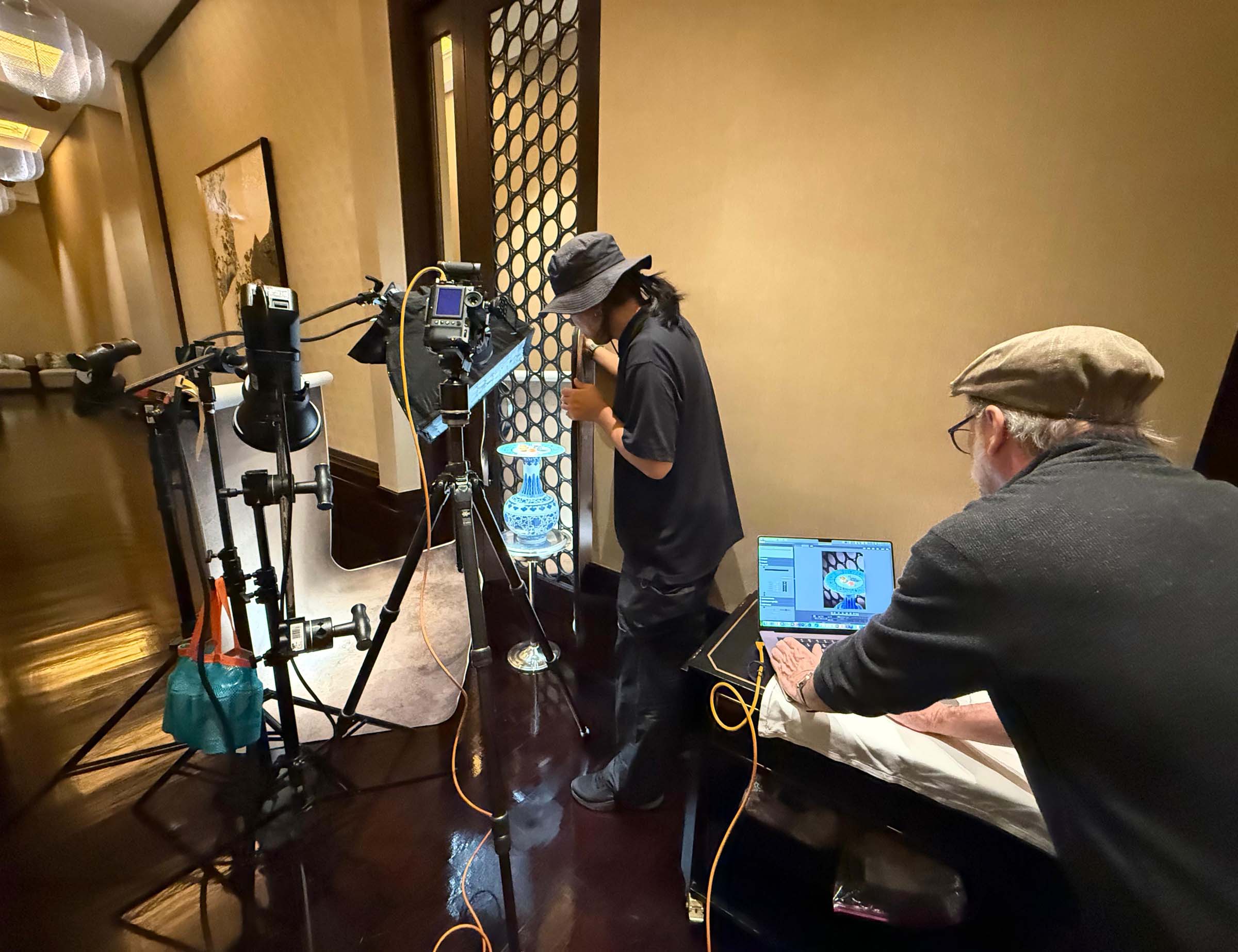
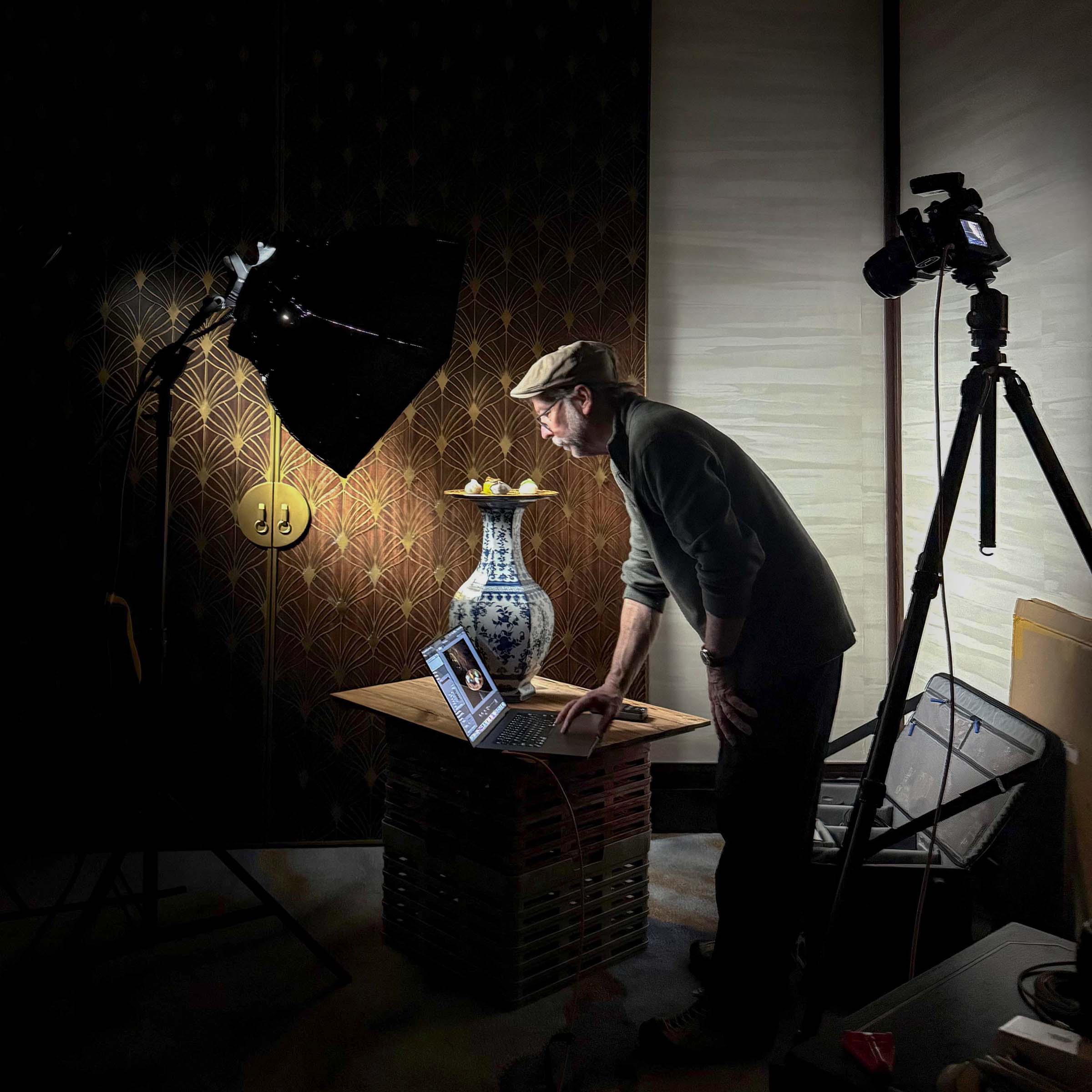
A seemingly straight forward image, see below, was a technical challenge. The background is a mirrored door in which I wanted to see something being reflected without distracting from the dish. If I only lit the food the reflection would become just black circles. If I placed a light on what was actually being reflected it would appear chaotic and just plain ugly. A pre-shoot scouting had me prepare for this situation so I brought a simple painted backdrop that I could reflect in the mirrors. The space we were in was also tight but somehow we managed to get all the lights into a position that worked. This was all done in camera with no Photoshop or AI trickery.
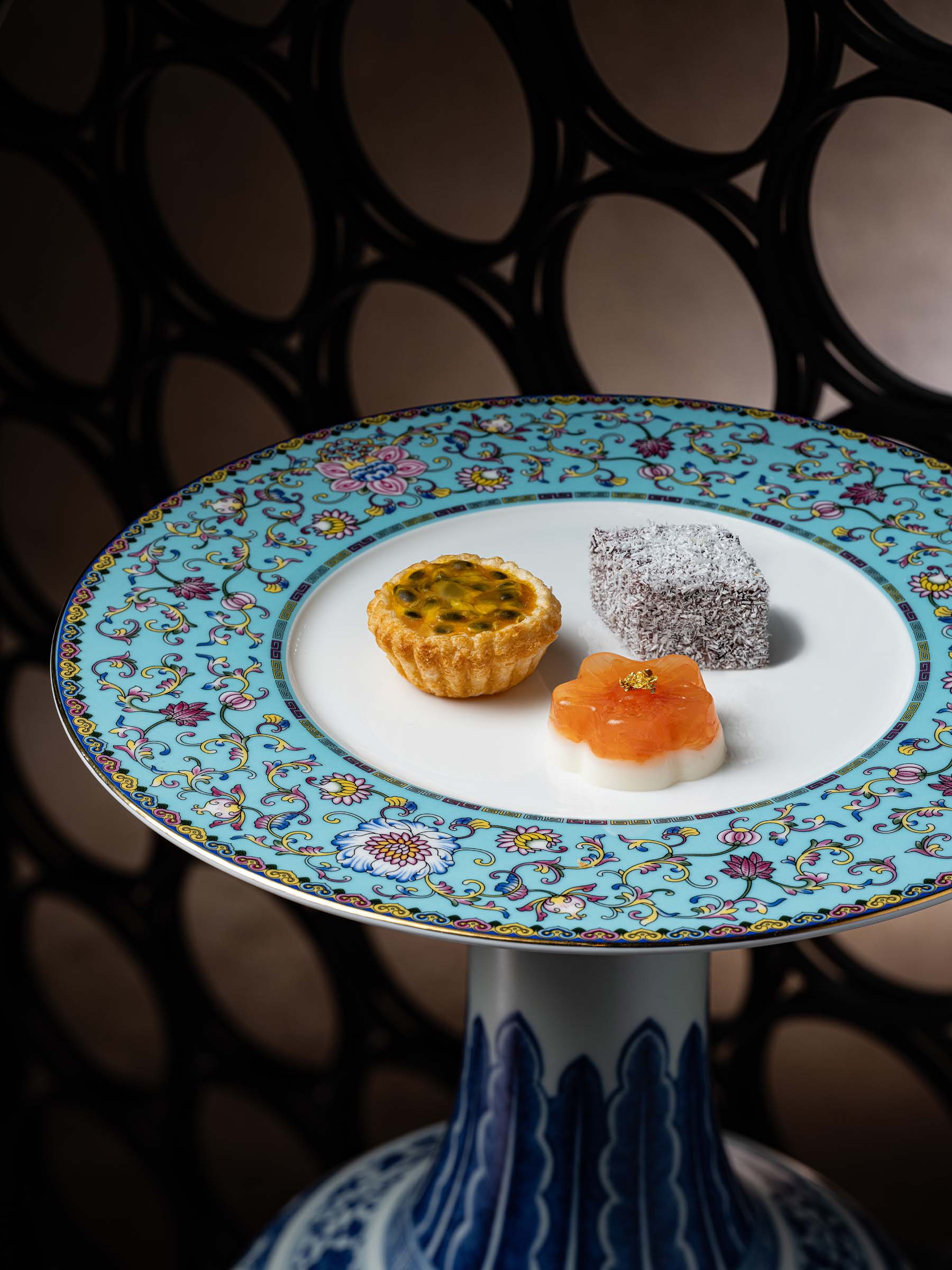
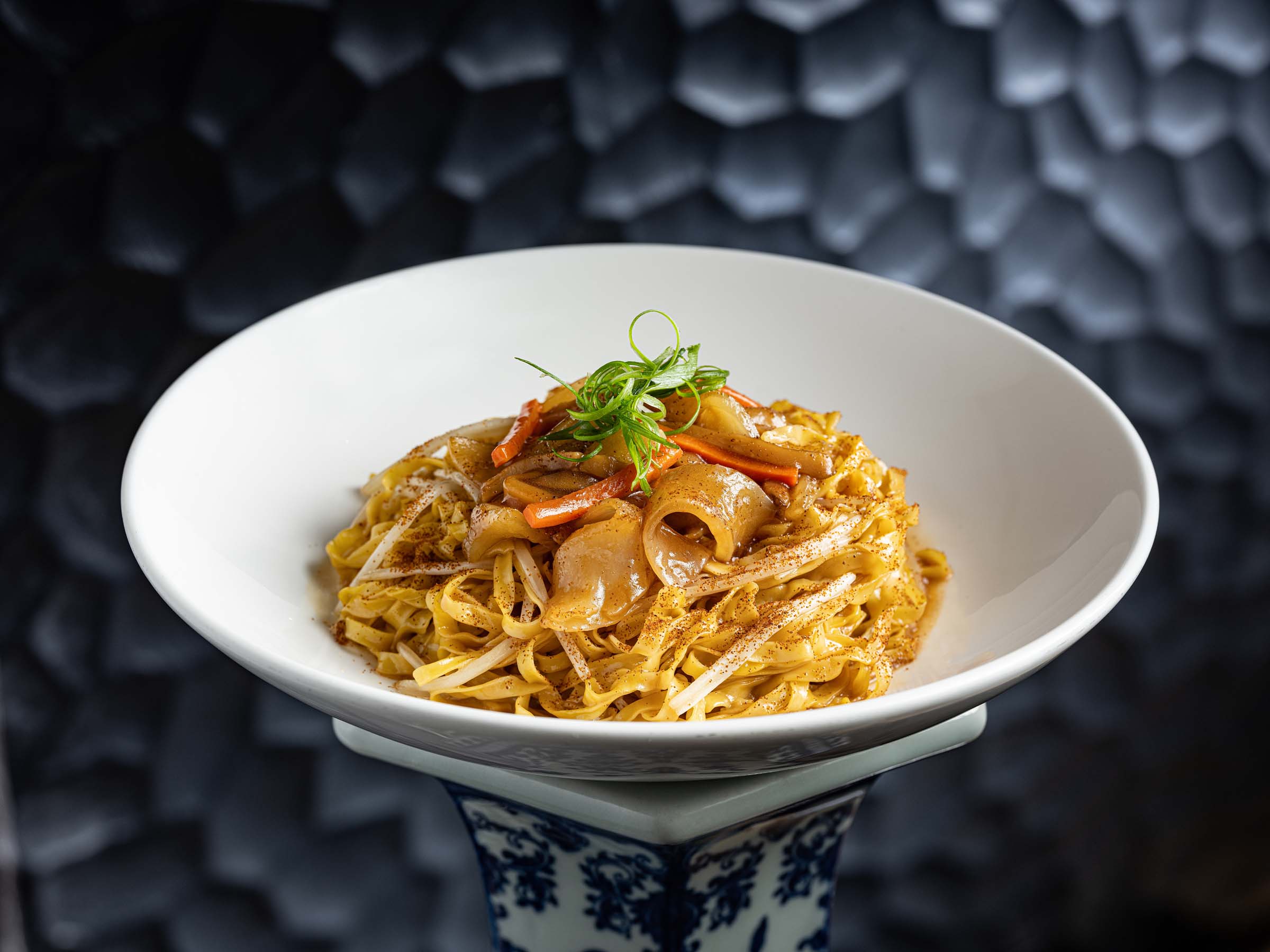
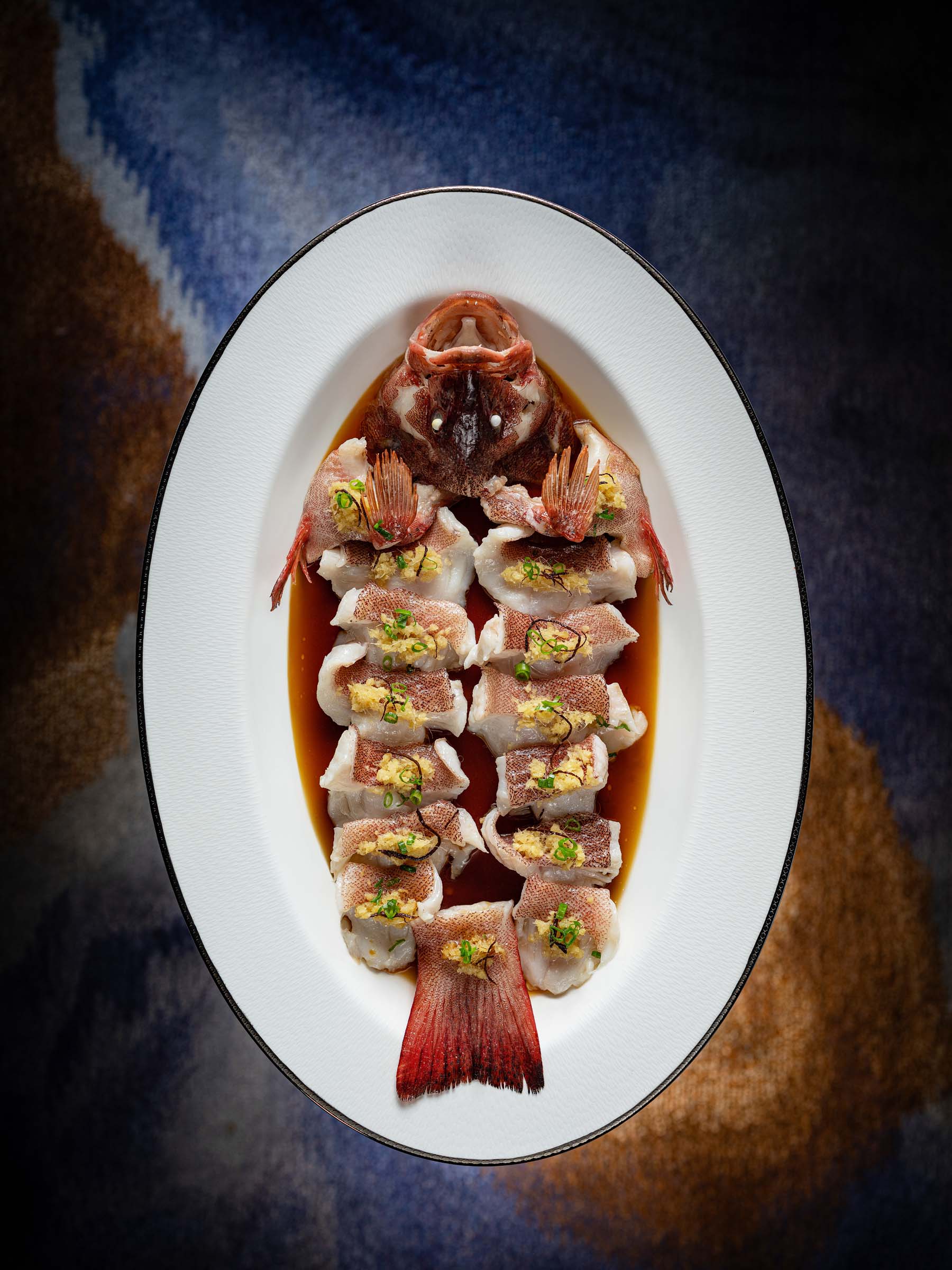
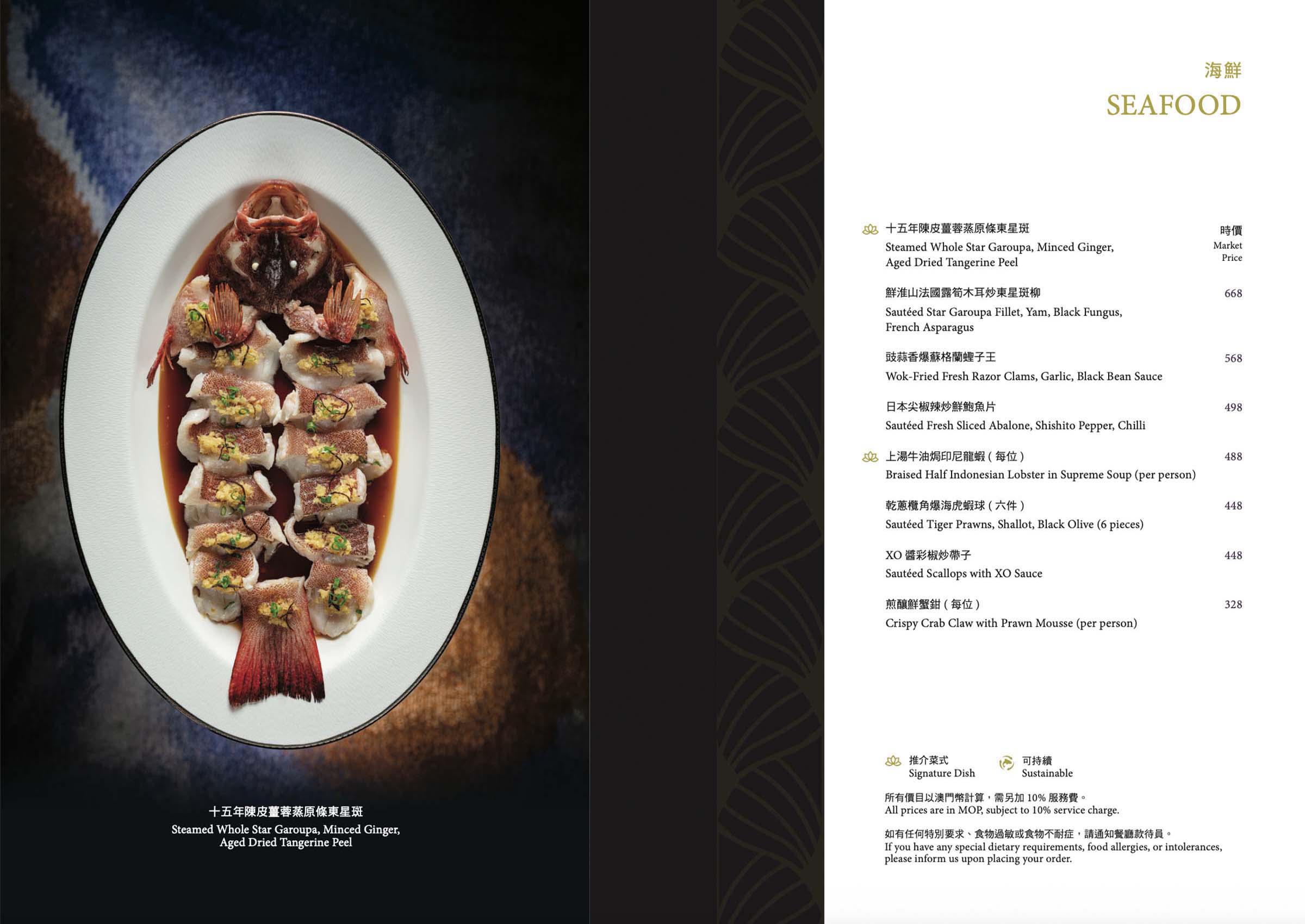
What may appear as a floating dish is actually the plate placed on a Champagne stand using the restaurant’s carpeting as the background. Since this was a fish dish I thought the blue could represent water while the brown tones matched nicely with the colors of some of the elements of the cuisine.
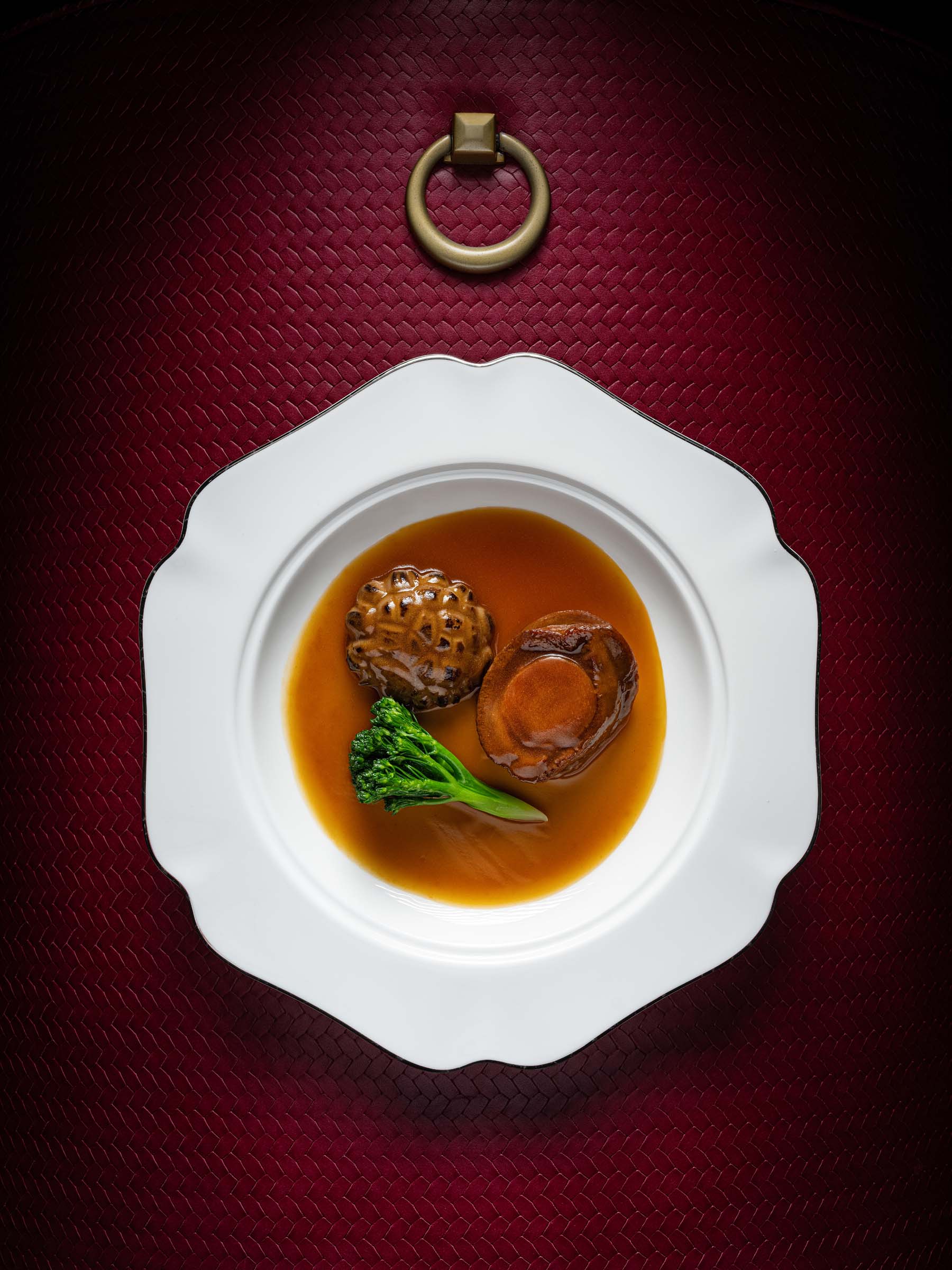
Sometimes even a chair can provide me with a unique background. For this image I used the back of a restaurant chair. The biggest challenge here was finding a way to balance the chair from leaning forward. The background is simple but brings in another element of the restaurant without exaggerating it.
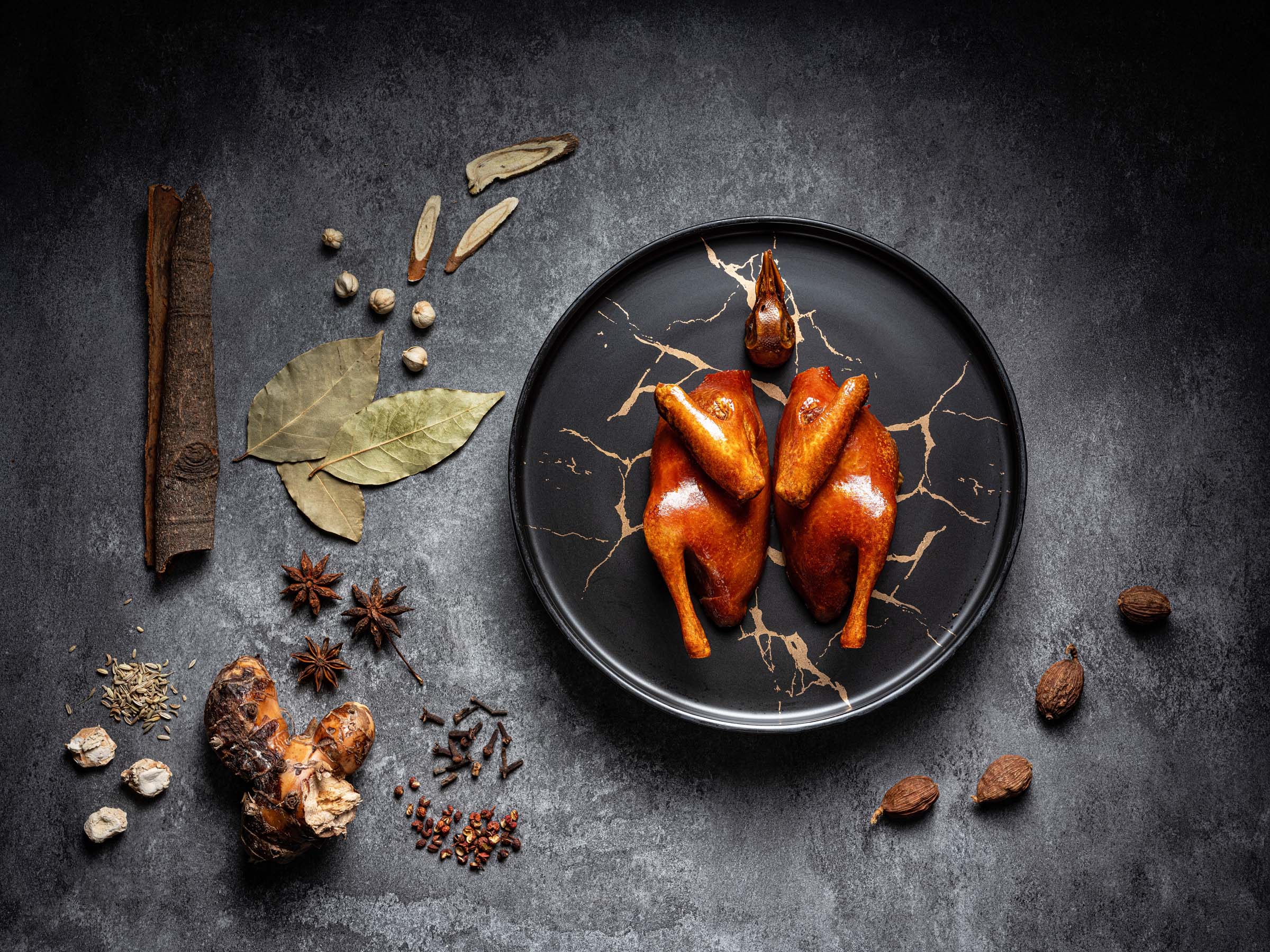
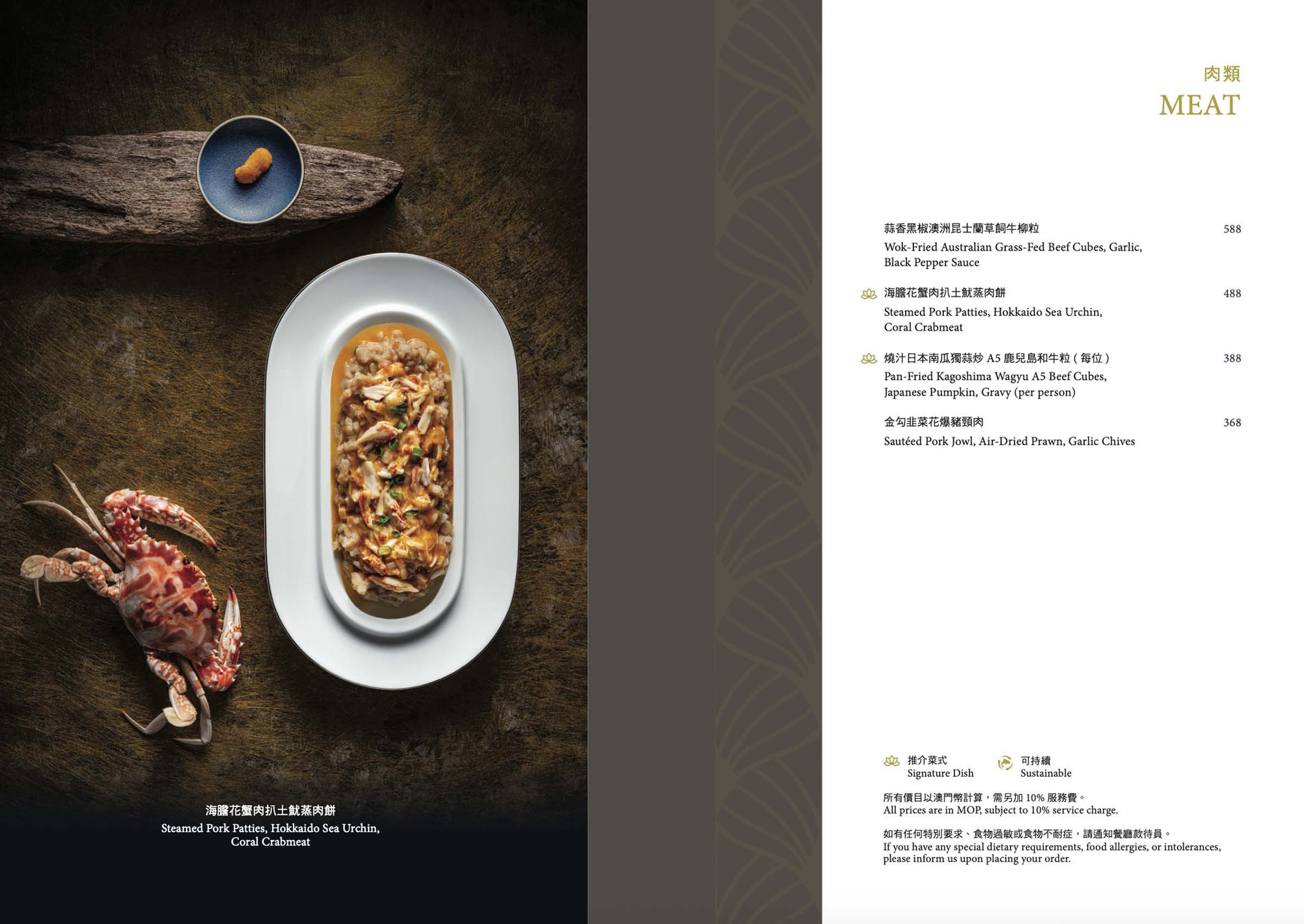
One of my favorite things to do is to create an image where we include all the ingredients that go into the making of that dish. It adds another story telling element to the final shot.
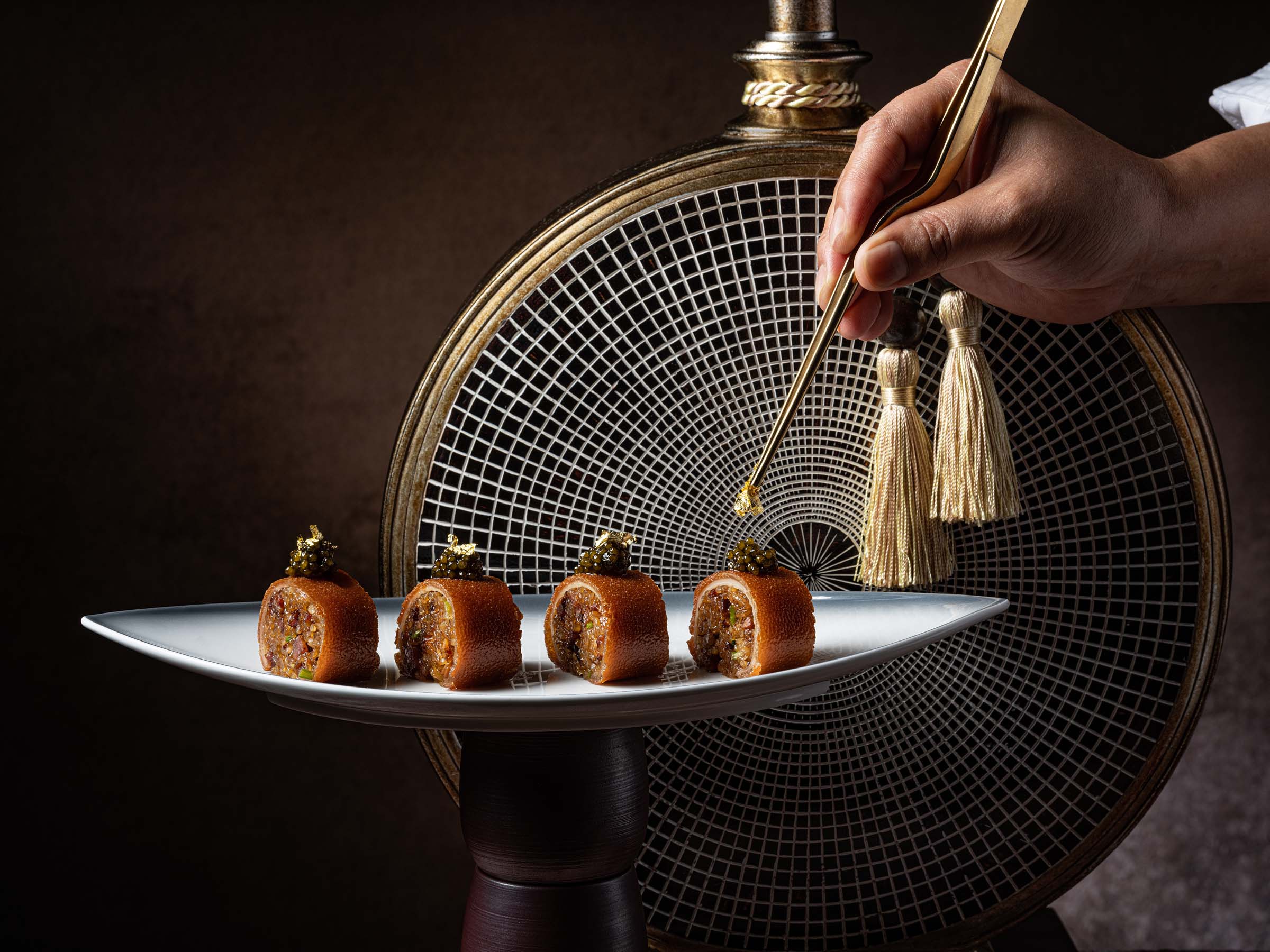
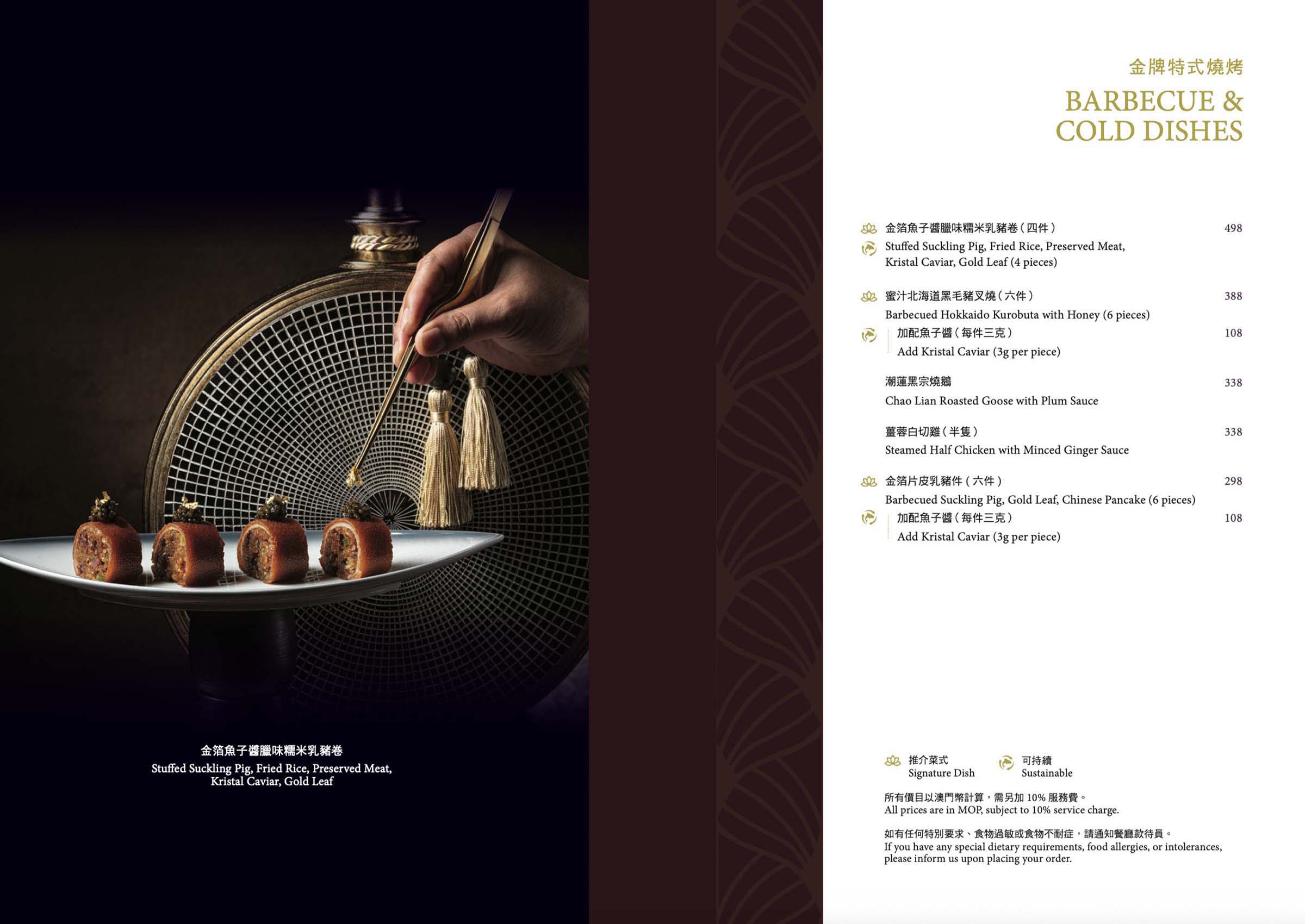
The client also requested that a couple of the images show the chef plating his cuisine. As in the opening image to this story where Chef Ho is performing a table side presentation of his roasted duck we also wanted to get something up close of his hands placing the final elements to one of his dishes. To add to the composition I took a decorative lamp base from the entrance of the restaurant and brought it in to the studio we created in the private dining room.
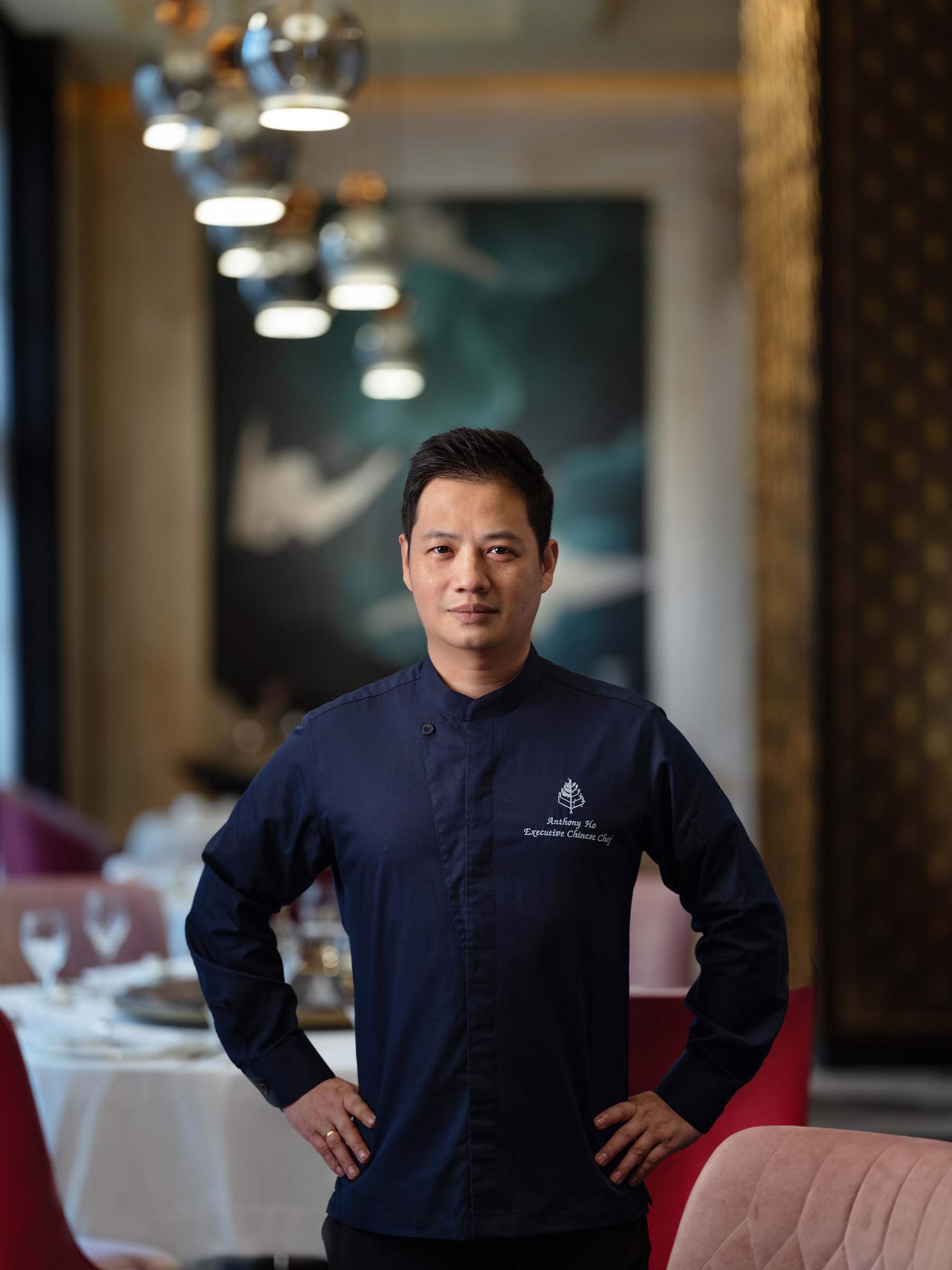
Executive Chef Anthoy Ho in Zi Yat Hee, Four Seasons Hotel Macau.
The Menu
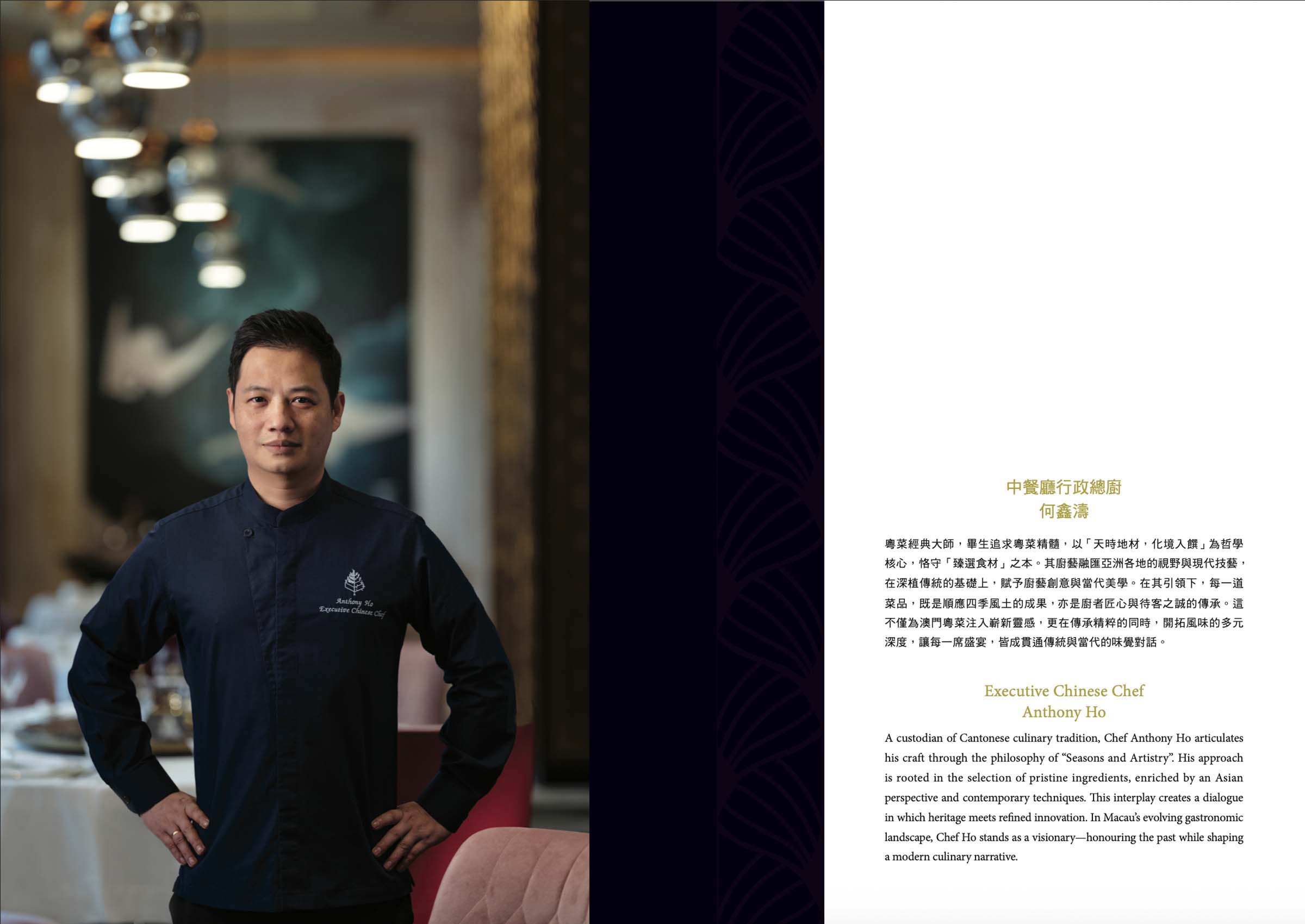
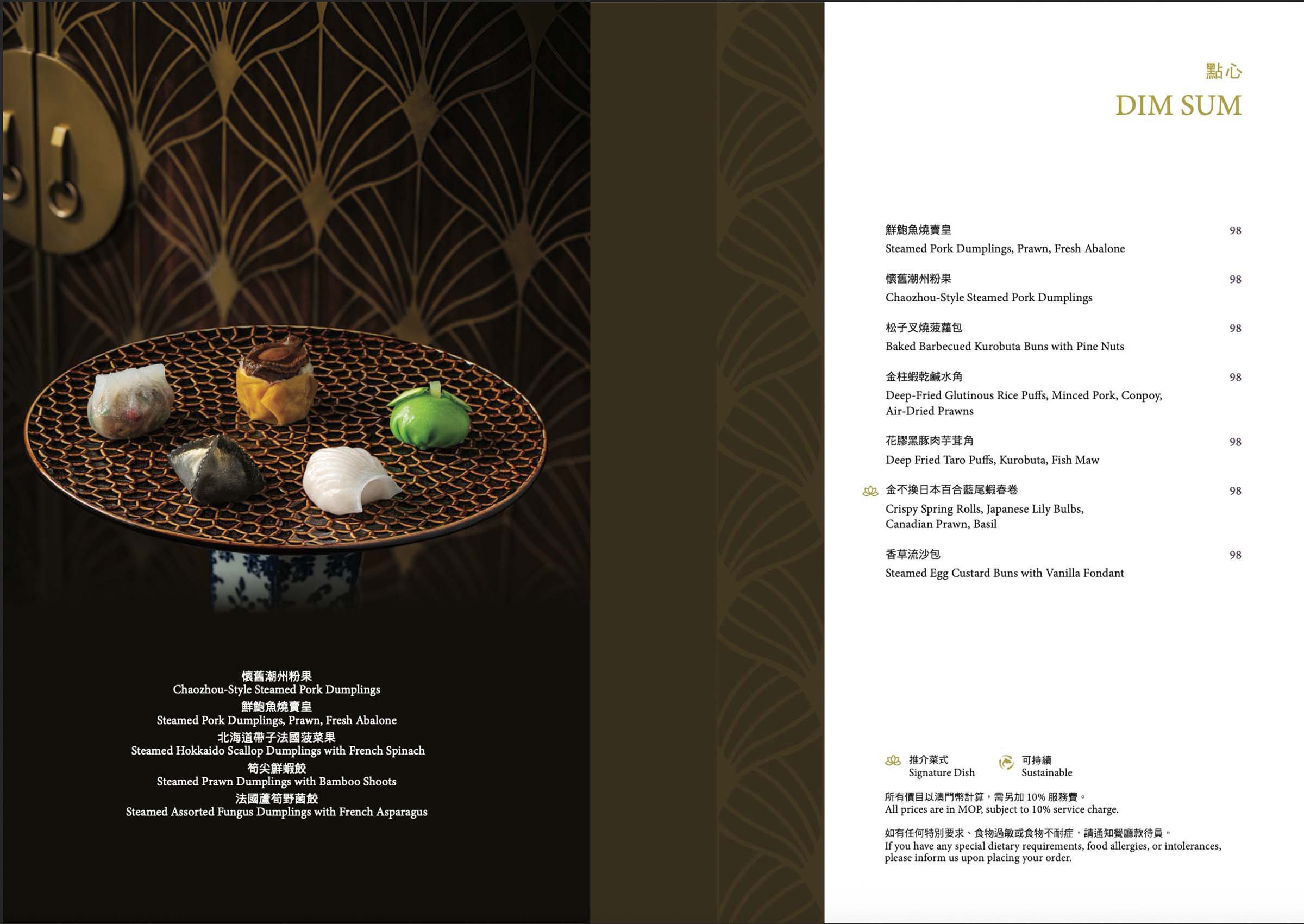
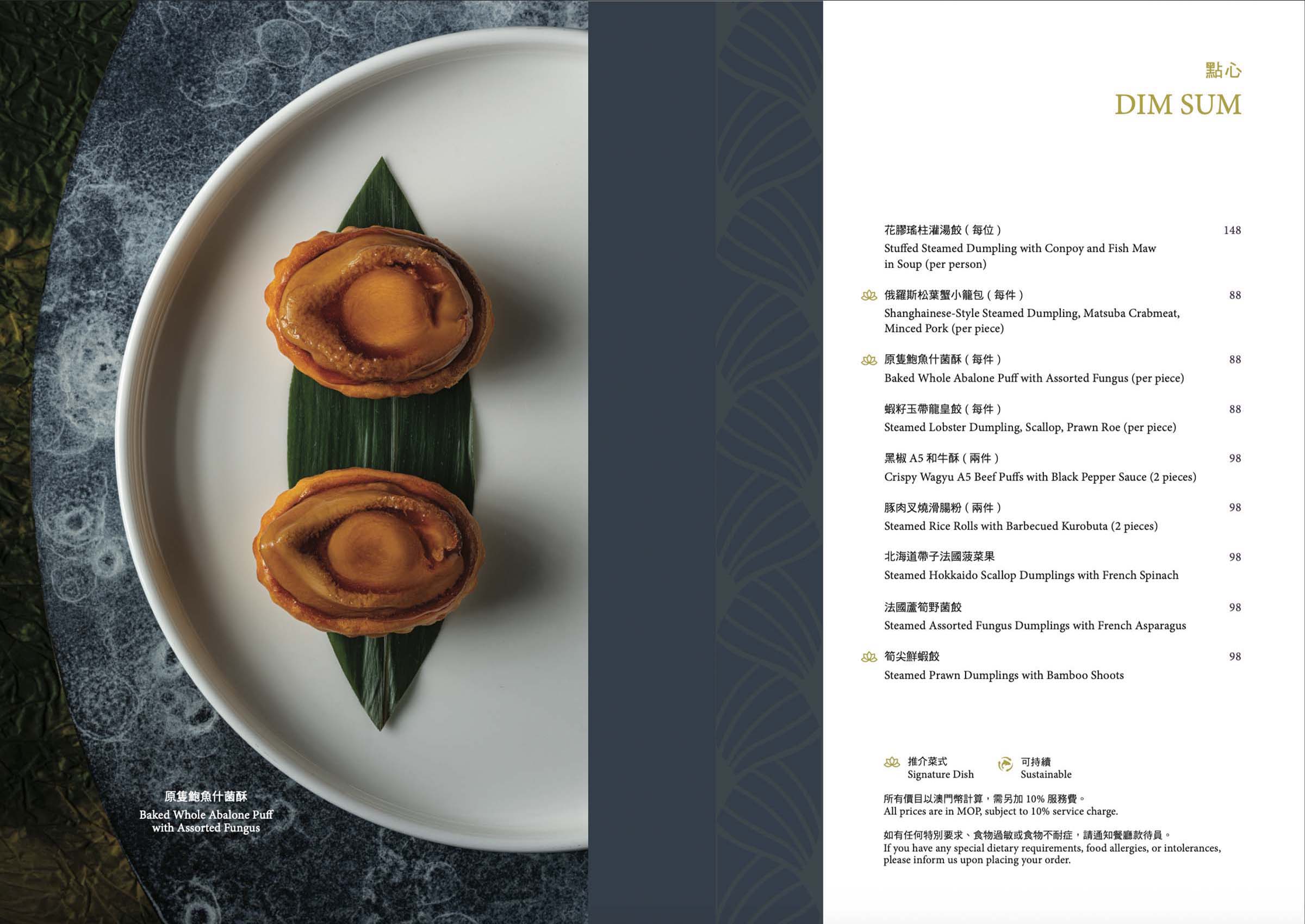
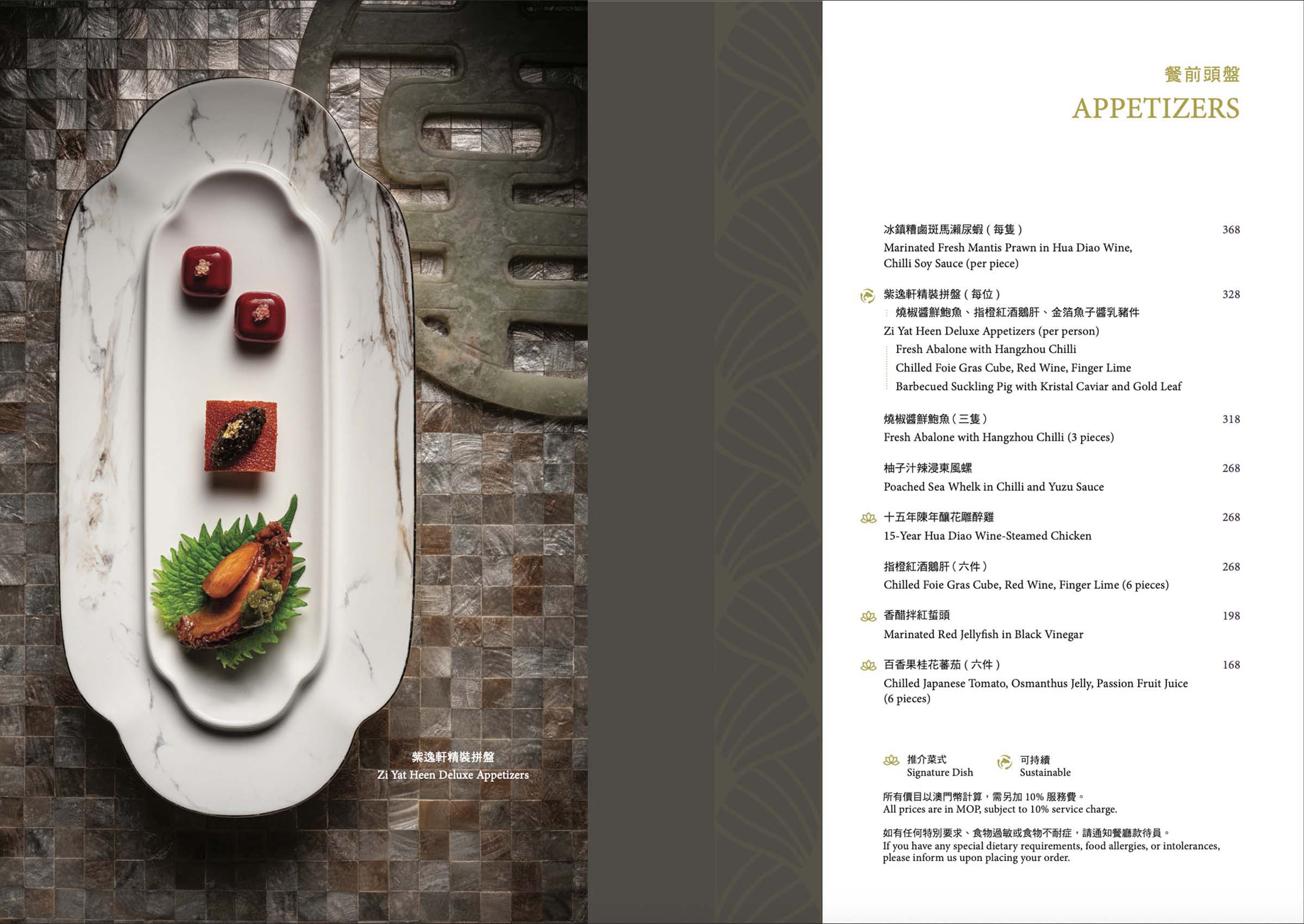
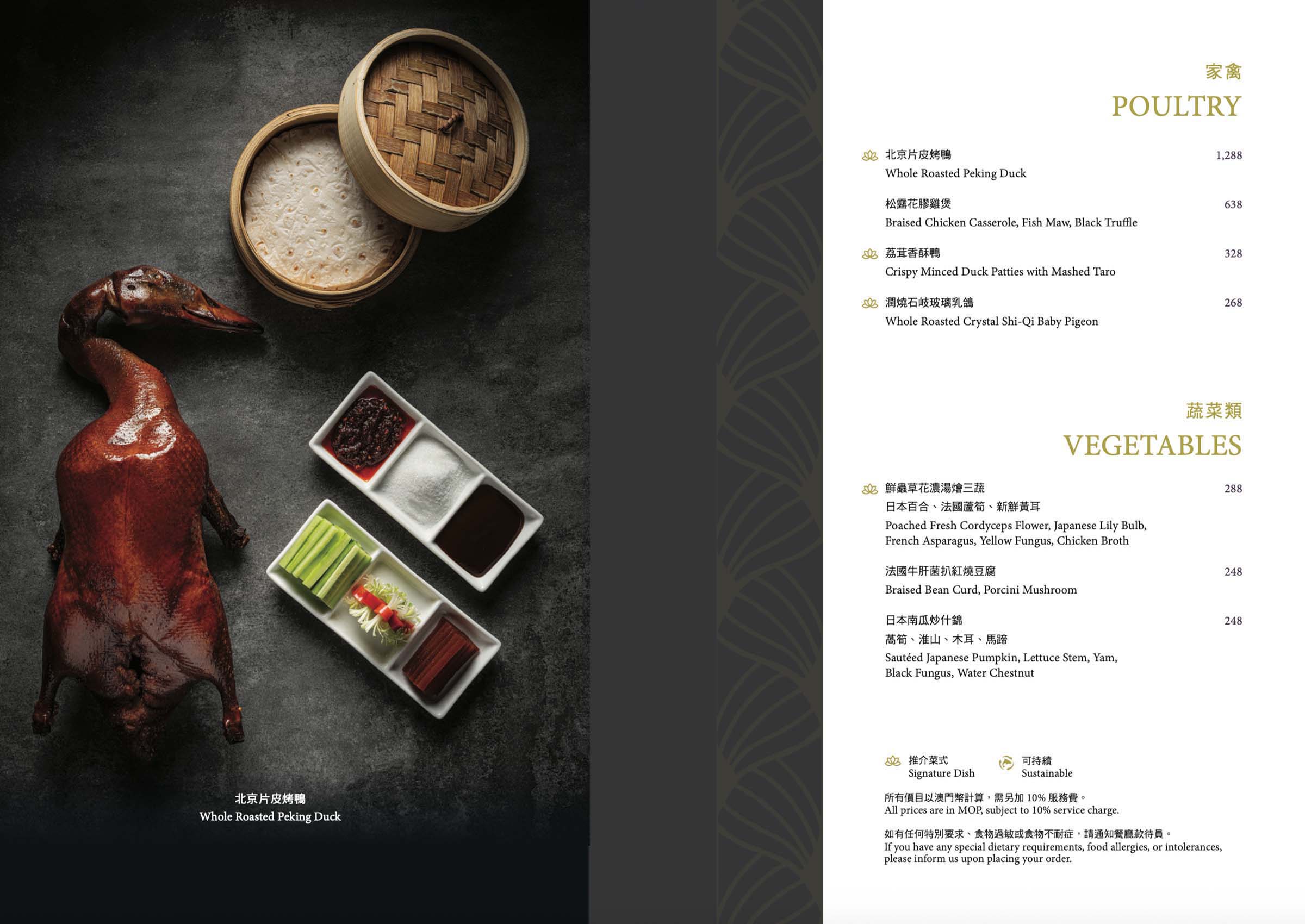
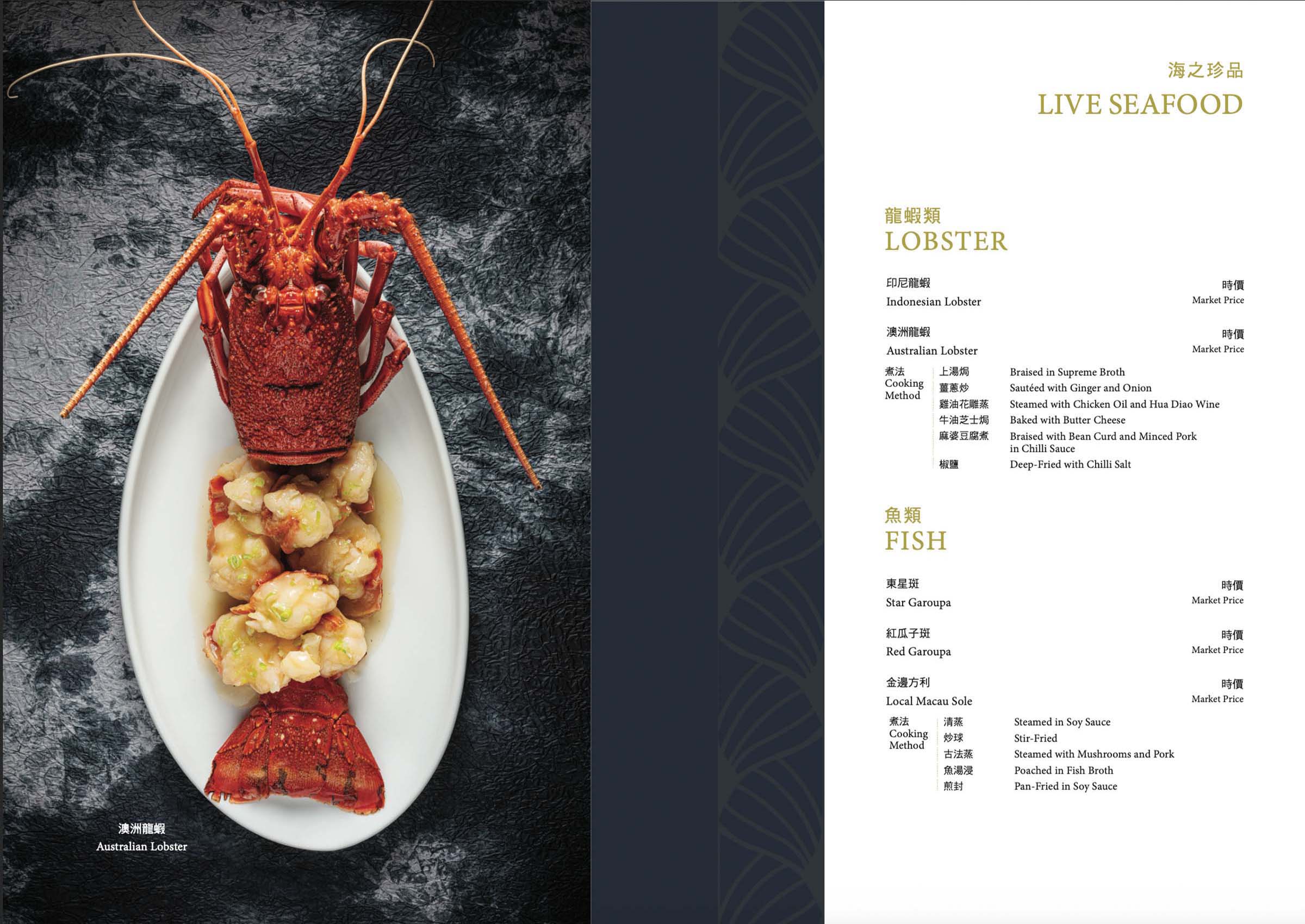
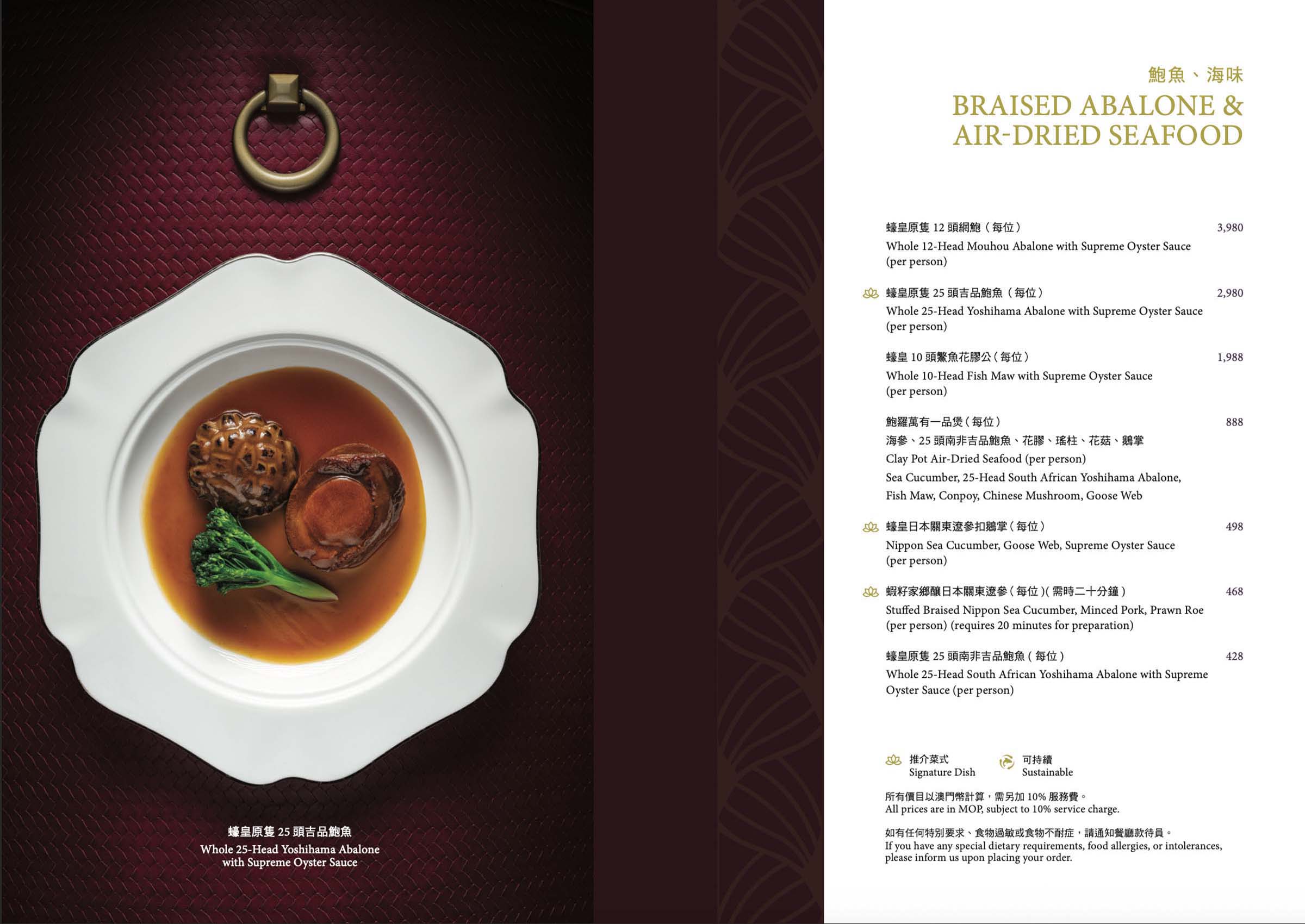
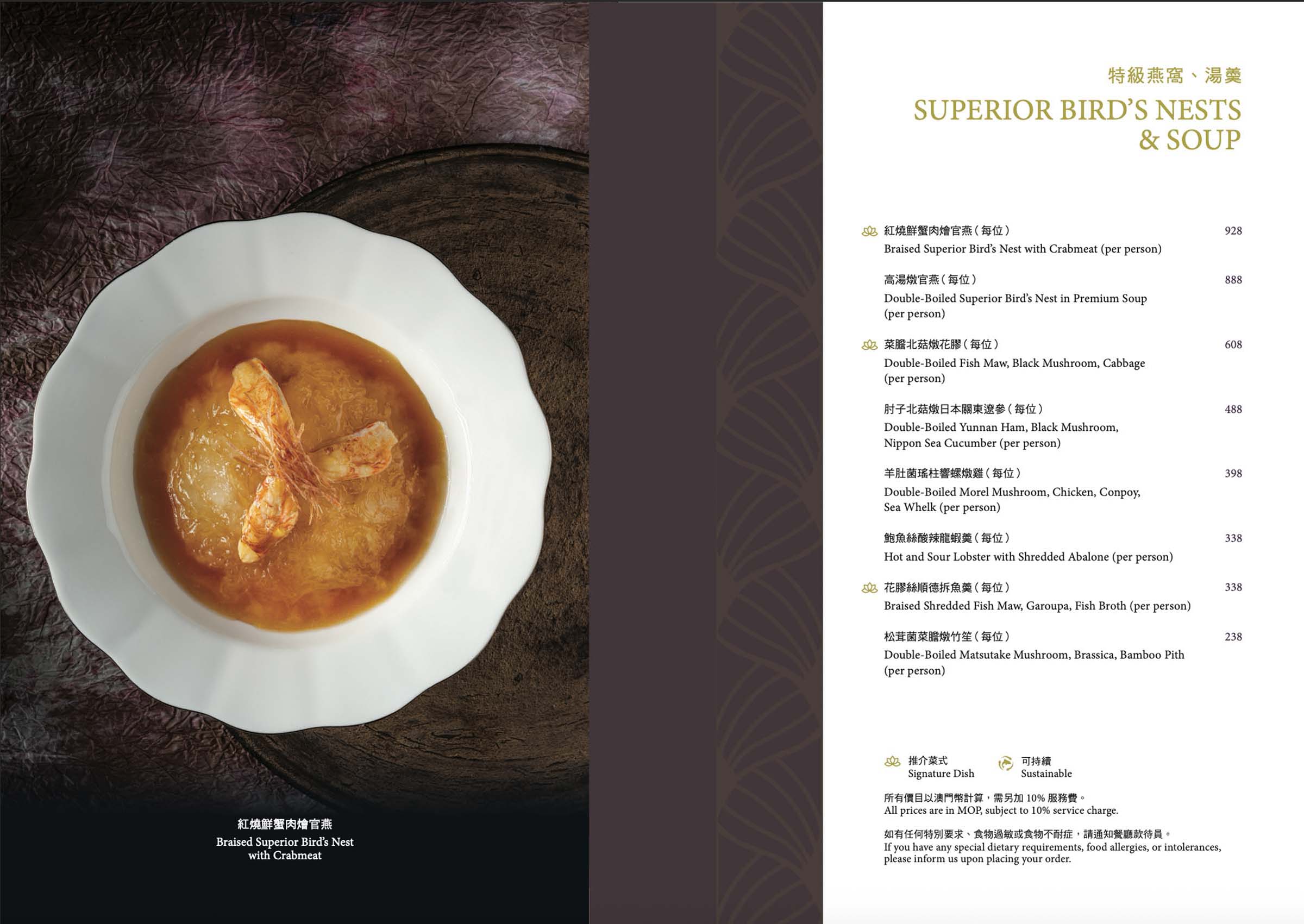
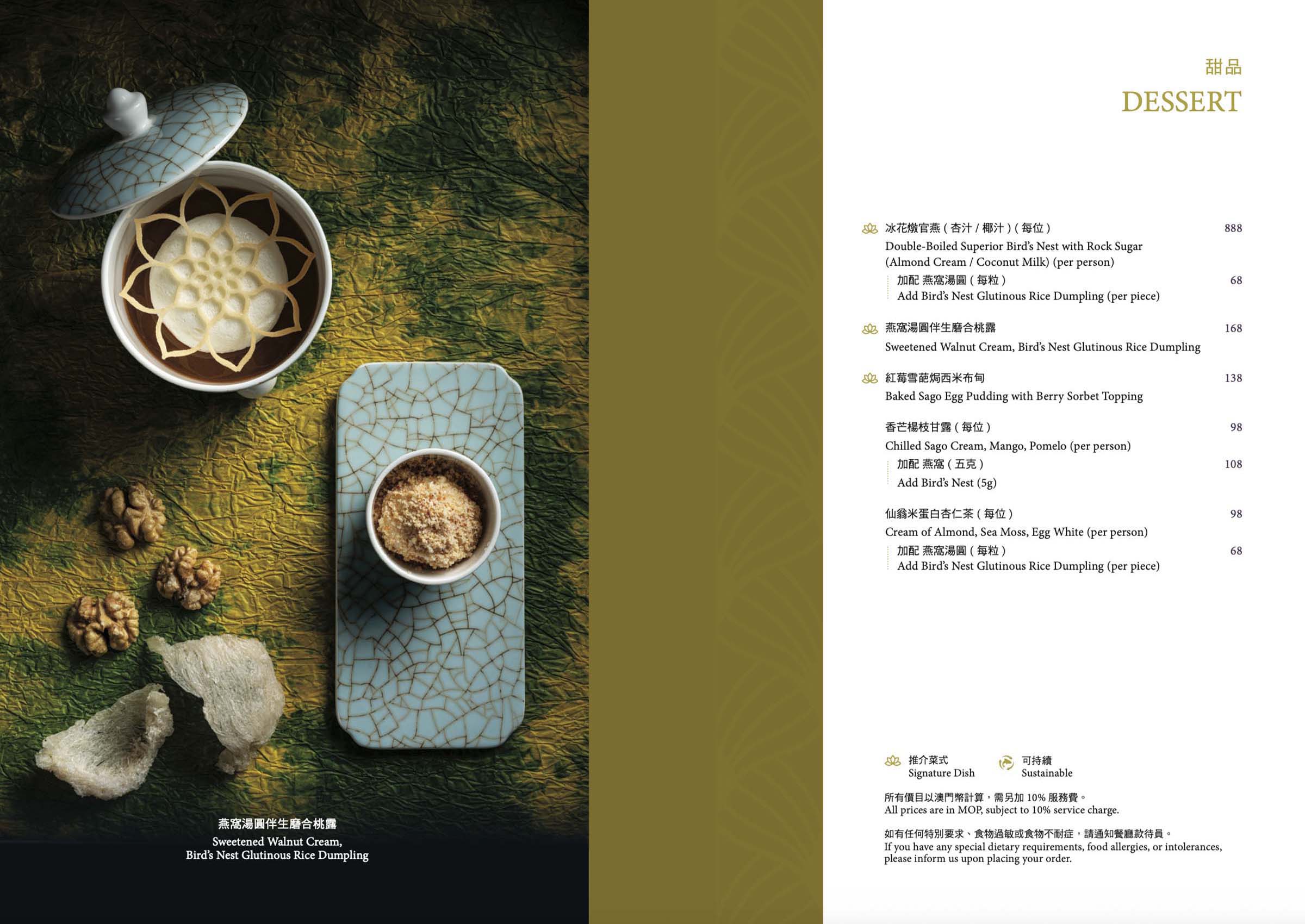
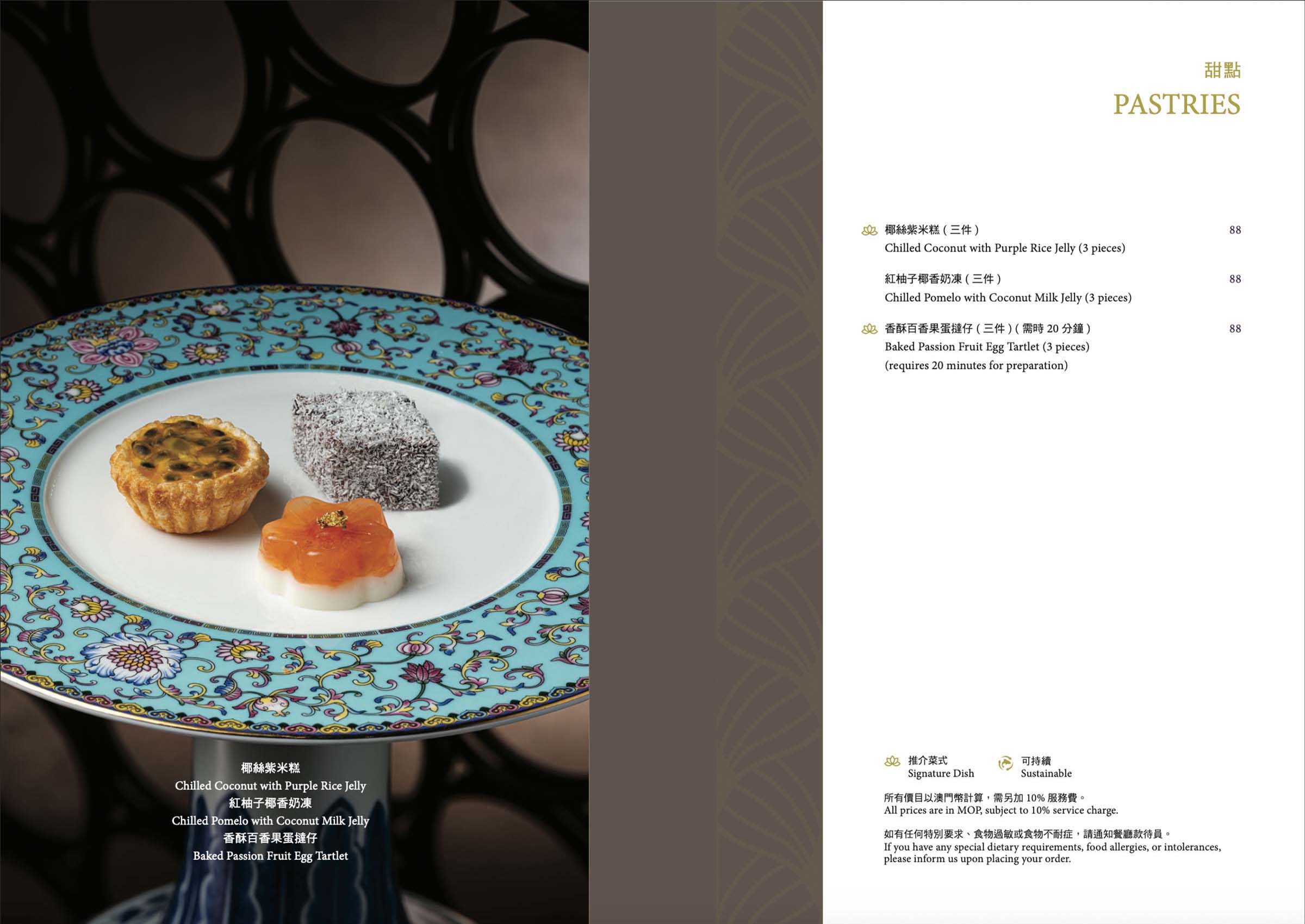
The final printed menu turned out beautifully. The design was created by Alicia Beebe who is the award winning designer for TK (Tasting Kitchen) magazine. Working with Alicia on any project is a joy. Her approach is one that photographers would always appreciate. Rather than having a preconceived idea for the design she will wait to see the photographs and then work to create a beautiful design around what she has received. Too often I’ve worked with designers that have the total opposite approach and destroy photographic compositions by forcing the image to work within what they designed before seeing any of the work. Such an approach is mainly egotistical as they want the viewer to be impressed by their design work rather than creating something that is both beautiful and helps the viewer to navigate the design.
Working with me on this project was my long time assistant, Jin Lao, who now knows what I’m going to do before I do. Also, special praise needs to go to Vivian Pun who served as the producer. Vivian was not only good at keeping things moving along but also has a keen food styling ability.
Using heavy high quality print stock the final menu was printed at Artron publishing house located in Shenzhen, China. Joey Cheang, TK’s Deputy Publisher, oversaw the entire project and even went to the print house to make sure the quality was consistent from page to page. In addition to the heavy construction of the menu to withstand months of customer abuse the the client also requested that the menu be water resistant. This required a special coating to be applied during the printing process. Rather than using a shiny laminate, which would look cheap and reminiscent of a diner menu, the coating was a low sheen added layer. When looking at the menu one would hardly notice this application. So when Joey brought a sample of the printed menu to the client she was confident that all requests had been made and applied. As the client viewed the sample printing they then took a glass of water and poured it on the menu to test its resistance. This action surprised Joey as she didn’t expect such a test would be conducted. While she was confident in the quality of the product she told me her heart skipped a beat watching this test occur before her eyes. Fortunately her dedication to the quality of this printed menu was well rewarded as she, and the others, watched the water flow off the printed page with no absorption or damage to the book.
Here are the pages…
Tech Specs
Camera: Fuji GFX 100 II
Lighting: Godox 1200, 400, 300
Lighting Tools: Chimera softboxes of various sizes, honeycomb grids, disk reflectors
All Photos Copyright David Hartung

Your images are always top-notch, and a pleasure to look at. The BTS photos are also nice to see, and they bring back very pleasant memories of when I had the privilege of working, and learning, alongside you.
Peking Duck is among one of my favorite things to enjoy, and now thanks to you, I have a craving for one…