
Japan Wayfarer
Exploring Japan’s Michinoku Trail one step at a time
Story and Photographs by David Hartung
Setting out alone on a ten-day walking journey along Japan’s Honshu north eastern coast seemed like a daunting undertaking. Navigating in a land with no knowledge of its language and only a peripheral understanding of the culture made me a bit nervous about accepting this assignment.
I was invited to Japan through a travel company called Walk Japan who have established walking tours all over the country. They presented me with a list of choices and I opted for the ten-day Michinoku Trail which goes from Hachinoe, Amori Prefecture all along the Pacific Coast through the Iwate Prefecture all the way down to Soma City in Fukushima Prefecture. The total distance of the trail is just over 1,000 kilometers (640 miles). I would like to impress you by saying I walked this entire route but the truth is that I travelled only one half of the route which included 120 kilometers of walking but also some train journeys that bypassed areas along the route. Each day of walking consisted of a variety of trail conditions. Some areas were well manicured and leisurely while others were steep uphill accents on endless flights of stairs followed by steep descents on narrow steps leading into lush ravines. On some days this process repeated itself until my legs felt like heavy bags of cement.
Since this was a self-guided tour created by Walk Japan I was, at first, nervous about how I would navigate my way along the Michinoku Trail. After landing in Tokyo and finding my way to the hotel I was presented with a guidebook created by Walk Japan. In this book are extremely detailed instructions on how to navigate your way along the trail which included precise distance measurements, trail conditions, and photos marking the way. This proved to be most helpful, especially in situations where there were not clear markers on the trail or when walking through villages and small towns.
In addition to a wonderful guide book Walk Japan also arranged all guesthouses and hotels along the route. In some situations they also had transportation waiting for me at both the end of a day’s walk or at the beginning of the next day. This would be mainly in situations where the trail finished or began a significant distance from the hotel. Walk Japan also took care of my luggage which would be picked up in the morning and sent ahead to my next night’s guesthouse. That meant I only had to carry what I needed during the day, which for me was heavy enough considering all my camera gear.
The first challenge of my journey was just getting to the starting point. After spending one night in Tokyo my instructions from Walk Japan were to take a train to Hachinohe located in Aomori Prefecture. This would be a three hour journey aboard Japan’s famous Shinkansen railway. These trains, also known as Bullet Trains, travel at speeds between 260 km/h (162 mph) and 320 km/h (200 mph). For those that have not travelled in Japan their train and subway stations can be quite intimidating. The crowds and sheer number of tracks and platforms can be very confusing for those unfamiliar. I wasn’t even sure where I was suppose to go to buy my ticket. A friend of mine, who used to live in Japan, gave me some good advice, “Just look for the line with a lot of foreigners.” Sure enough when I arrived at Tokyo Station I immediately observed a line with foreigners and joined the queue. Within minutes I was holding my ticket. Now, which platform do I go to? As is often the case I went the wrong direction and had to seek the help of a train station attendant who pointed me in the right direction. With a sigh of relief I made it to the platform with a full two minutes to spare.

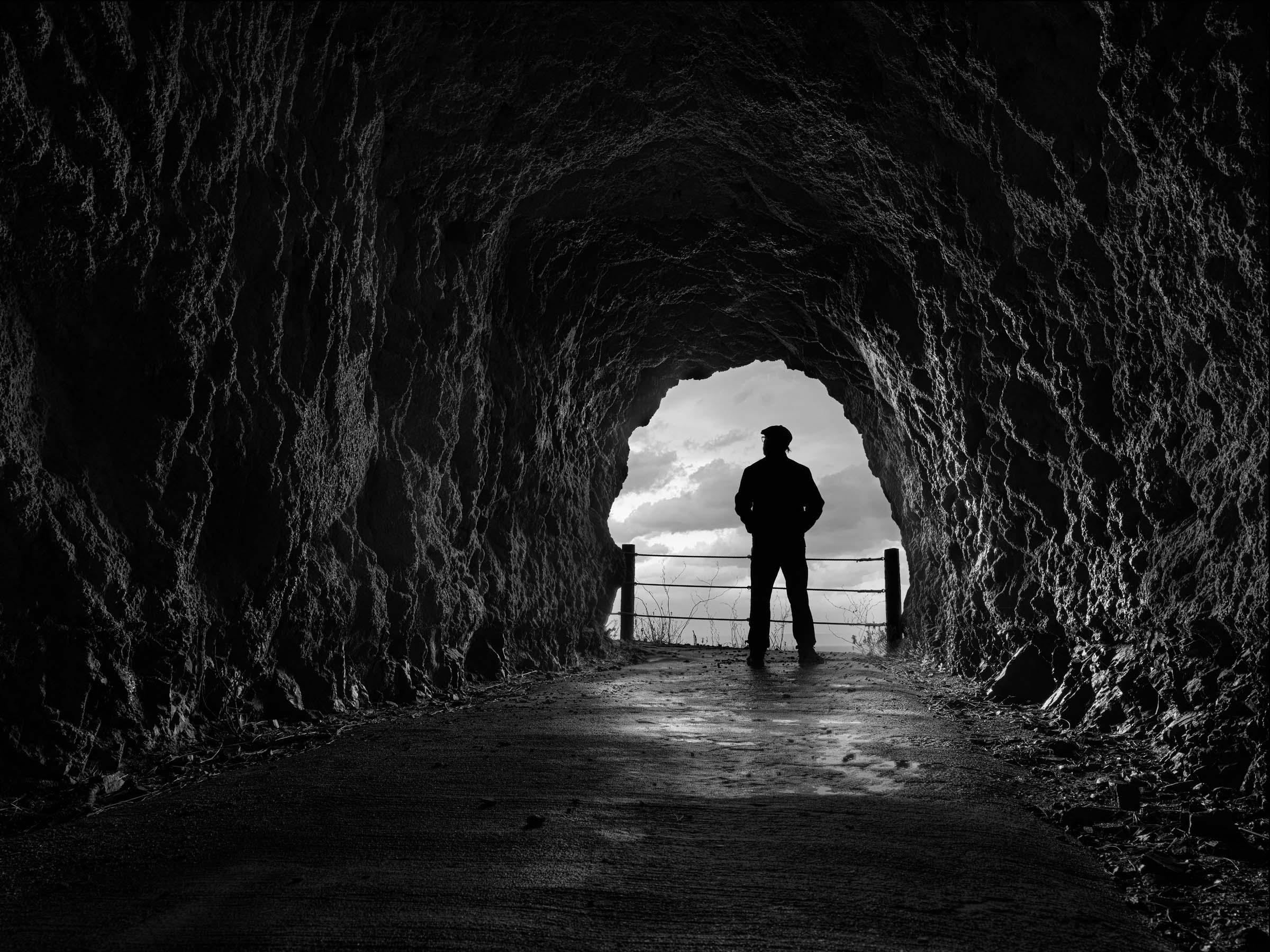
View out the front window of a local train as it moves through one of the many tunnels located in the Iwate Prefecture.
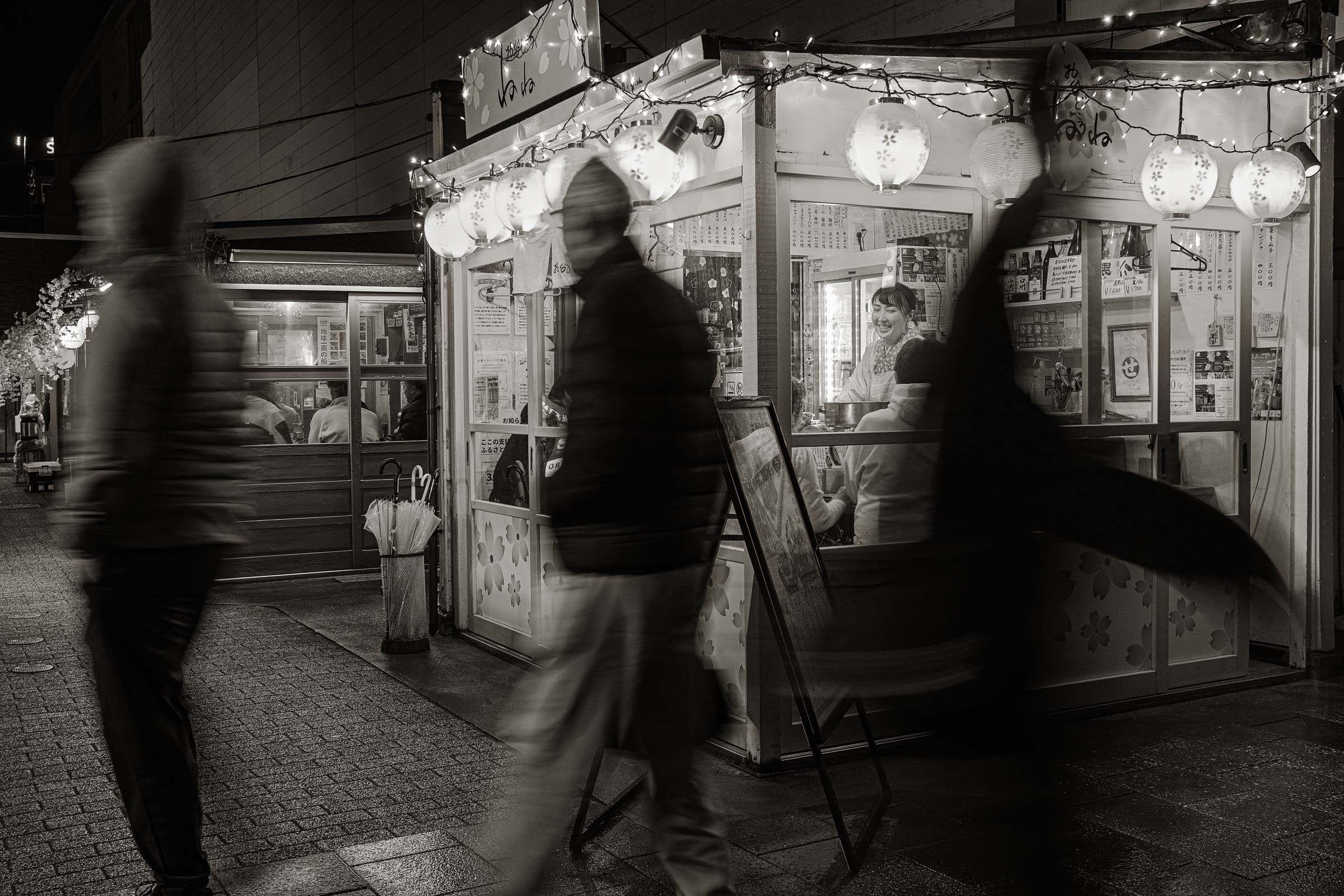
Food street in Hachinoe, Amori Prefecture
Upon arrival in Hachinohe I quickly checked into my hotel and then wandered around town. Not a whole lot happening in this northern little city but I did find myself in a narrow walking street loaded with small izakaya restaurants. Each could seat from six to ten people all sitting around an L-Shaped counter/bar where customers could chat with each other and the restaurant proprietor. The atmosphere in each of the venues was lively and jovial as patrons ate delicious Aomori specialties and knocked back glasses of sake. As I stood outside a pink colored izakaya examining the menu the young woman running the place beckoned me in. I was a bit nervous at first as I had no Japanese language skills and didn’t want to interrupt anyones good time. The tiny restaurant had everyone squeezed in together and as I stepped in I was greeted by welcoming smiles and hellos from the other guests. I was then handed a menu and instructed to sit down. After placing my order of grilled mackerel, a tofu dish, and a seafood soup, I began trying to chat with some of the other guests. It was the usual conversation of where I’m from, what are you doing here, etc. Some spoke a bit of English but when that’s not possible Google Translate comes to the rescue. It’s just a matter of time before we all have Babel Fish inserted into our ears.
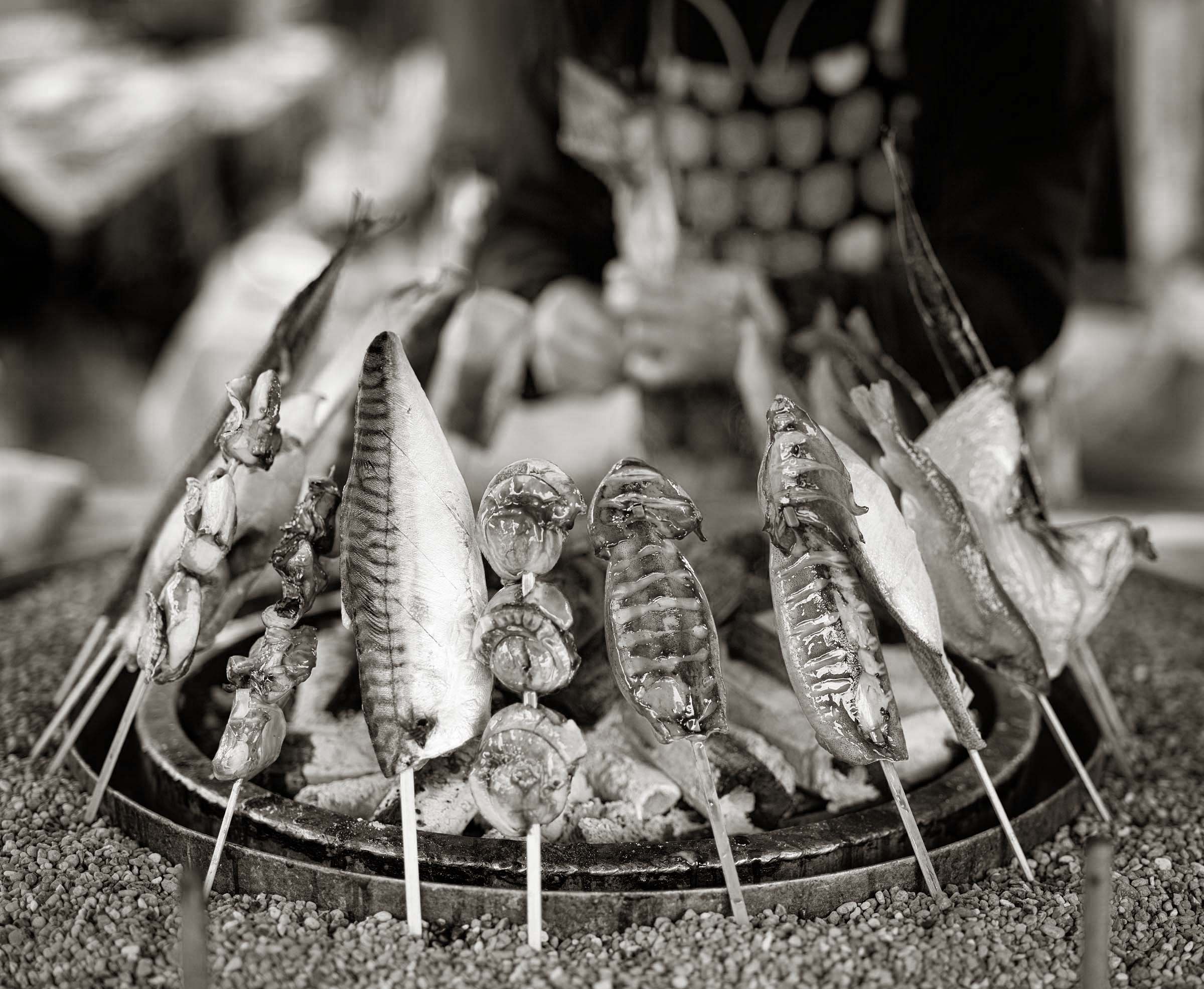
Grilling seafood on the back of a truck at the Tathana Wharf Sunday Morning Market in Hachinoe.
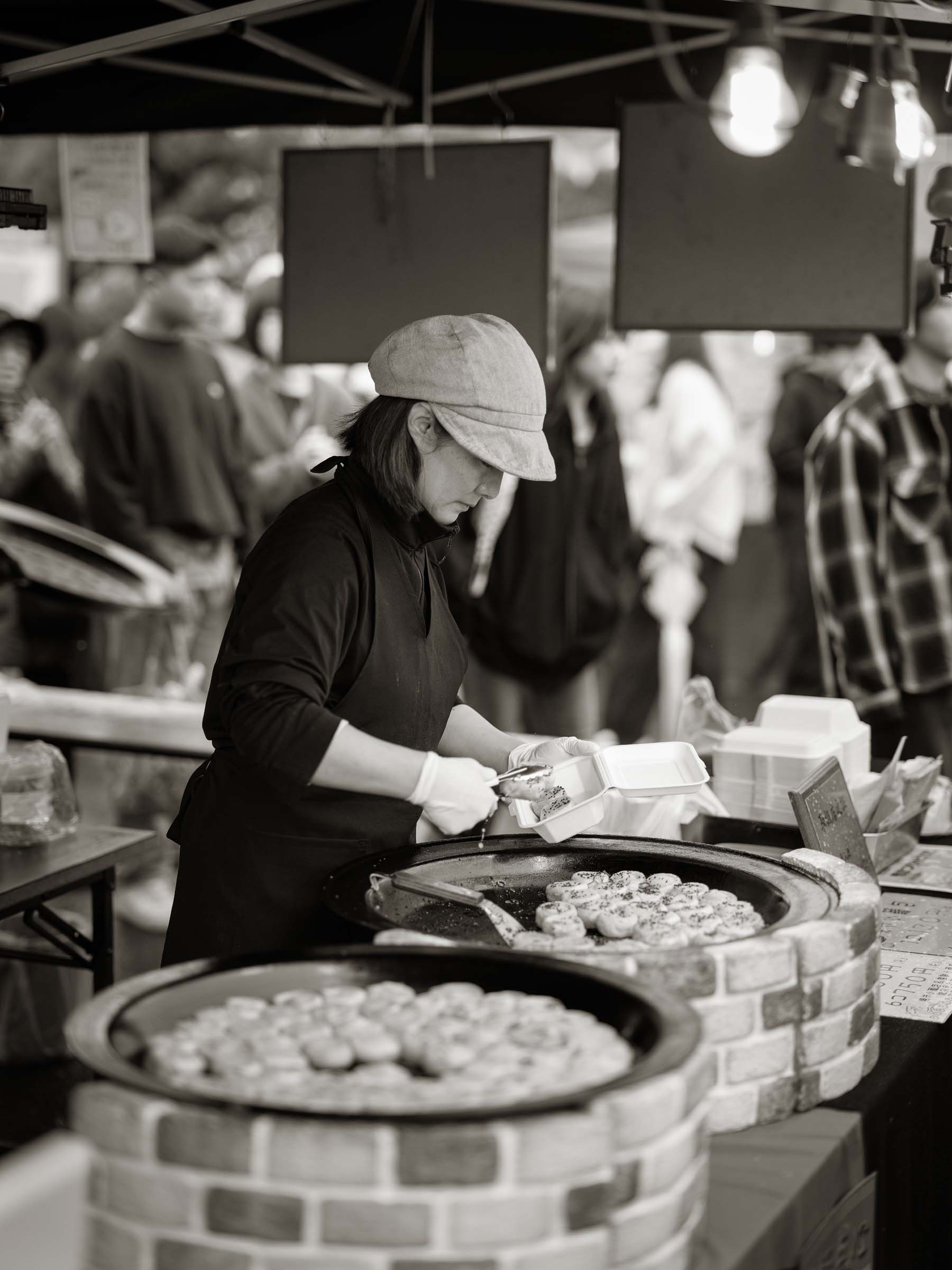
Fresh made dumpling being sold at the Tatehana Wharf Sunday morning market.
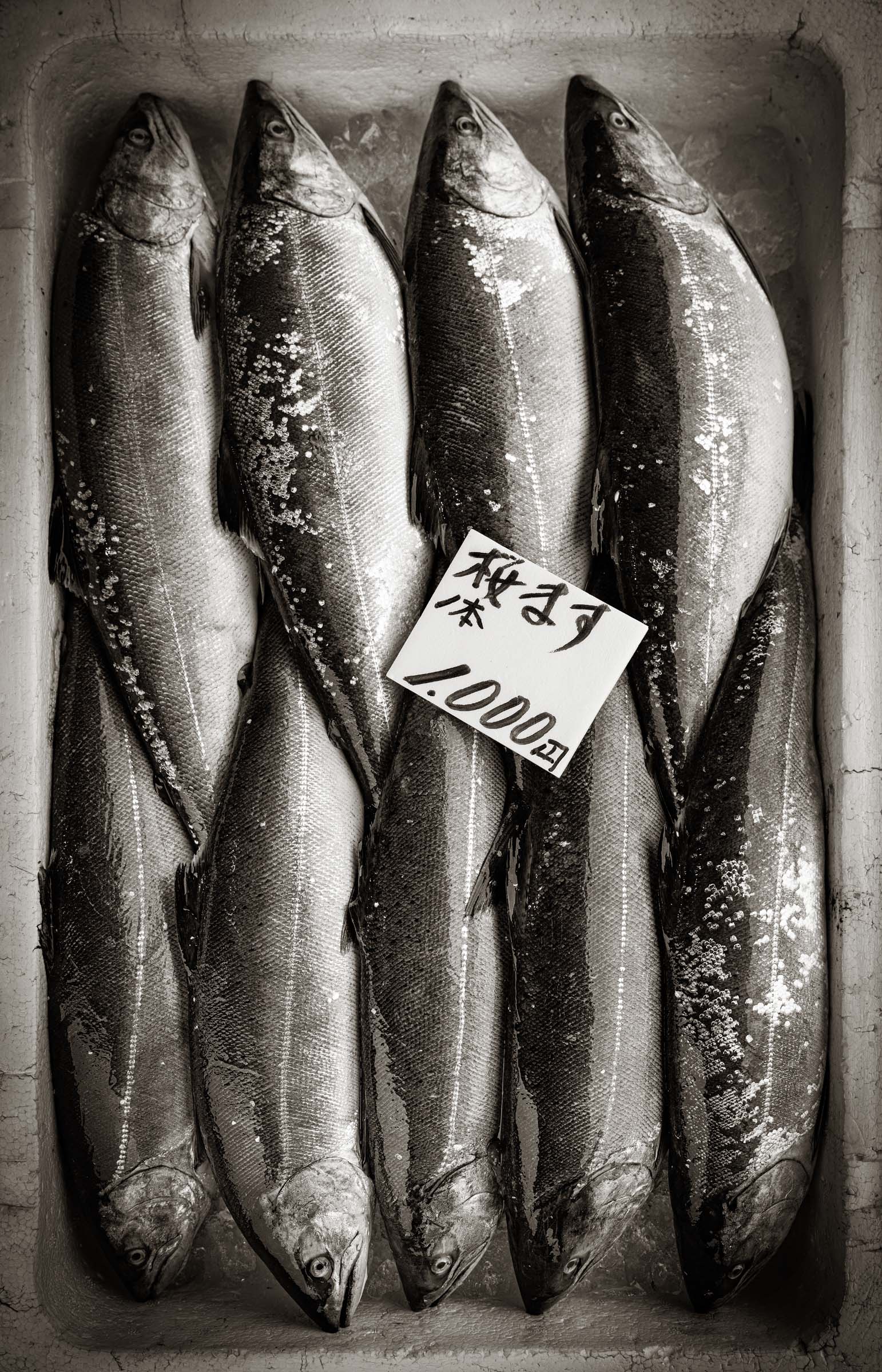
Fresh fish for sale at the Tatehana Wharf Sunday morning market.

Tasty treats for sale at the Tatehana Wharf Sunday morning market.
Rising early the next morning I headed straight for the Sunday morning market located at the Tatehana Wharf. The morning market is famous as being one of the largest in Japan and only occurs on Sunday mornings from dawn to 9am. Despite the morning rain it was still nice to wander from stall to stall to see the variety of edible items available. From fish to fruit to dumplings to some amazingly good coffee there was something for everyone. I even ran into some of the people I dined with the night before.
After leaving the market I headed for the local station and boarded a train going just a few stops to Same where I would begin my trek.
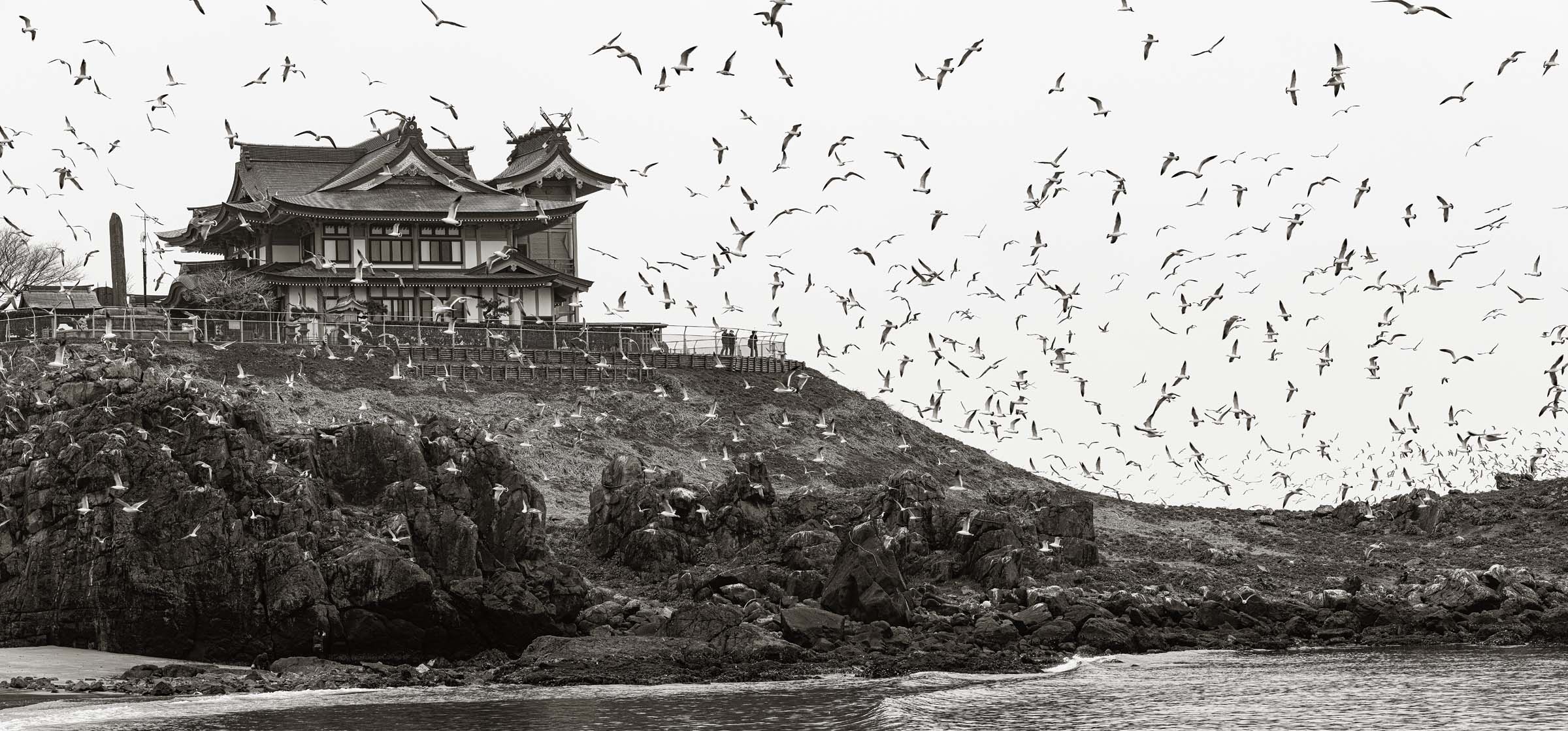
Black-Tailed Gulls flying around the Kabushima-jinja Shrine.
At the trail’s starting/ending point is the large Kabushima-jinja Shrine which dates back to the 13th Century. The island that the shrine sits on is also the nesting grounds for thousands of Black-tailed gulls. It’s quite a site to see and hear when they all decide to take flight together. Somehow I managed to not be bombed.
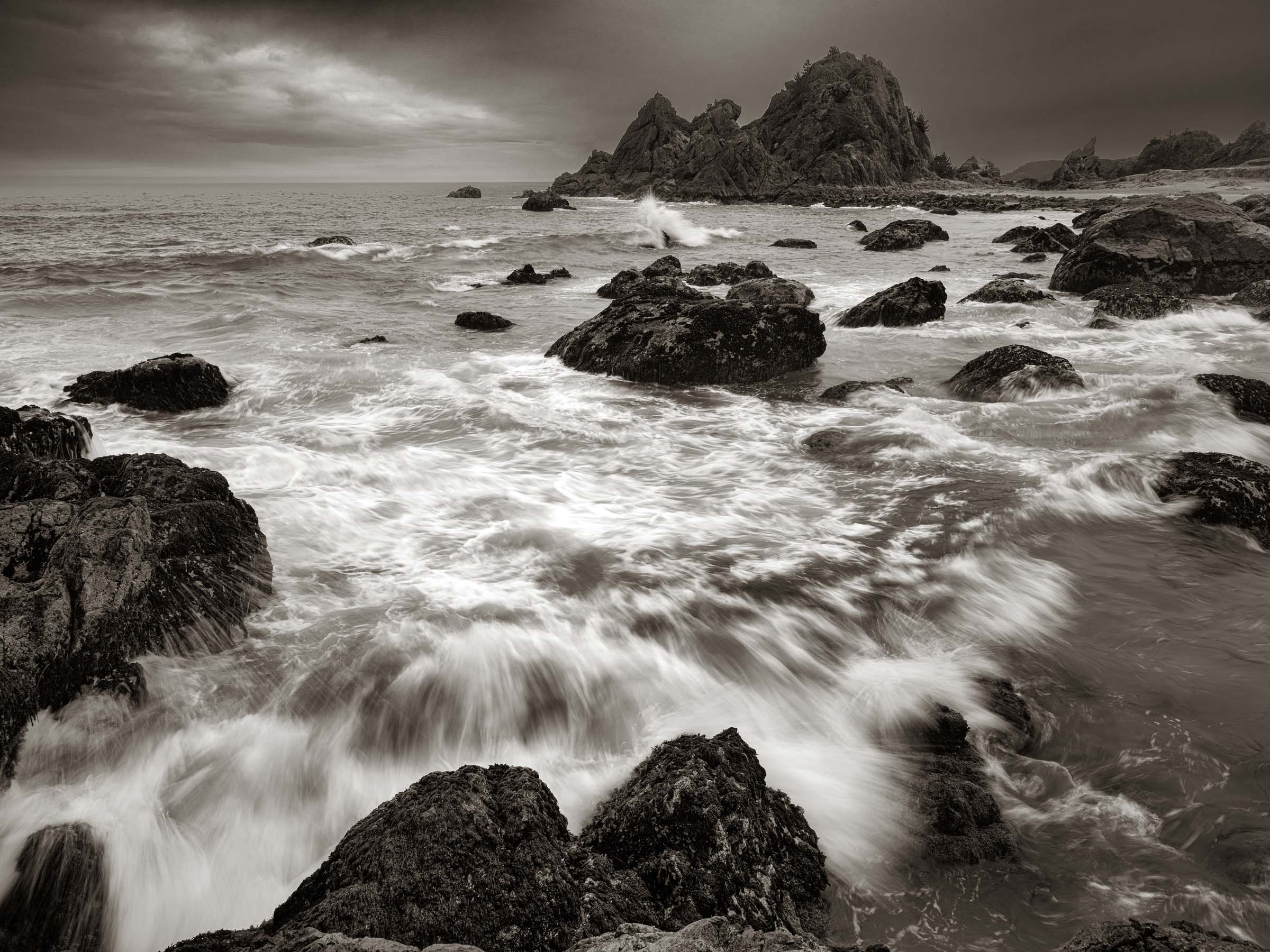
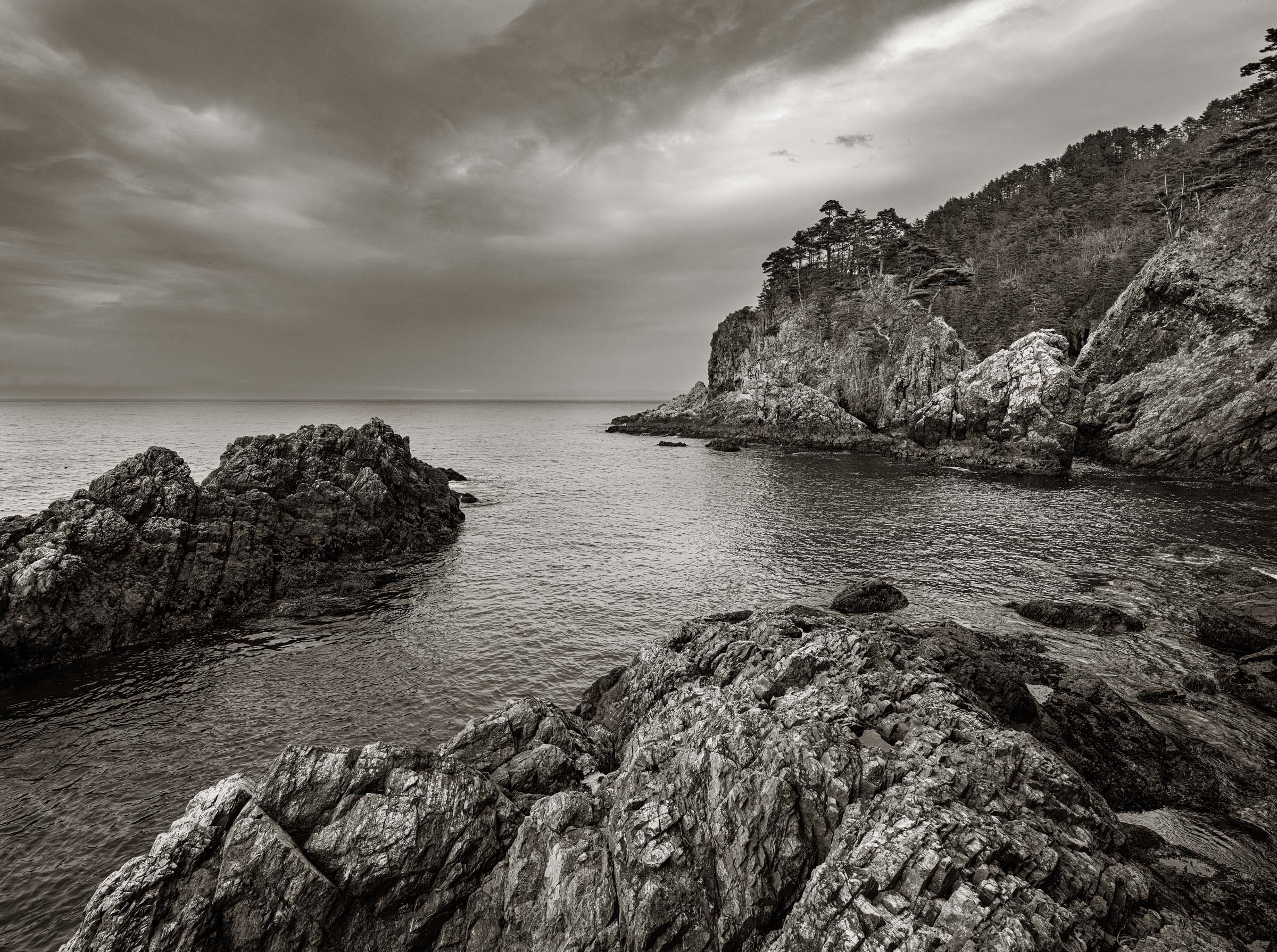
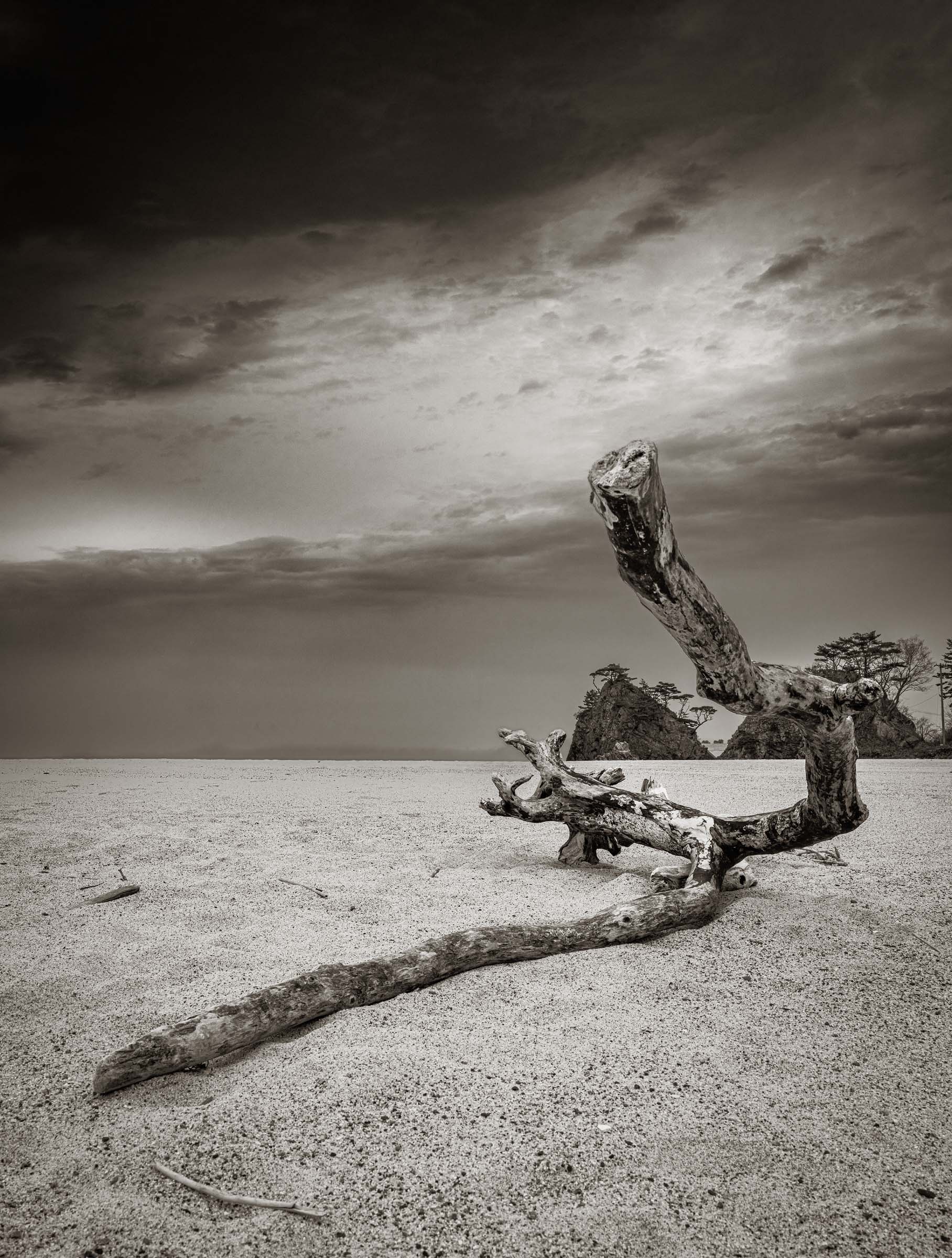
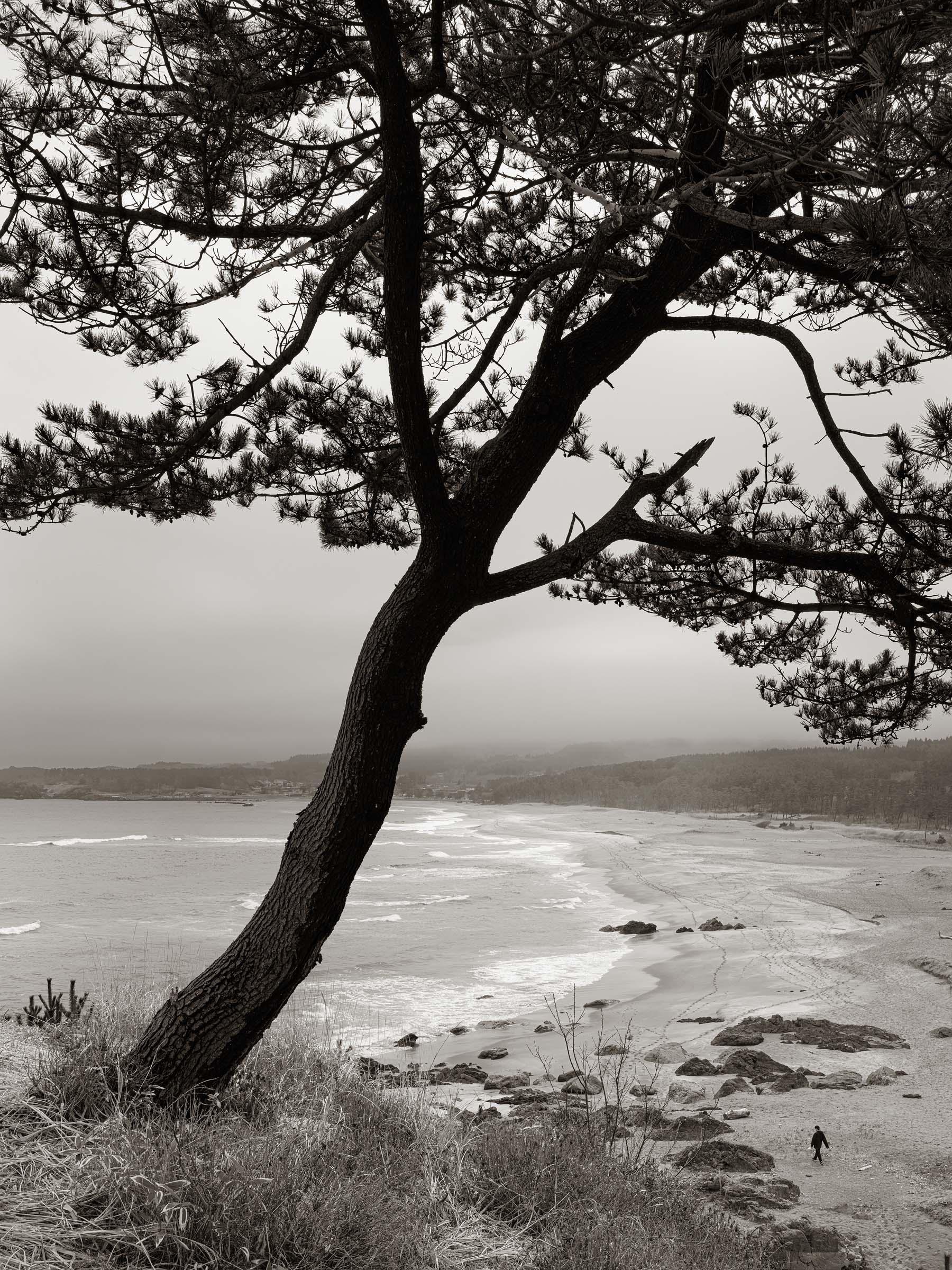
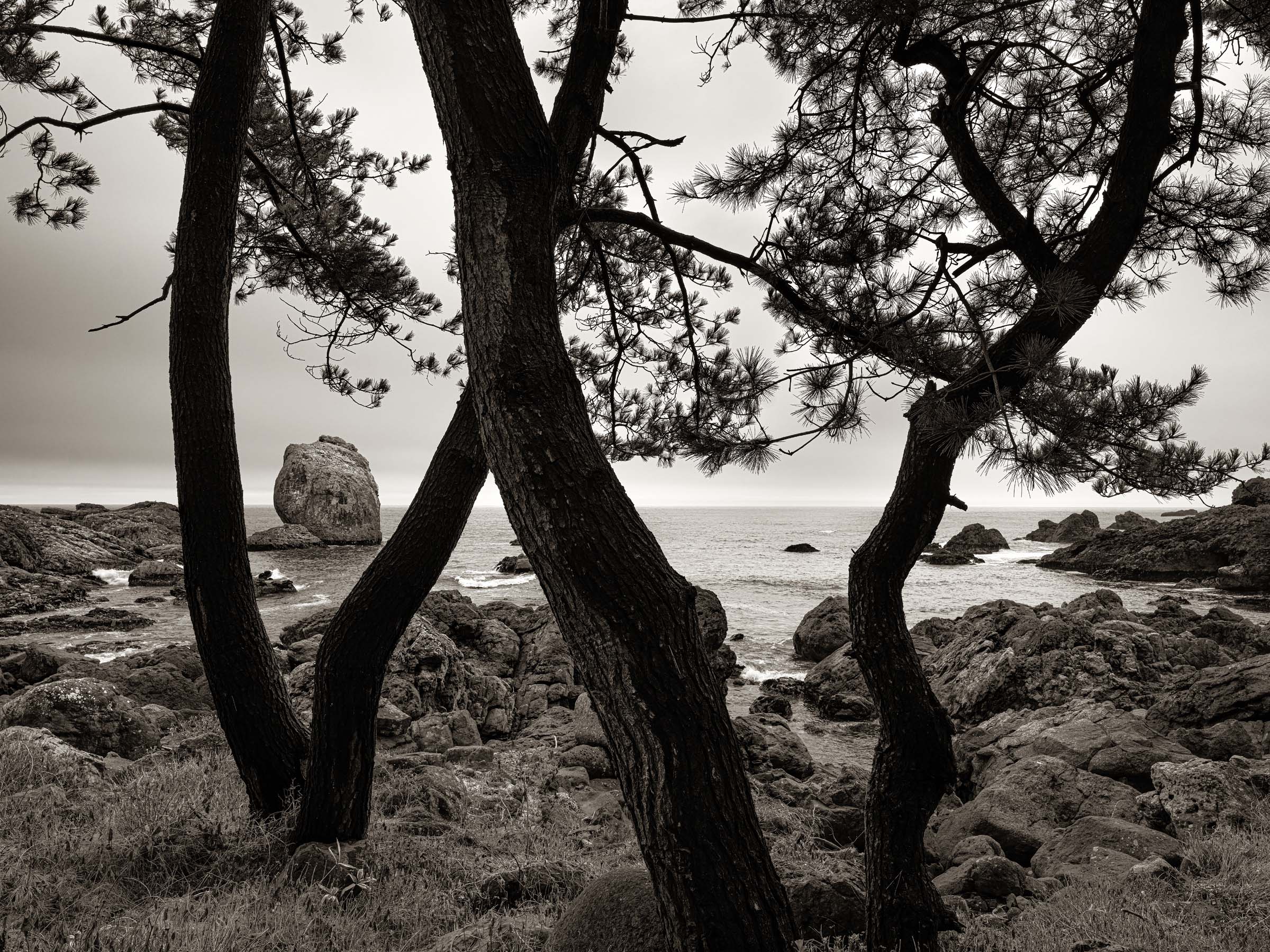
Walking along this section of Aomori’s southern flank is known as the Tanesashi Coast and is part of the Sanriku Fukko National Park. The dramatic views of the coast would change from jagged volcanic rocks that provide natural protective barriers, to long sandy beaches, to small fishing ports, and even beautiful natural grass lawns in the small city of Tanesashi.
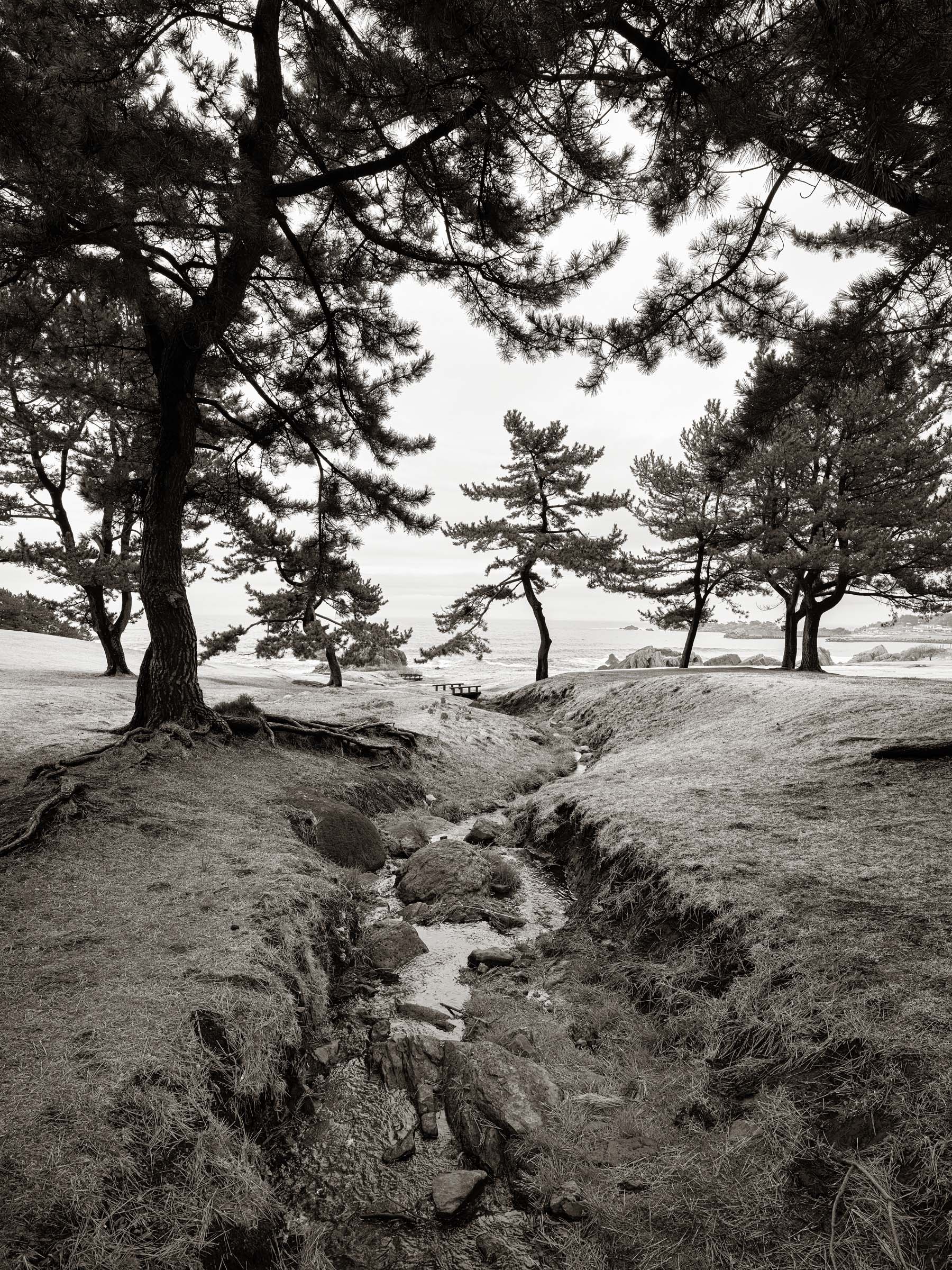
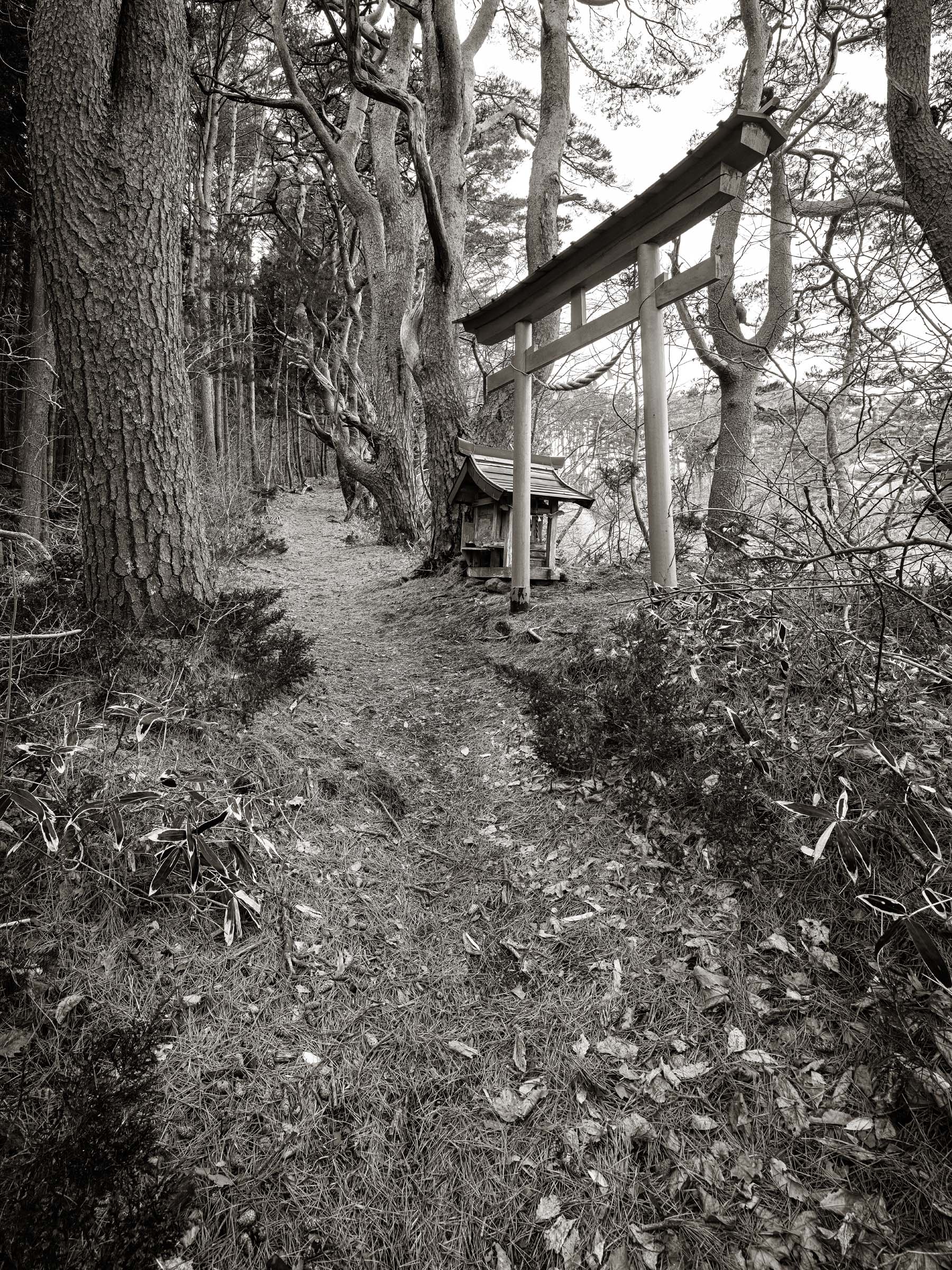
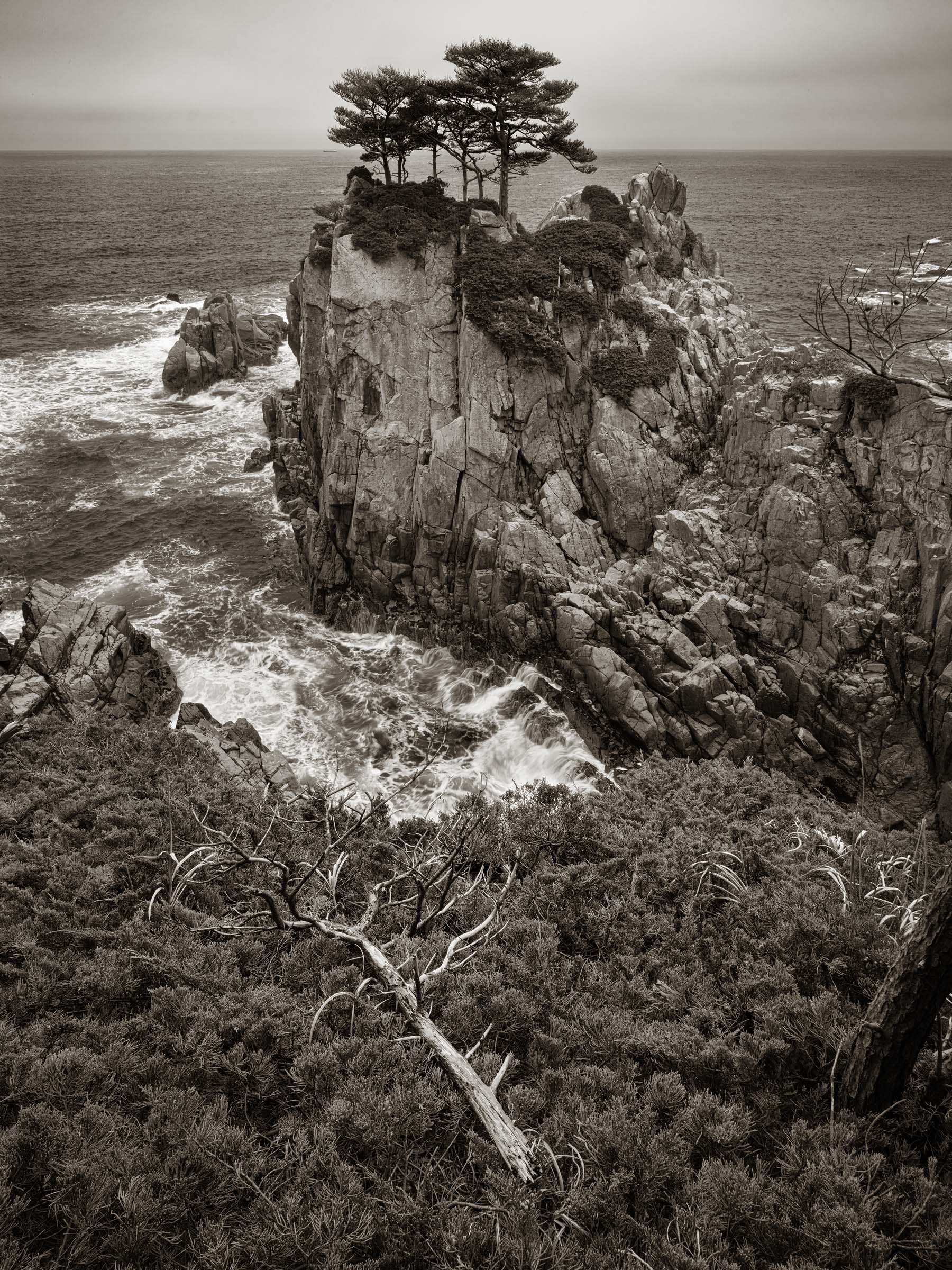
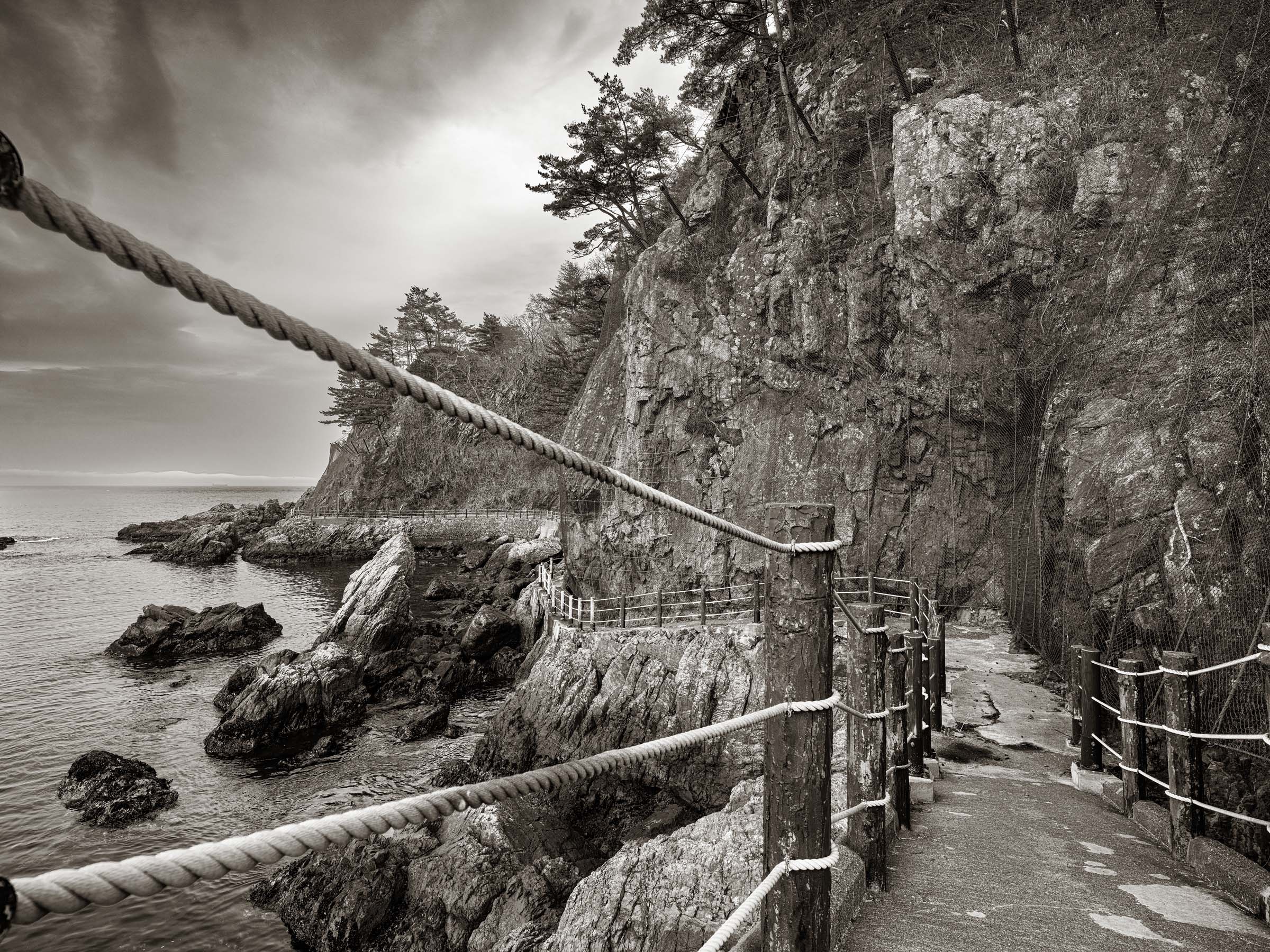
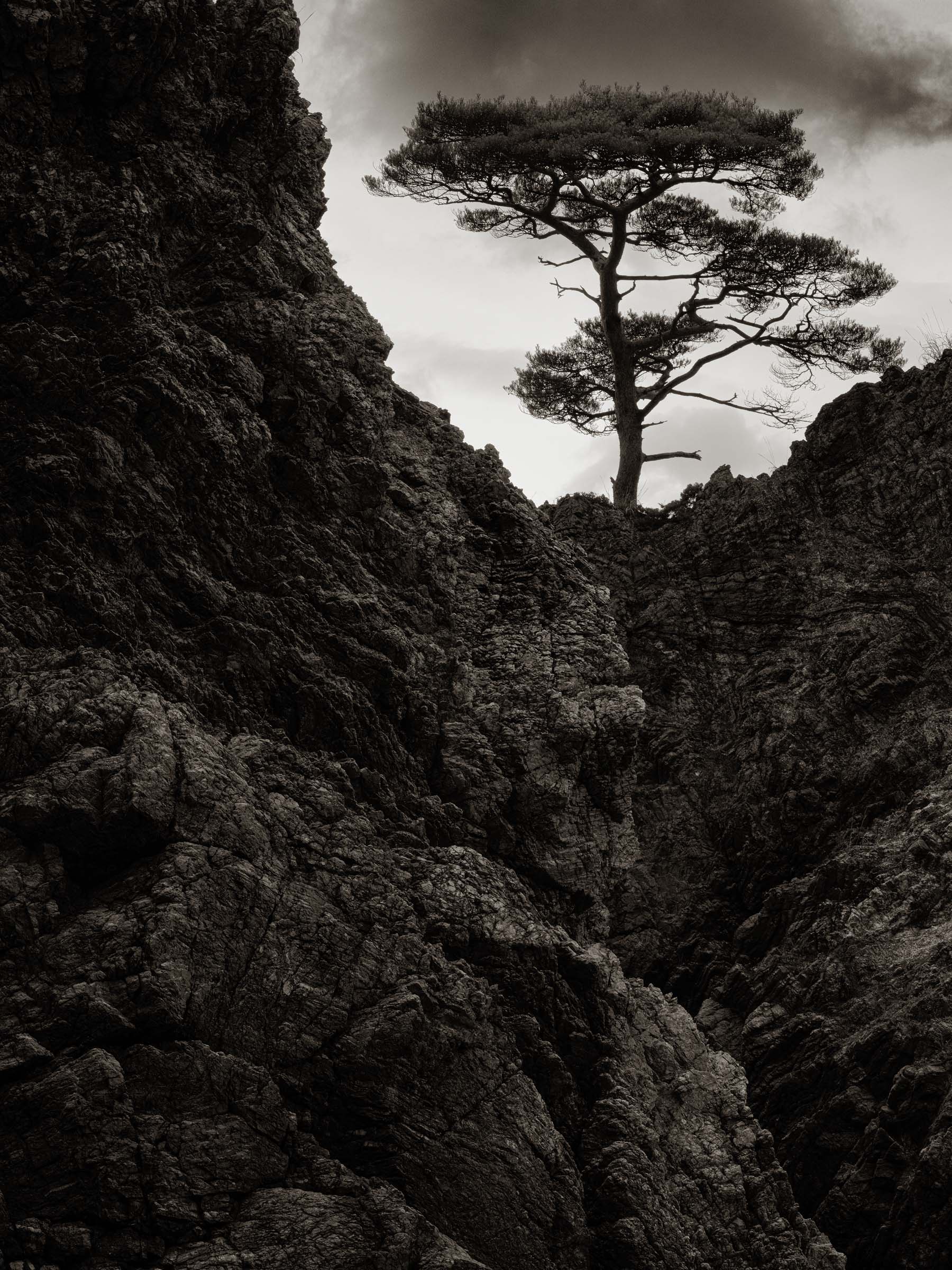
These rock formations were especially beautiful along the coast throughout my journey. The black jagged rocks which would range from low laying bunkers to tall statue like creations, some several hundred meters high, are volcanic and date back to the earth’s Cretaceous period some 130 million years ago. What would amplify the beauty would be the sight of vegetation and trees growing on these rock formations. Viewing this natural and seemingly impossible location for a tree to flourish one could imagine how people got the idea for creating bonsai gardens.
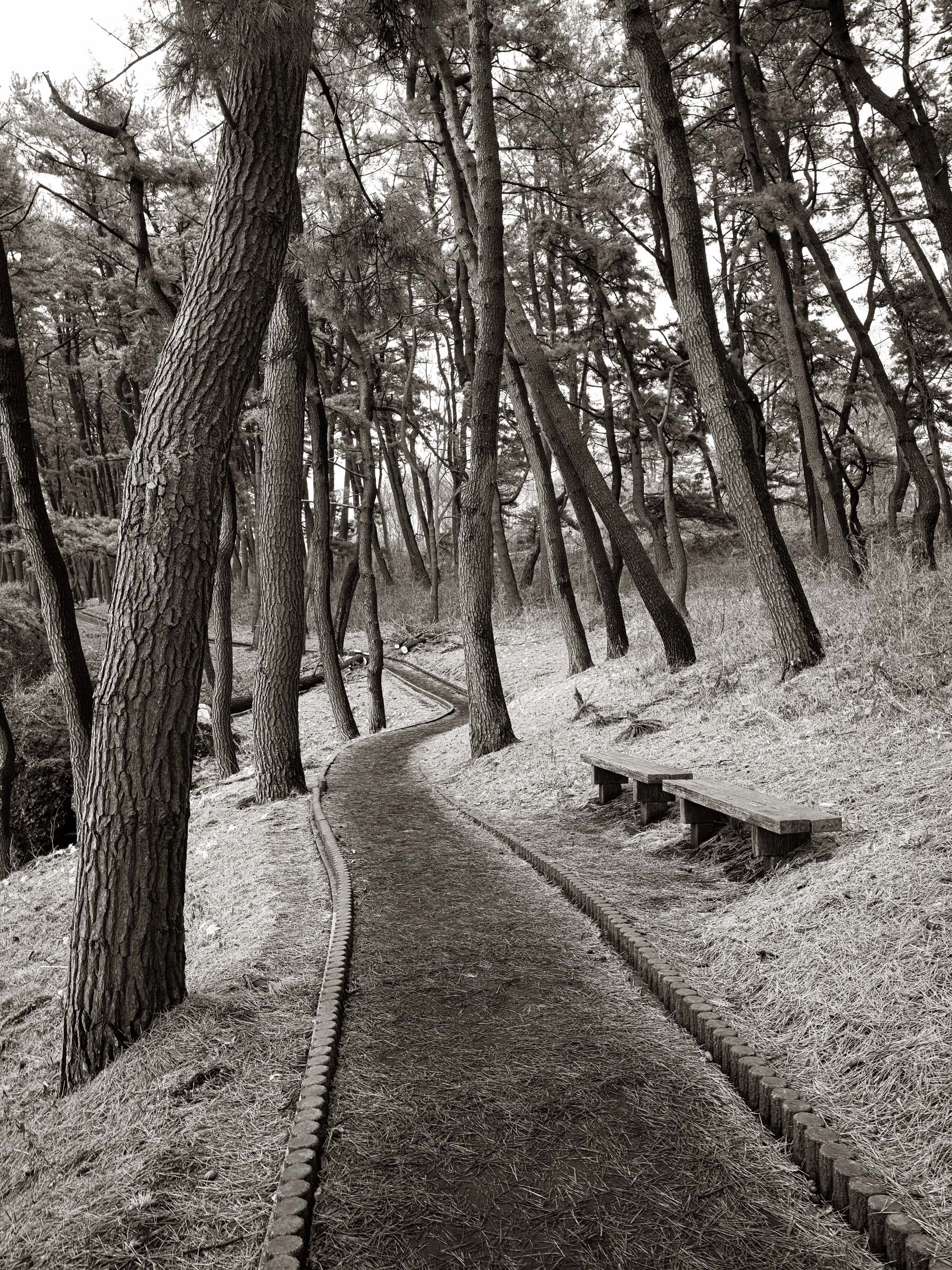
The only real concern for trail walkers was finding themselves face to face with a bear. Posted signs run all along the trail warning hikers to be on the lookout for the furry beasts. Every now and then I’d hear the sounds of jingling bells which some hikers would attach to their packs as alerts to the bears that a human was approaching. Though I didn’t have my own set of bells I did quite like the sound of them through the forest. I would have liked to have seen a bear as most of my days on the trail were quite lonely. A chance encounter with a forest friend would have been welcome. I knew they were about as I had to step around a large pile of excrement on the trail which could have only come from a large critter. On my final day of the trail I was walking along an area with the ocean on my left and high brush to the right when I heard some heavy rustling in the bushes. The sound was strong enough that I figured it was either a deer or, possibly, a bear. With my camera at the ready I slowed my pace and followed the sound. As I reached an opening in the foliage I spotted it. Much to my disappointment it was an elderly Japanese man trampling through the brush. Not sure if the gentleman had lost the trail and was just pushing on or simply liked the idea of finding his own path. Whatever the reason he got my heart racing for no good reason.
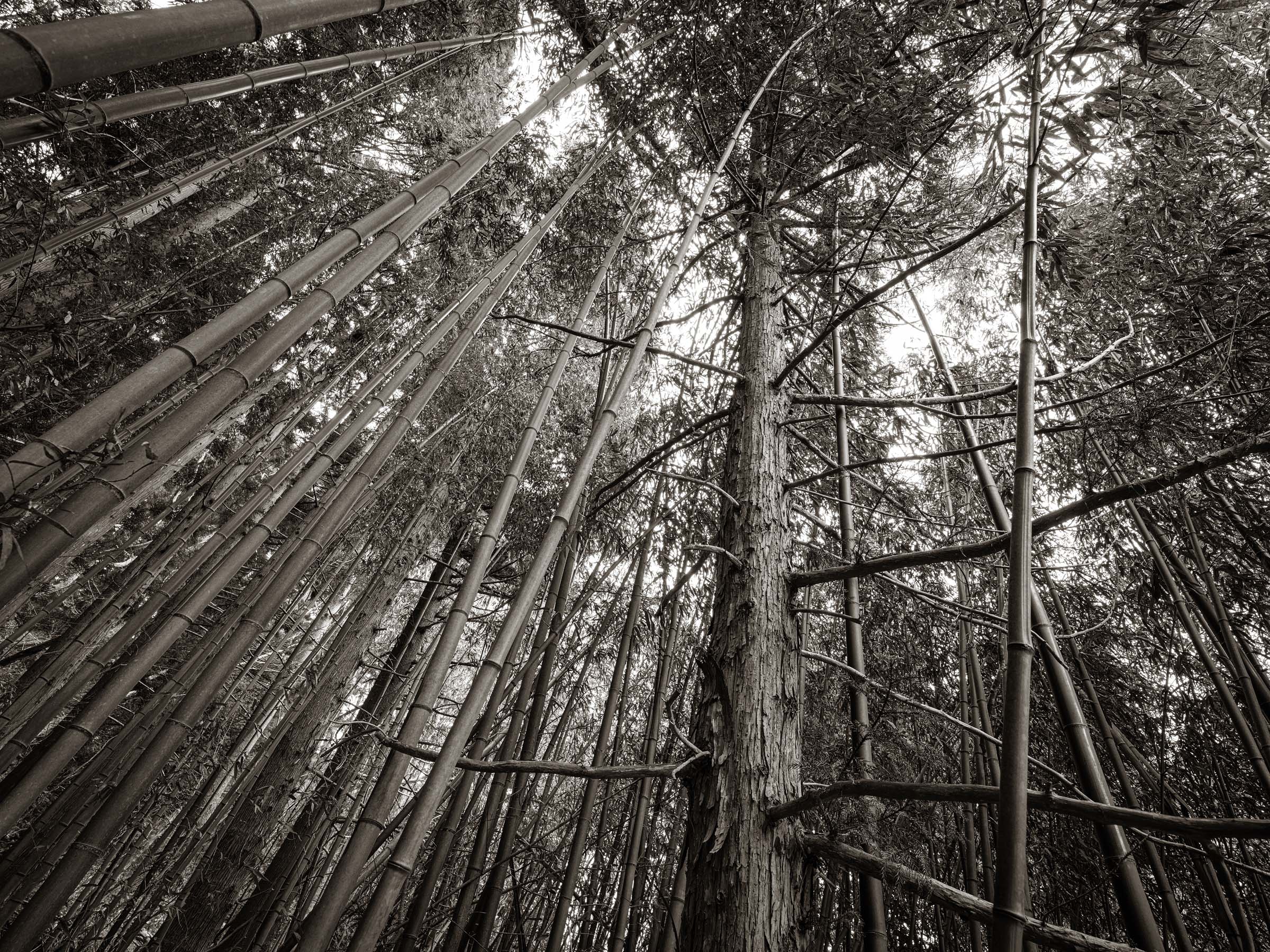
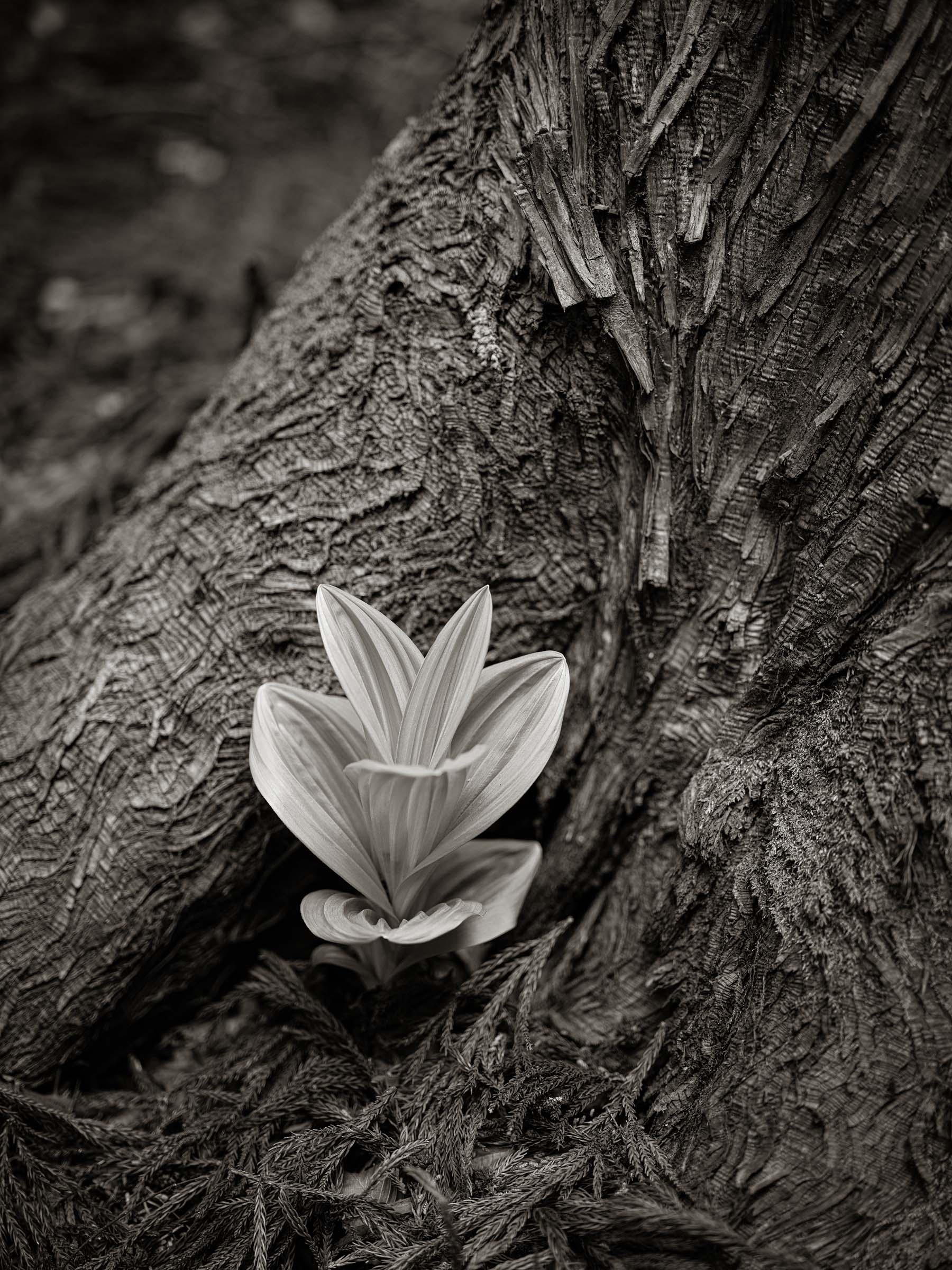
On any given day the trail could go from being next to the ocean along a path carved right out of a cliffside to then climbing high above the sea into a forest of cedars or into a lush valley where young lily plants, known as Kobai-keiso, decorated the trail. I was often amazed how the foliage would change so rapidly within a very short distance as I moved through various micro-climates. At one point I found myself in a grove of tall bamboo that appeared to be sheltering a few cedars. Since I was walking during early spring I was often in forests where the various types of deciduous trees had not yet blossomed. I could only imagine how beautiful those sections of the trail would be in the coming weeks.
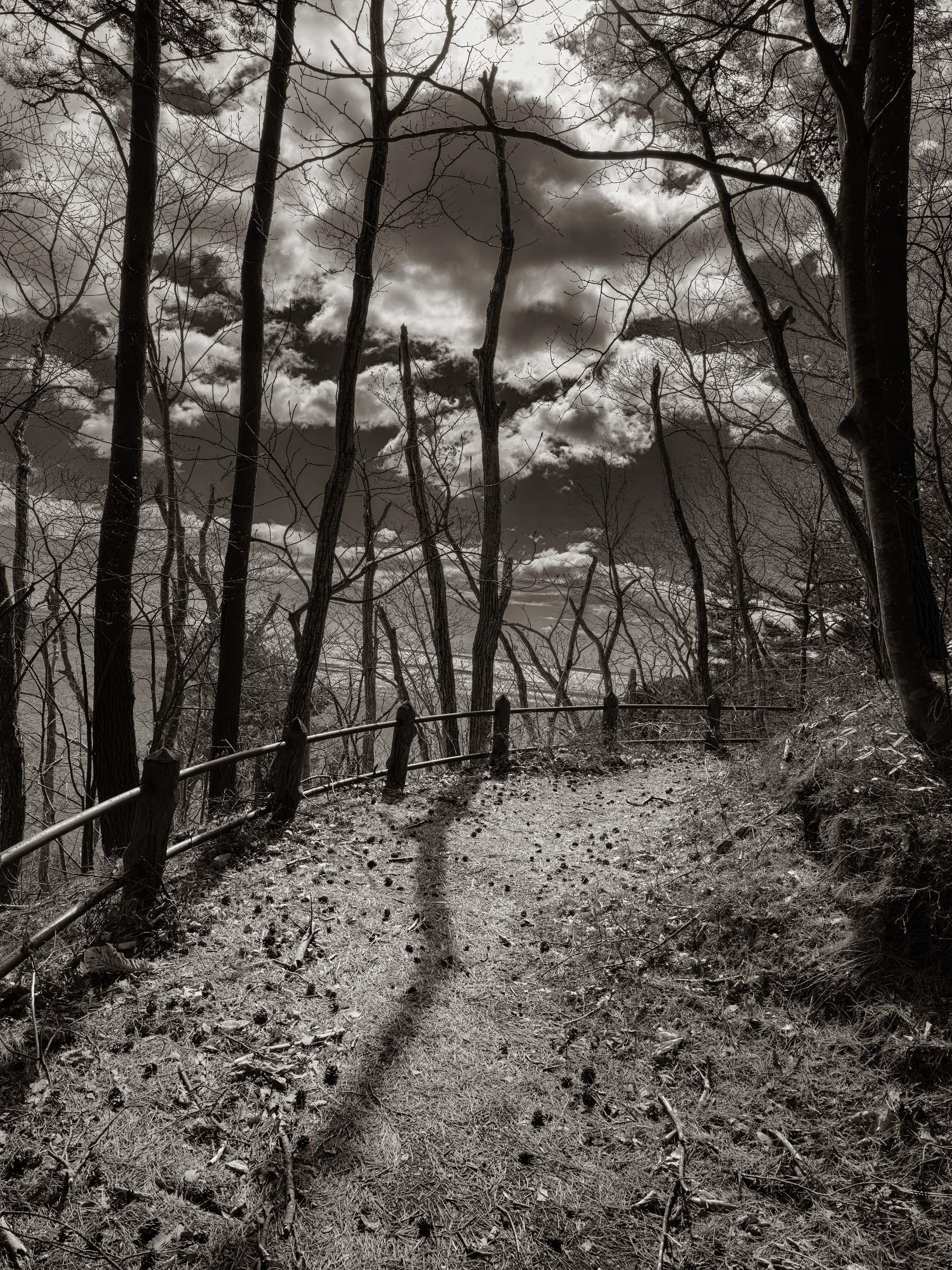
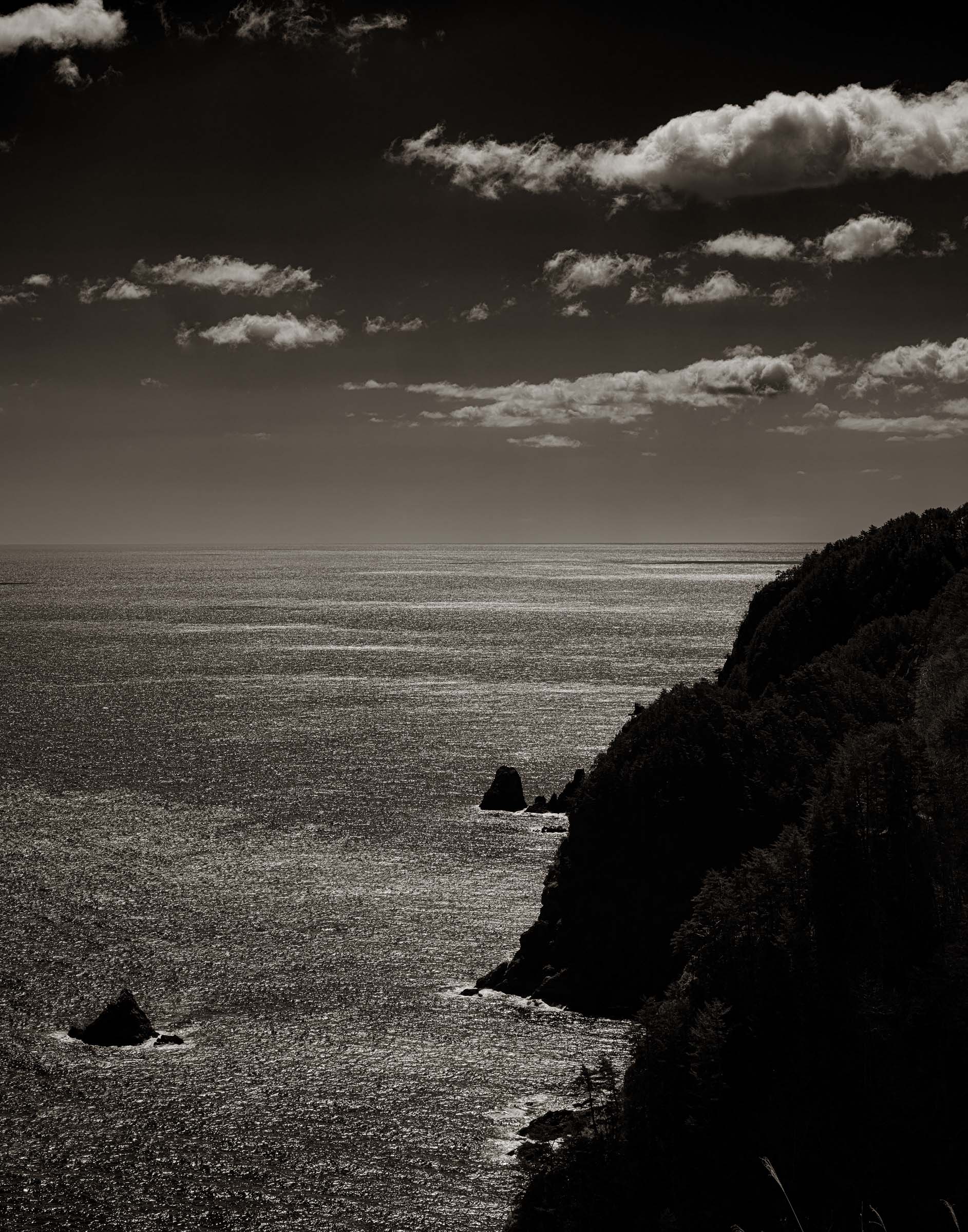
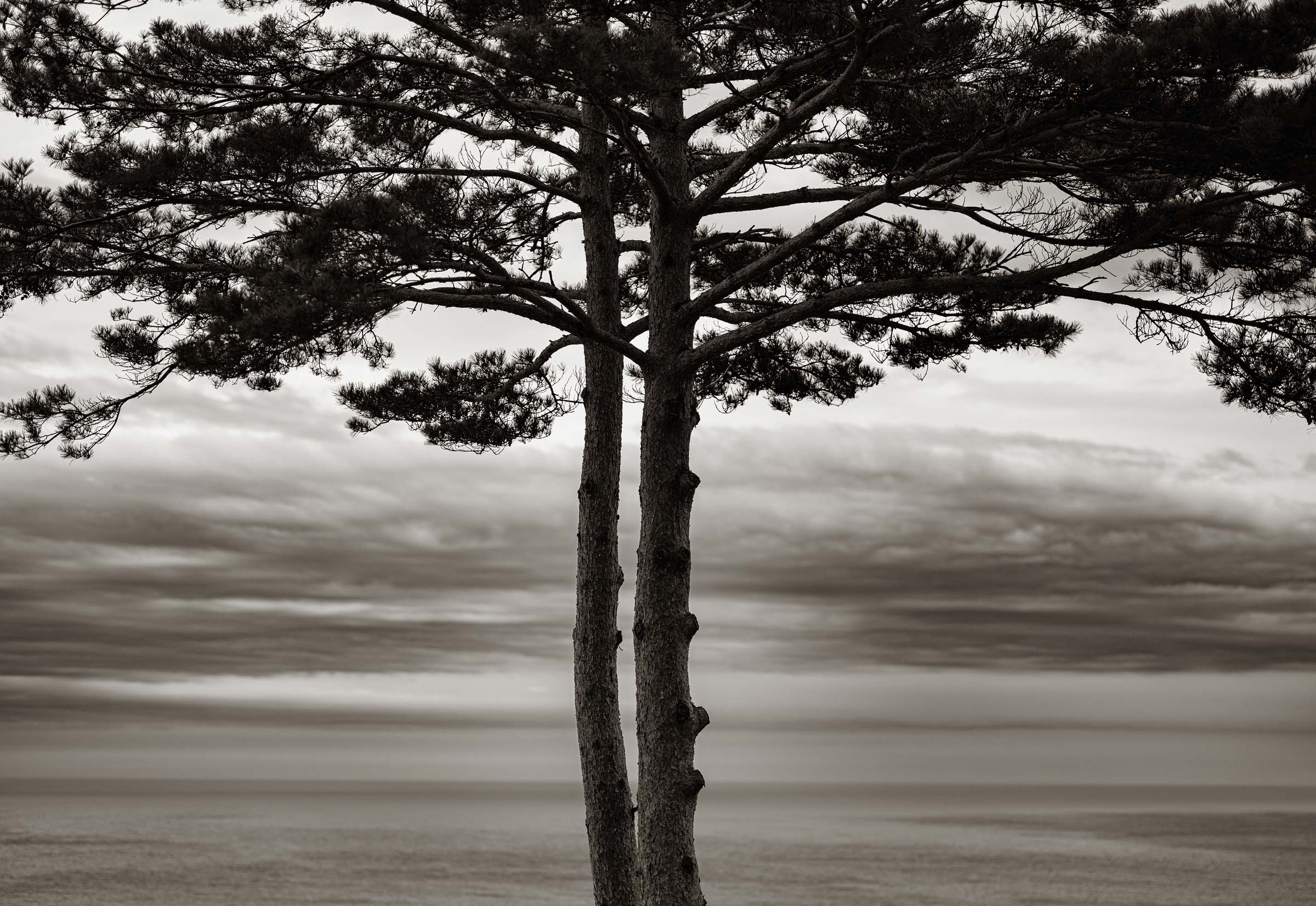
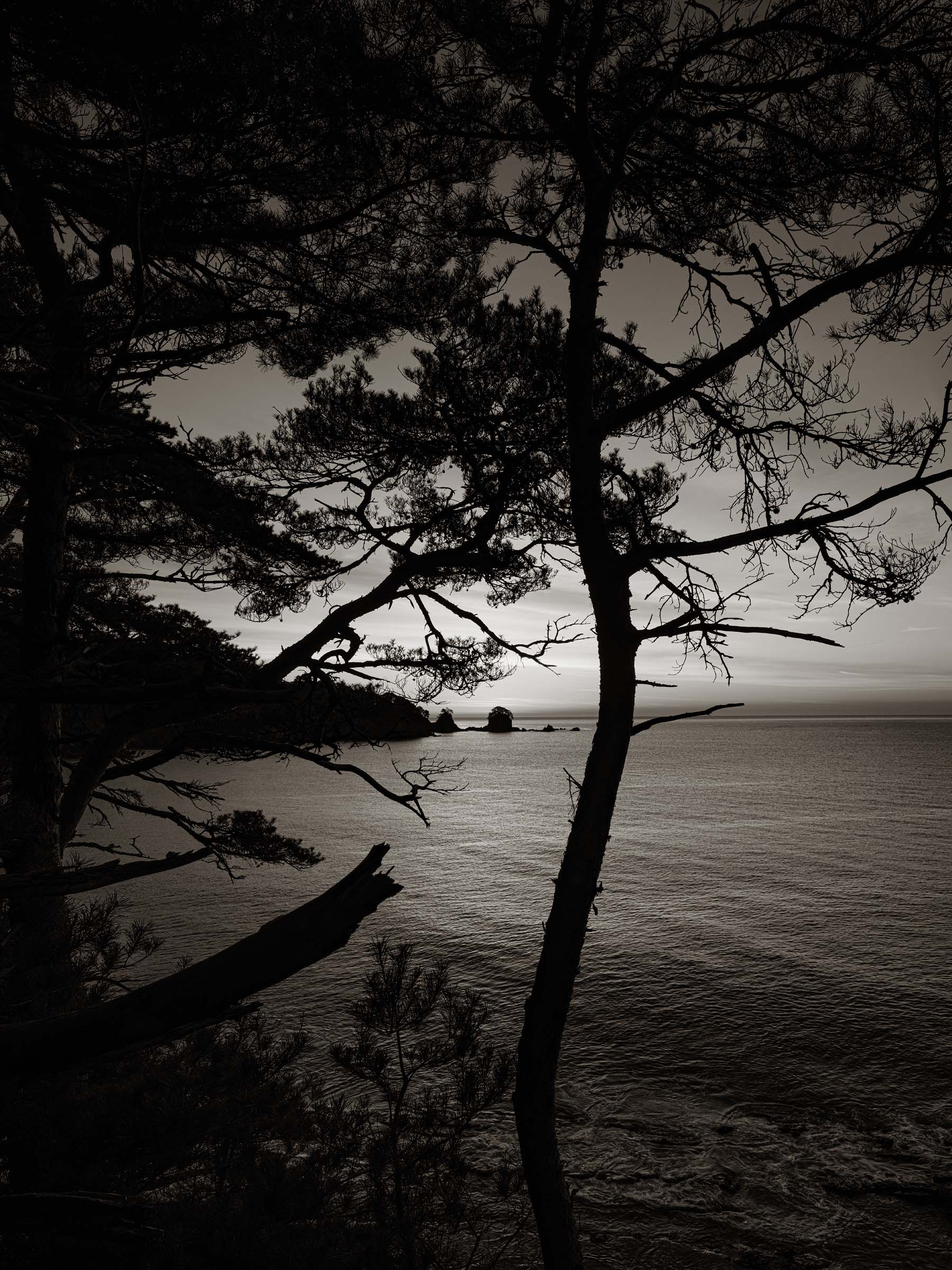
On my final day of trekking along the Minchunaku Trail I walked along Goishi Coast which is a beautiful six kilometer trail around Suesaki Peninsula. The cliffside walk provides for dramatic views of jagged rock formations sculpted by millions of years from an unrelenting sea.
As I neared the end of my walk I stepped out onto a point where I could capture a wide view of the coastline from north to south. As my eyes scanned the view I became fixated on one little pine tree that found itself rooted in the crack on one of the jagged rock formations high above the sea. I’m always amazed when I see life take hold in such precarious and seemingly inhospitable locations. As I worked to make a photo of this lonely plant struggling to survive I suddenly recalled one of my favorite lines by the actor Jeff Goldblum in the original Jurassic Park movie when he says, “Life finds a way.”
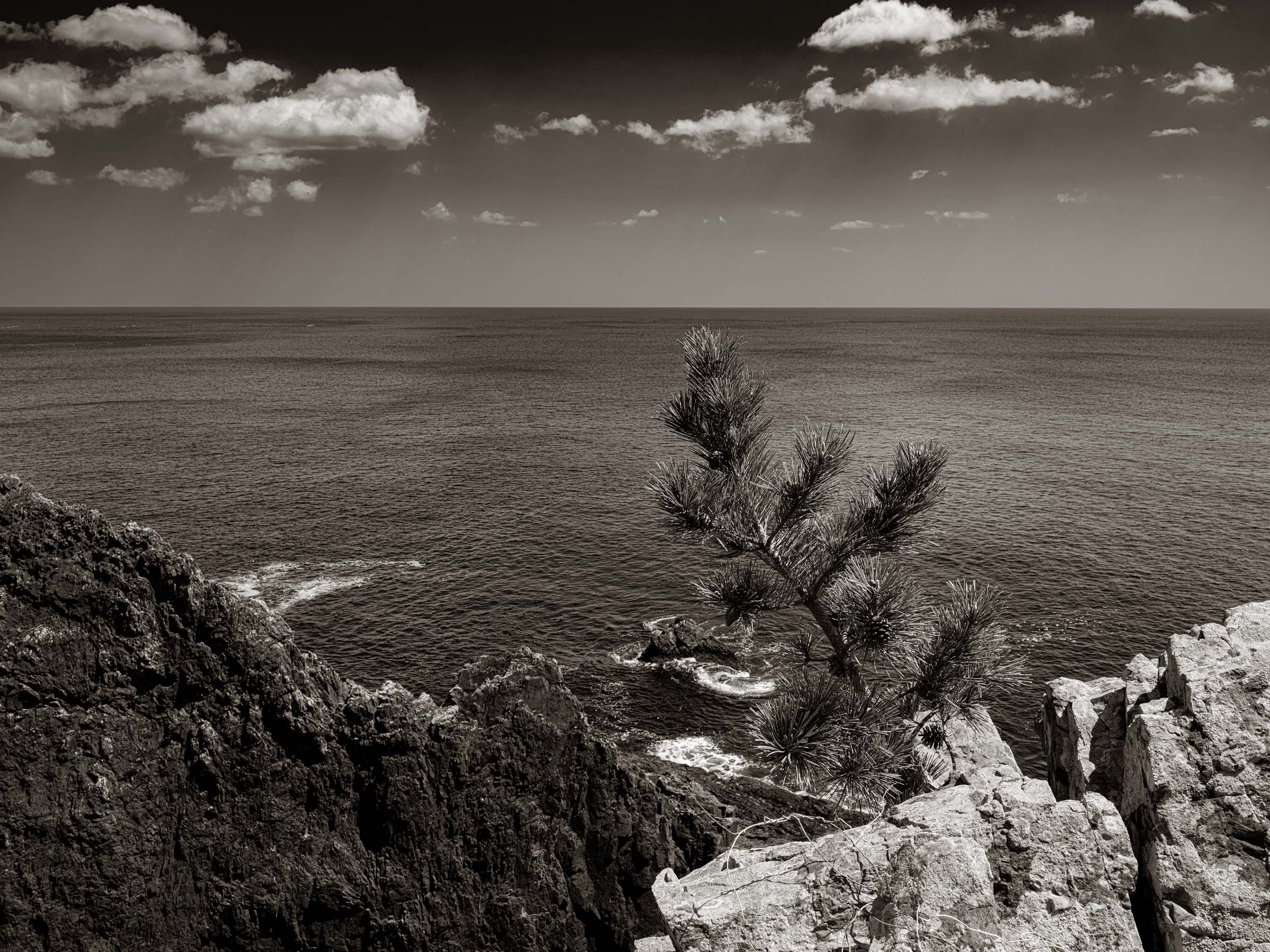
When I prepared for this journey I wasn’t sure what to expect. I anticipated it being a long lonely coastal walk where I could concentrate on my landscape photography and little interaction with the population in this fairly remote area of Honshu. And while much of the walk was exactly that I was touched by the warm hospitality of those I met along the way. From the family that gave me an apple at a market when the seller only sold in lots of five and I only wanted to buy one, to the construction crew along a remote road who cleared a path for me to get over a landslide, to inn keepers that prepared my meals and went to the effort of creating a diagram describing in English what each tasty item was on the plates. It was an experience I’ll carry with me for the rest of my life.
About my host: Walk Japan has created walking tours all over Japan. Some are lead by a guide while others, such as the one I completed, is self guided. For more information about the various walks they offer visit their website at https://walkjapan.com/




It looks and sounds like it was a really great time and experience, thank you for sharing it. And, once again I have to say, your images are just outstanding and I am glad that you presented them in B&W. As I have said for many years, when it comes to B&W, no body does it better…