
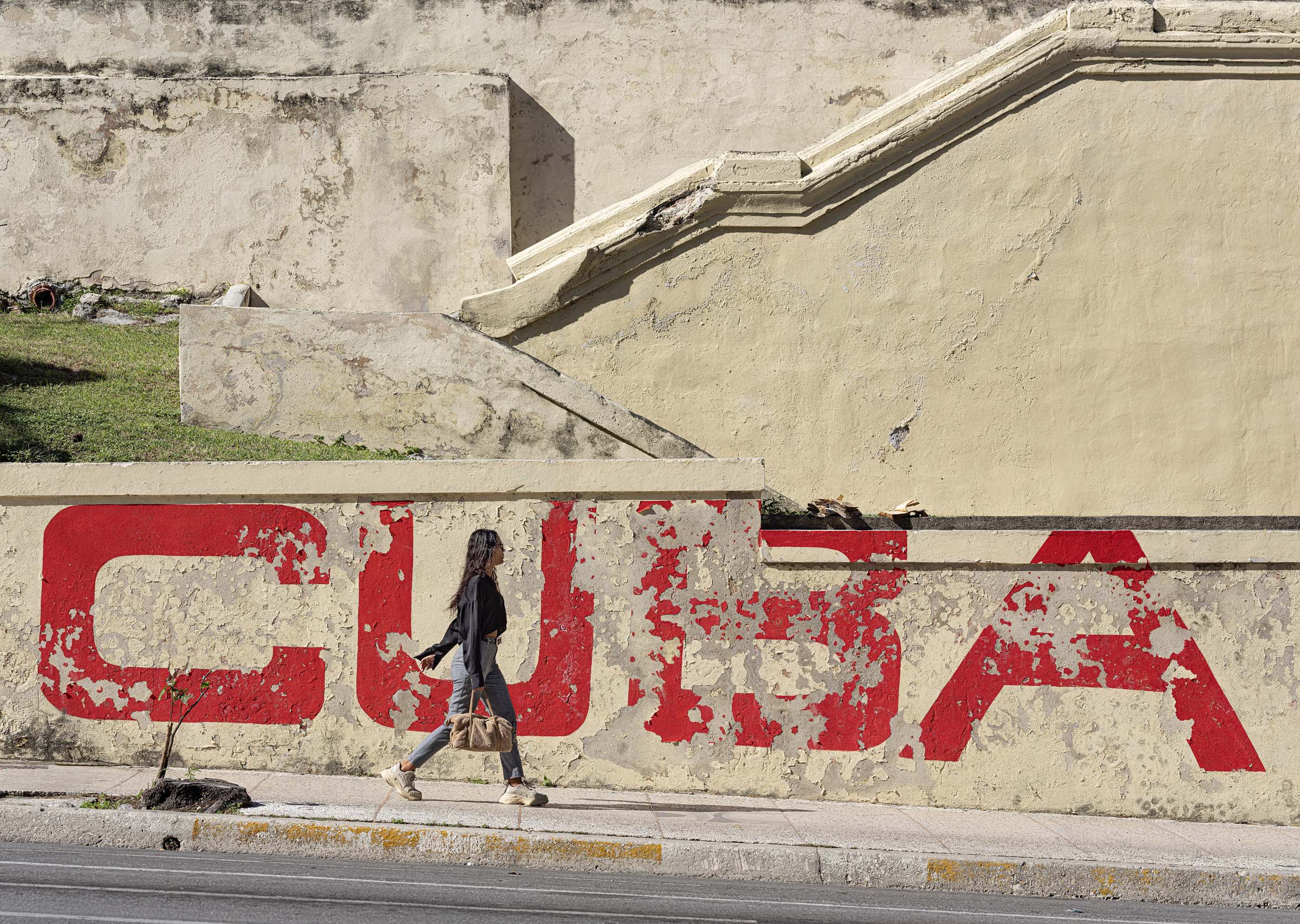
Cuba’s Heart
Despite years of challenges due to American economic embargos the people of Cuba pursevere and offer warmth and hospitality to visitors
There was a time when American citizens were not allowed by the US government to travel to Cuba. However, under the Obama administration the restrictions were relaxed, somewhat, and Americans could visit the island nation. So when the opportunity presented itself for us to do a story I agreed whole heartedly that we should go.
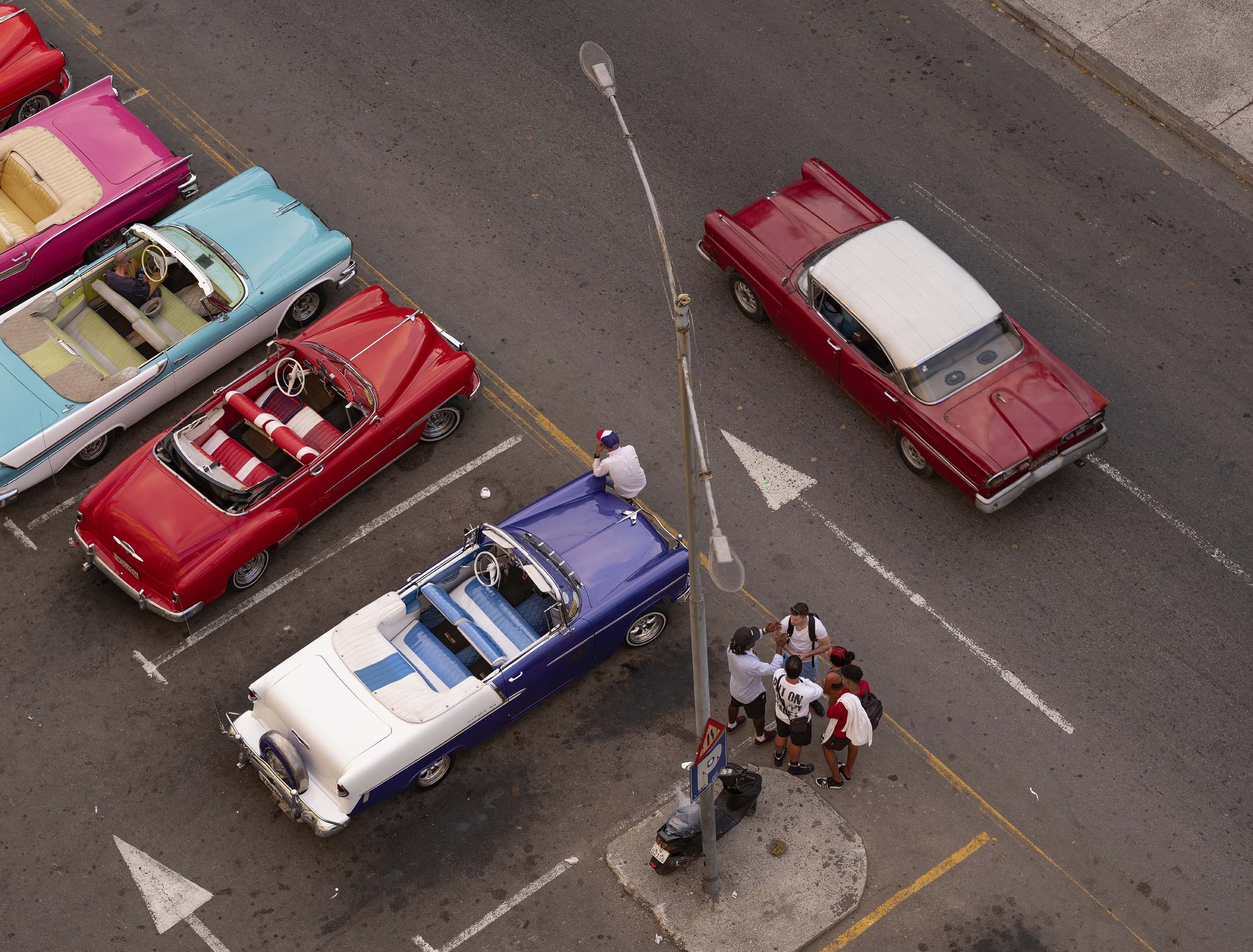
Classic American automobiles kept in near pristine condition in downtown Havana.
After applying for the visa we began to have second thoughts. The Cuban economy was in a bad state and the electrical grid was often failing for the entire country. Newspaper articles were predicting that the government was on the verge of collapsing. When we presented our concerns to our guide and fixer, Christopher Baker, who has spent years covering the island as a writer and photographer, his response was, “Don’t worry about it. That stuff has been going on for years.” I thought, “Okay, good enough for me. Let’s go!”
Upon arrival at Havana’s Jose Marti International Airport my thoughts turned to how would I be treated in this country where the US has kept them isolated for so many decades. Surely they will harbor deep resentment towards their northern neighbor. And while part of that statement may be true, at least in terms of how they view the US government, it didn’t affect how I was treated on a personal level. From the moment I left the plane I was treatment with kindness and a gracious form of hospitality. This welcoming spirit followed me for our entire trip.
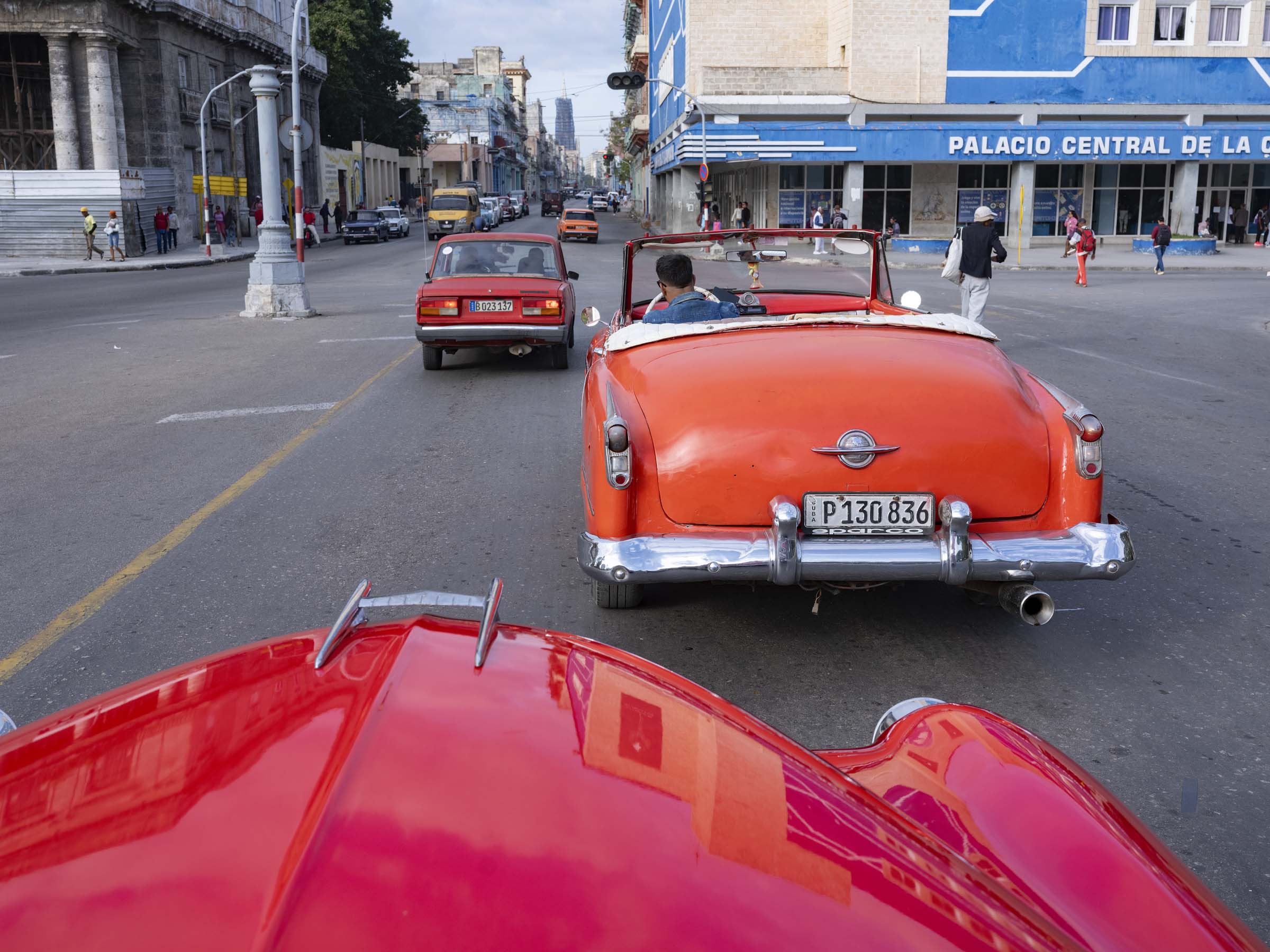
Cruising in downtown Havana.
One of the first things any visitor to Cuba will notice is all the classic American automobiles from the 1950s. The owners of these vehicles cherish them as if they are members of their family. Keeping vehicles like these running well and used on a daily basis is no easy feat. Especially when parts supplies have long dried. Like so many things I observed in Cuba the people find a way to make do by either manufacturing what they need in small garages or adapting parts from newer vehicles. In most of the cars I rode in the look, feel, and even the sound of the car sounds authentic. Then I learn from the owner that the engine in the seventy-year-old car is actually a Hyundai motor. Life finds a way as Jeff Goldblum said in the movie Jurassic Park.
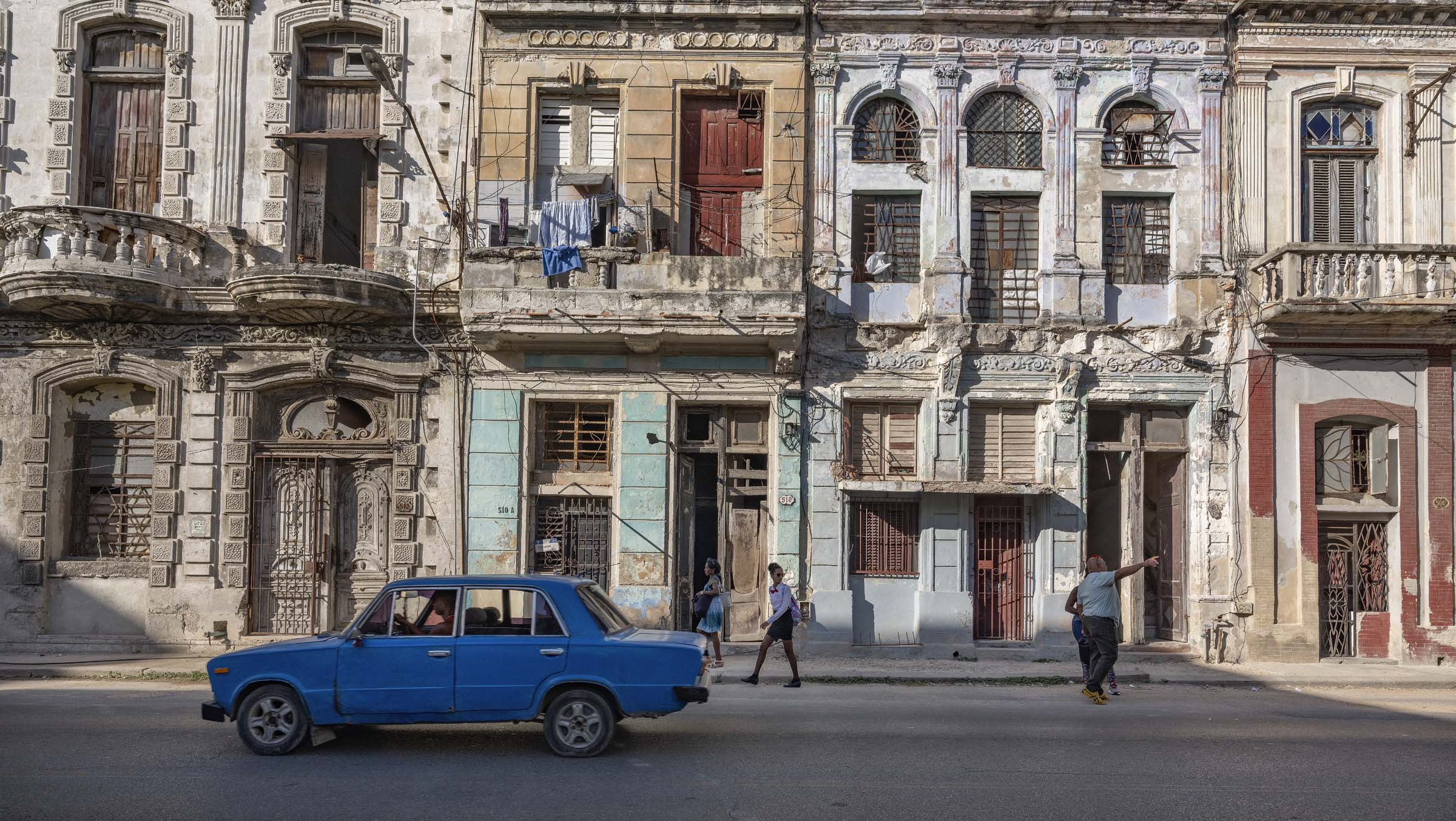
Downtown Havana
Our first few days in Cuba were spent wandering around Havana. Because of limited investment and resources many of the buildings are crumbling right before your eyes. While this presented wonderful textural backgrounds for me to photograph it was also quite sad to see. The areas frequented by tourists there were folks dressed up in period costume puffing away on cigars and buskers entertaining visitors with their Cuban classics.
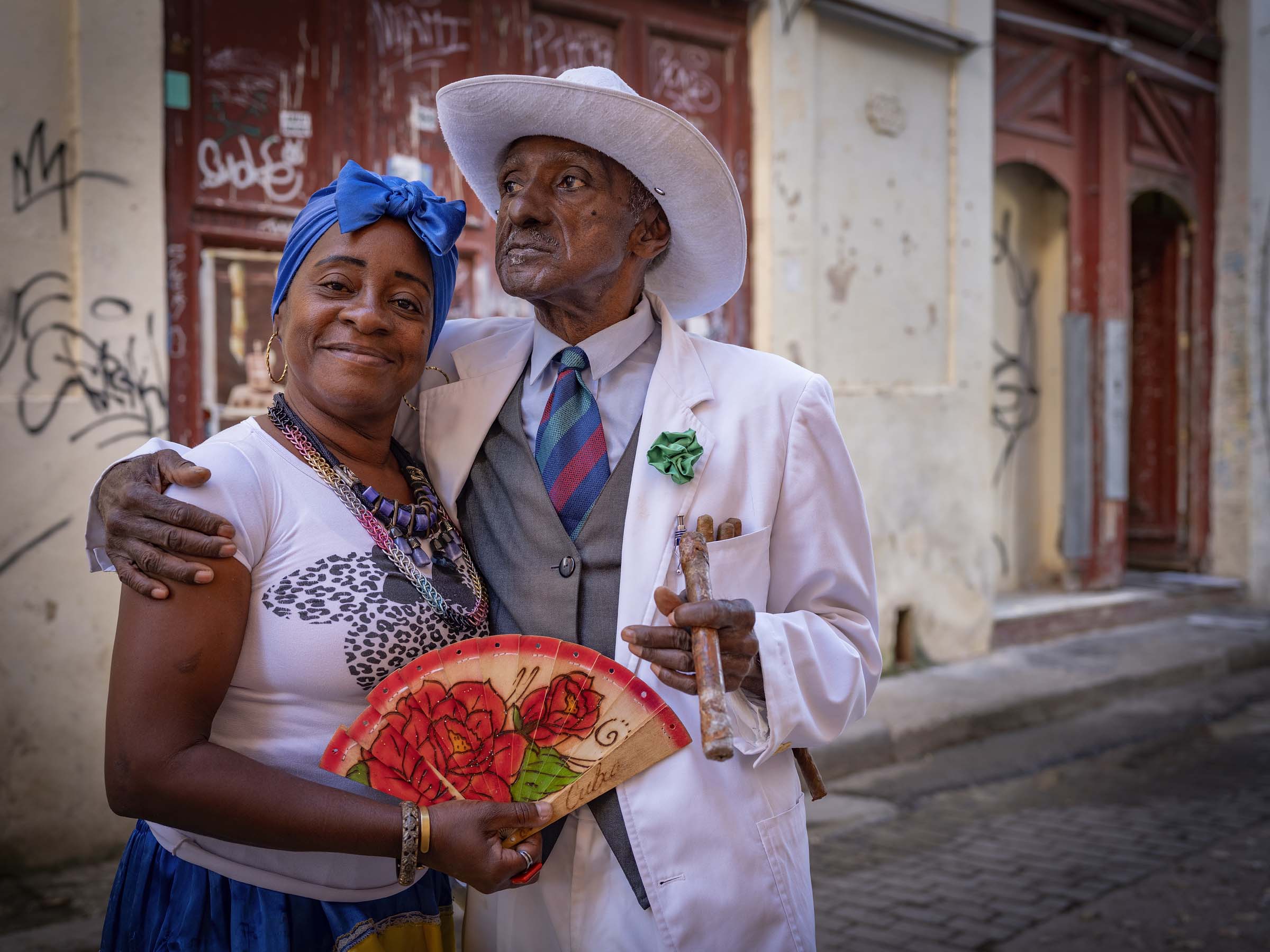
Dressed in period costume a Cuban couple offer tourists a glimpse into its Colonial past.
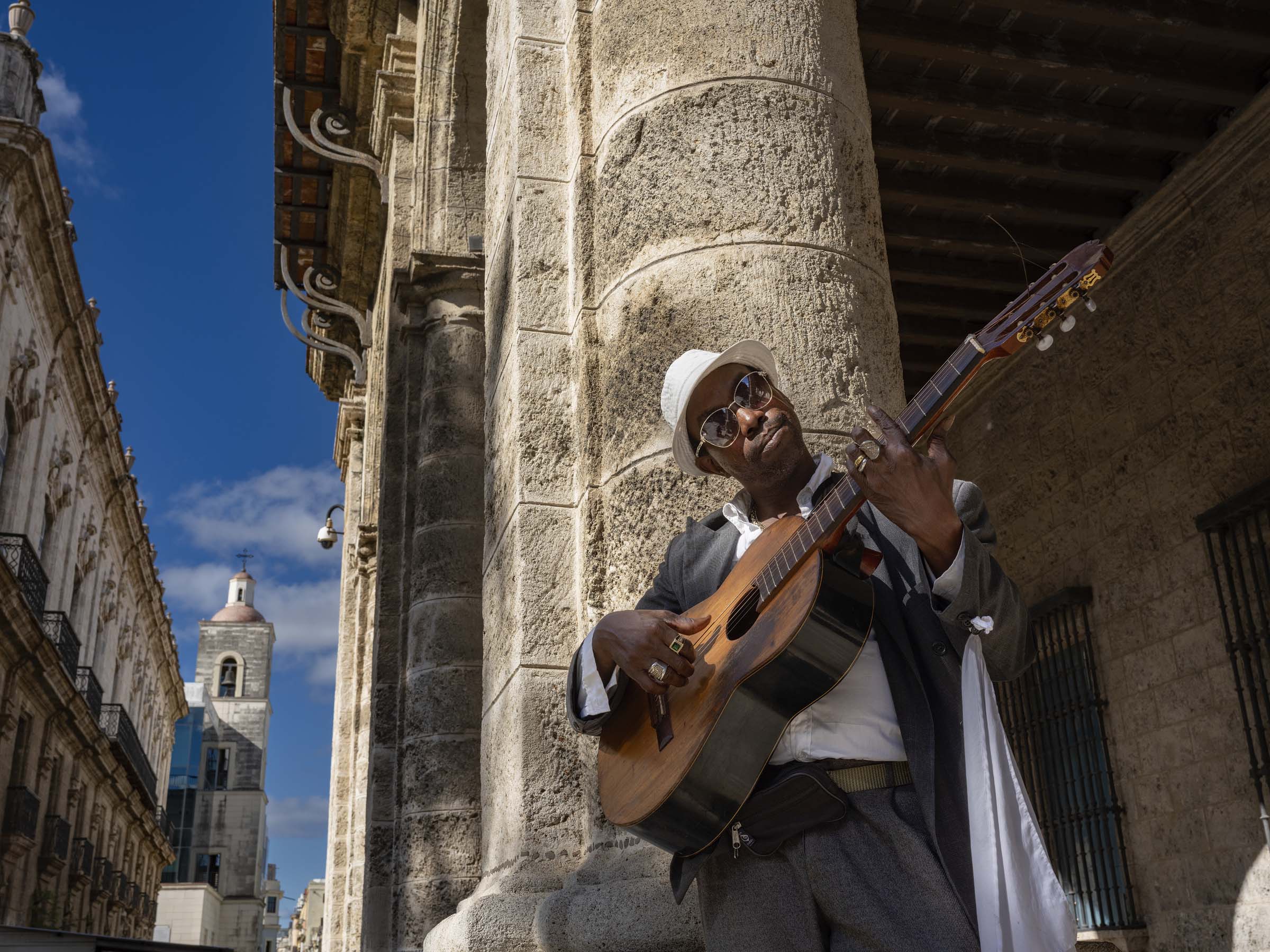
A street musician serenades visitors in Havana’s historic downtown district with classic Cuban songs.
As we ventured into residential areas we would be welcomed into tenement buildings where we could catch a glimpse of how local people lived. Daily life for the average Cuban is not easy but they are often welcoming and happy to share a smile and a chat. One ice-breaker I carried with me was a huge bag of Tootsie-Pops which is a hard candy lollipop with a chewy chocolate center. I mainly brought them to share with the children but soon discovered the adults loved them as well. I should have brought more.
In one of these tenement buildings I met a 9-year-old boy named Christopher and proceeded to photograph him standing on staircase that led up to his family’s home. I asked him if he liked baseball which he replied in the affirmative so I reached into my camera and revealed a brand new Rawlings baseball. Christopher literally took a breath and held his heart. I had no idea such a small gift would receive such a reaction. Chris, our guide, later told me that the young fellow had probably never seen a brand new baseball before.
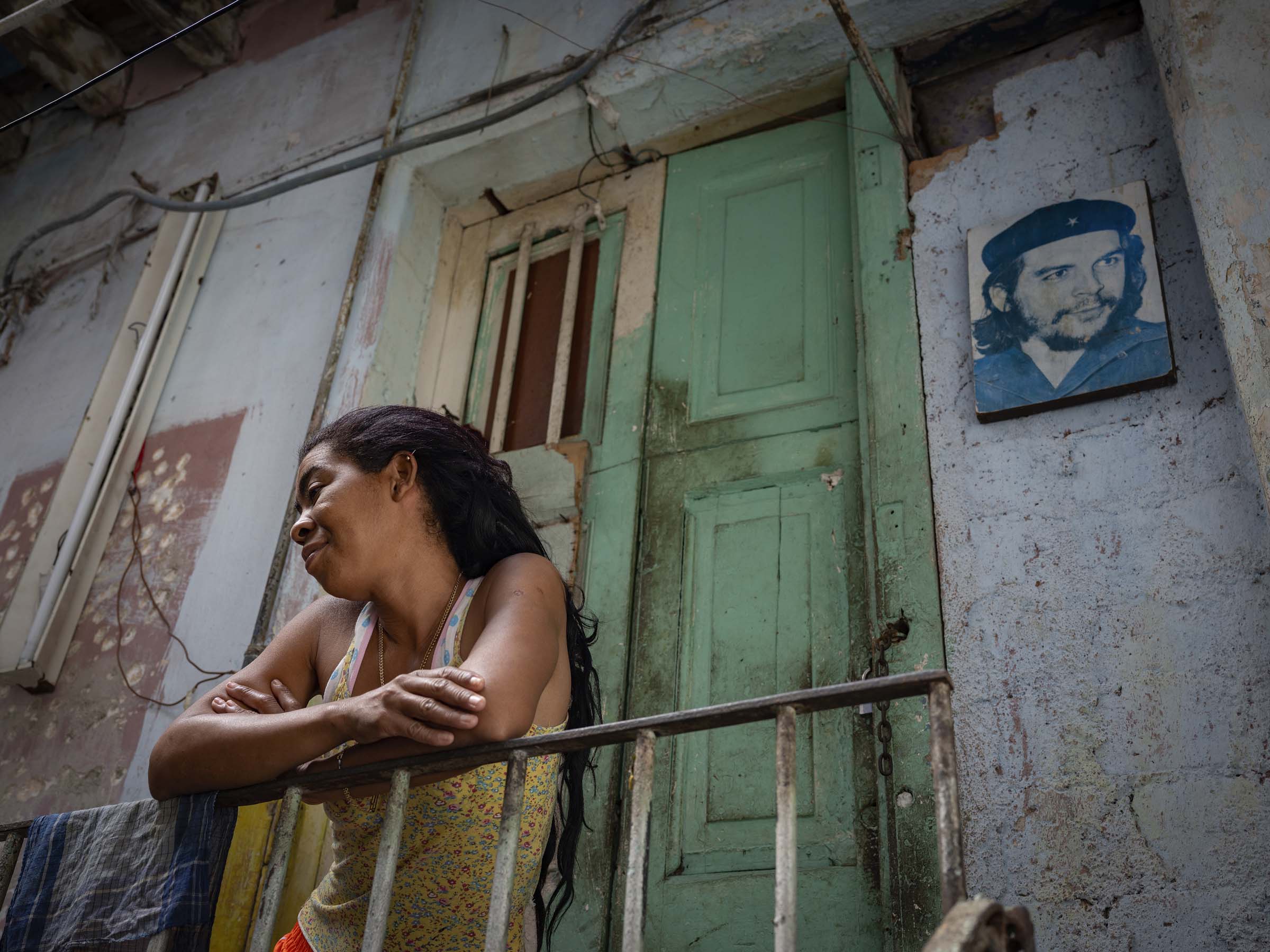
Portrait of a resident in one of Havana’s downtown tenament buildings.
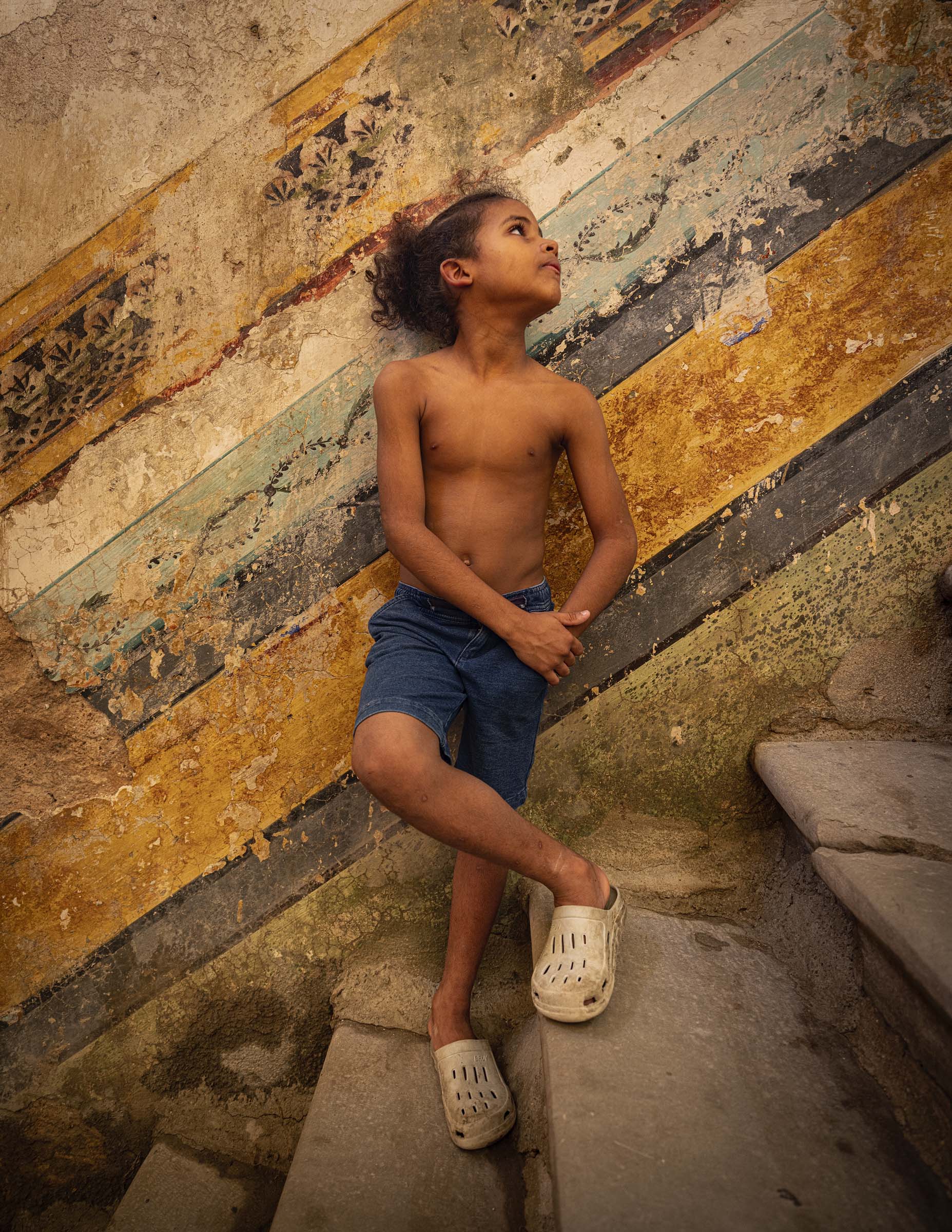
Christopher, 9, on the stairwell of his Havana tentament building.
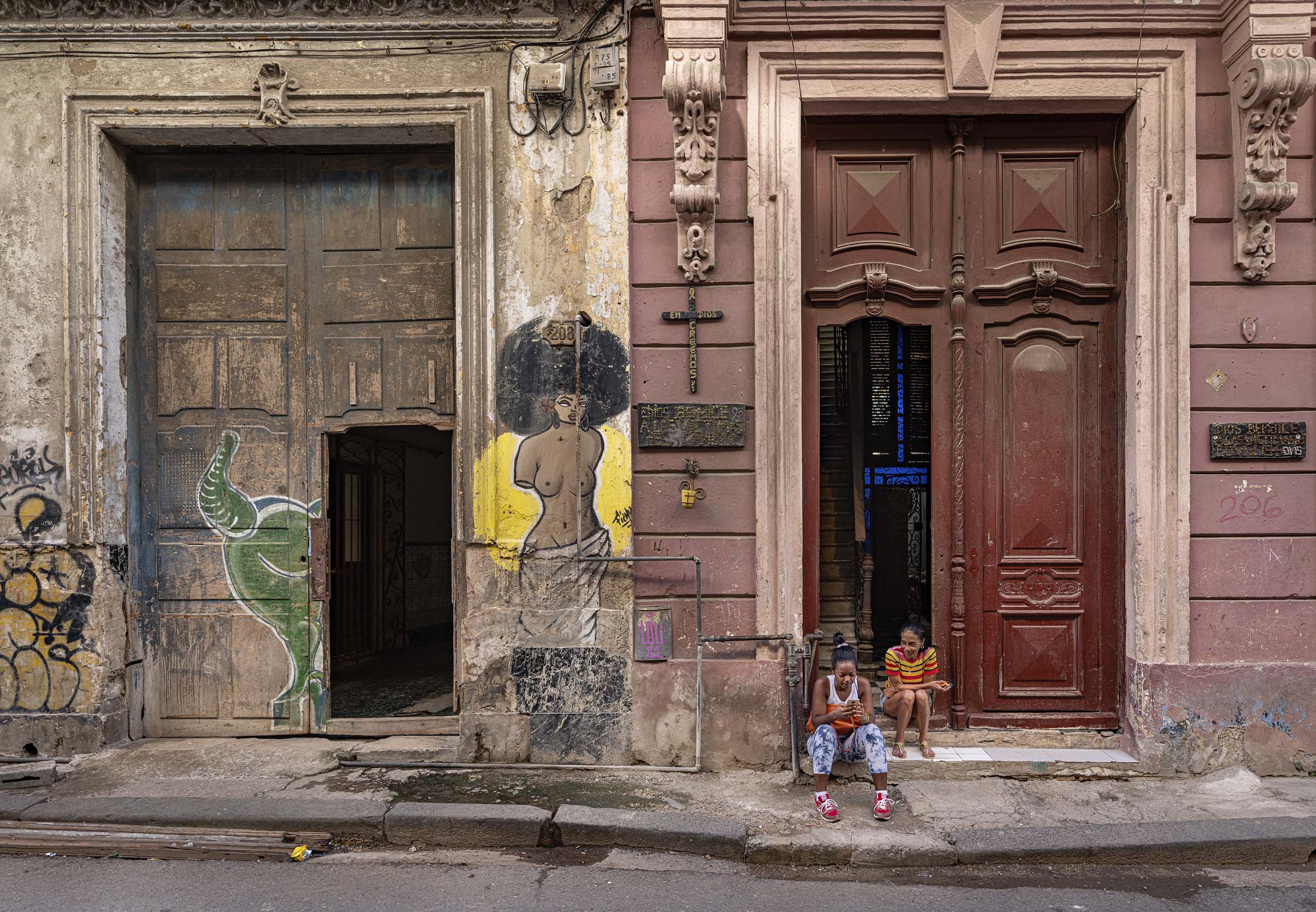
Havana residents sit outside their tentament building.
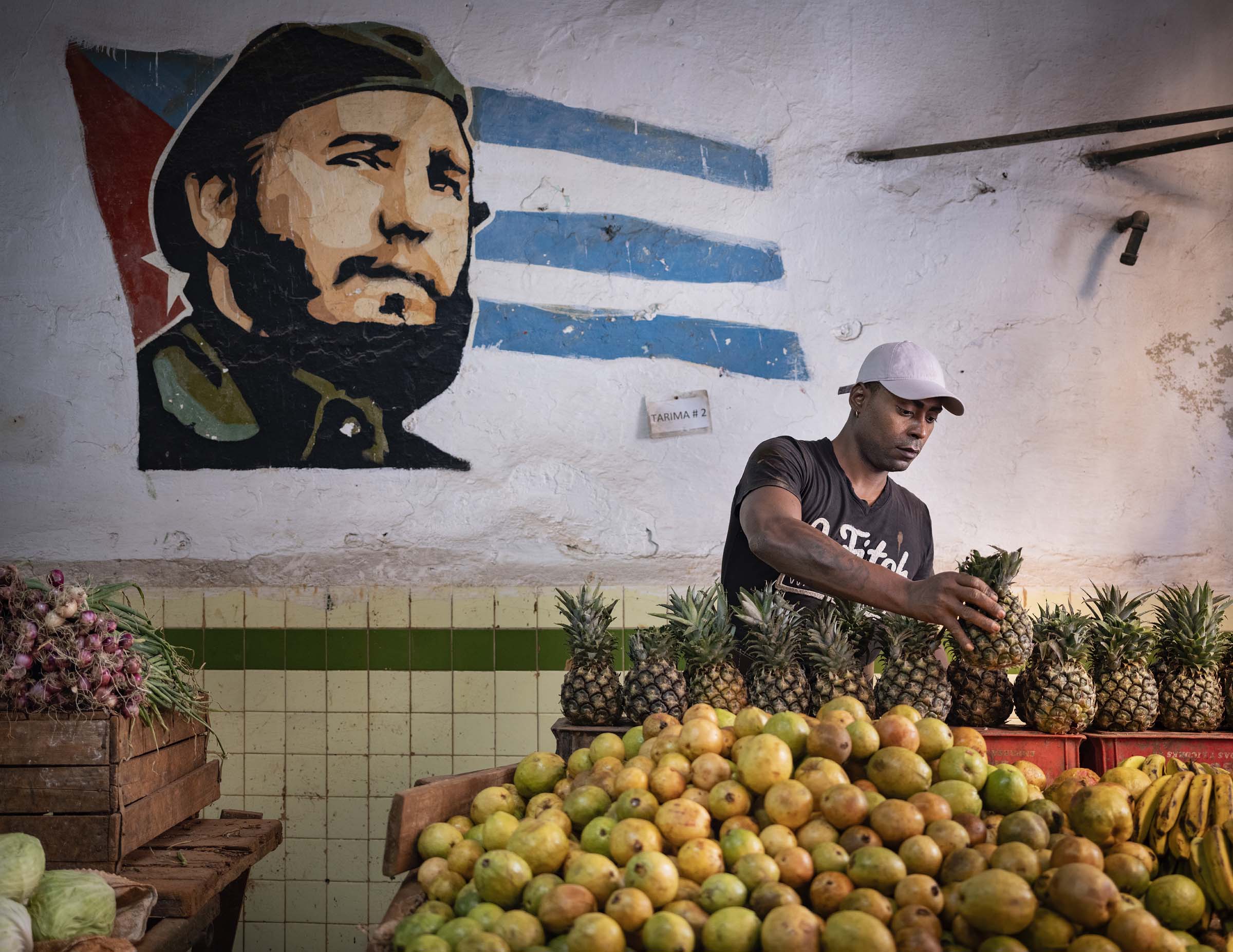
Havana neighborhood market.
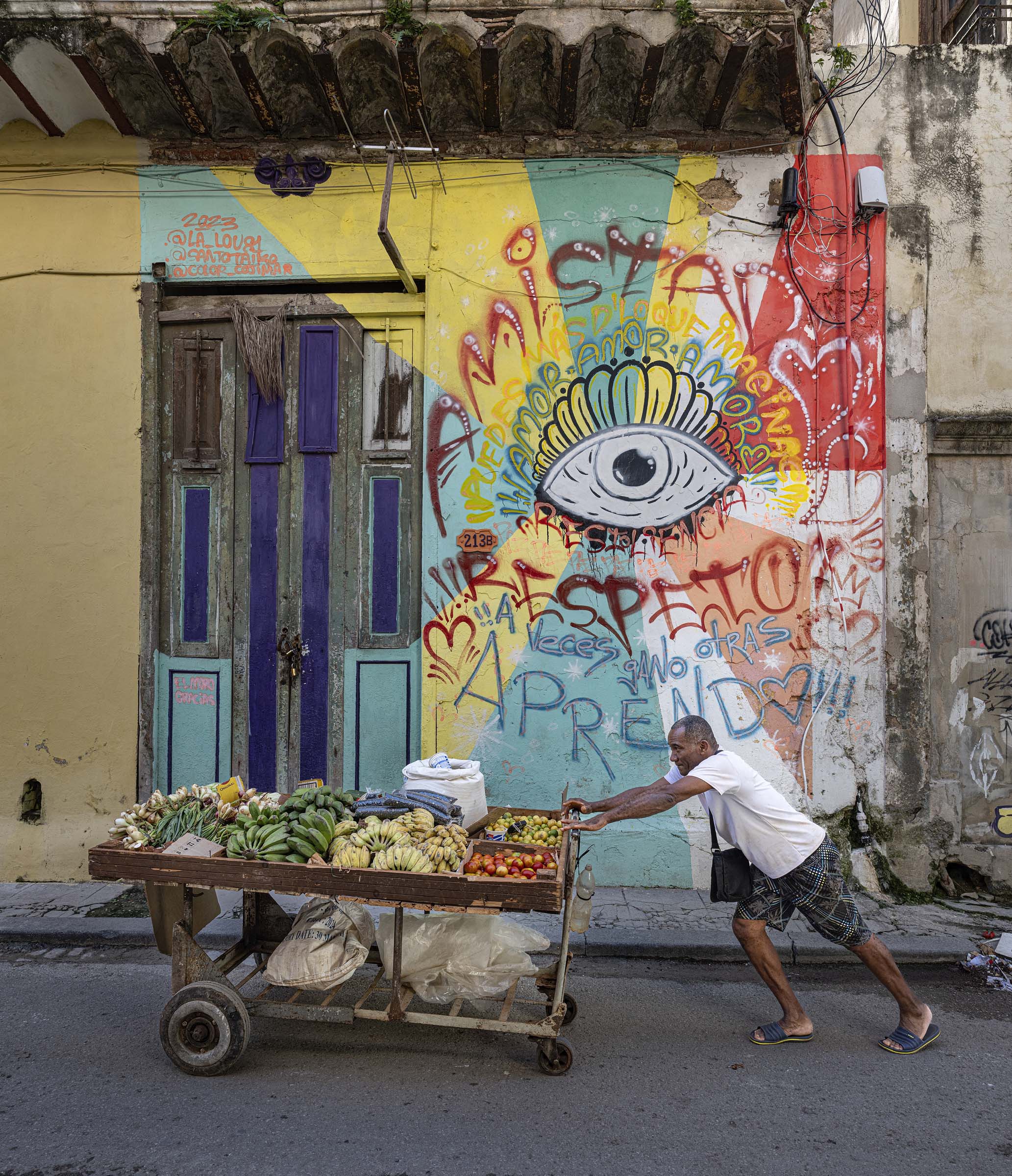
A fruit and vegetable seller pushes his cart through central Havana.
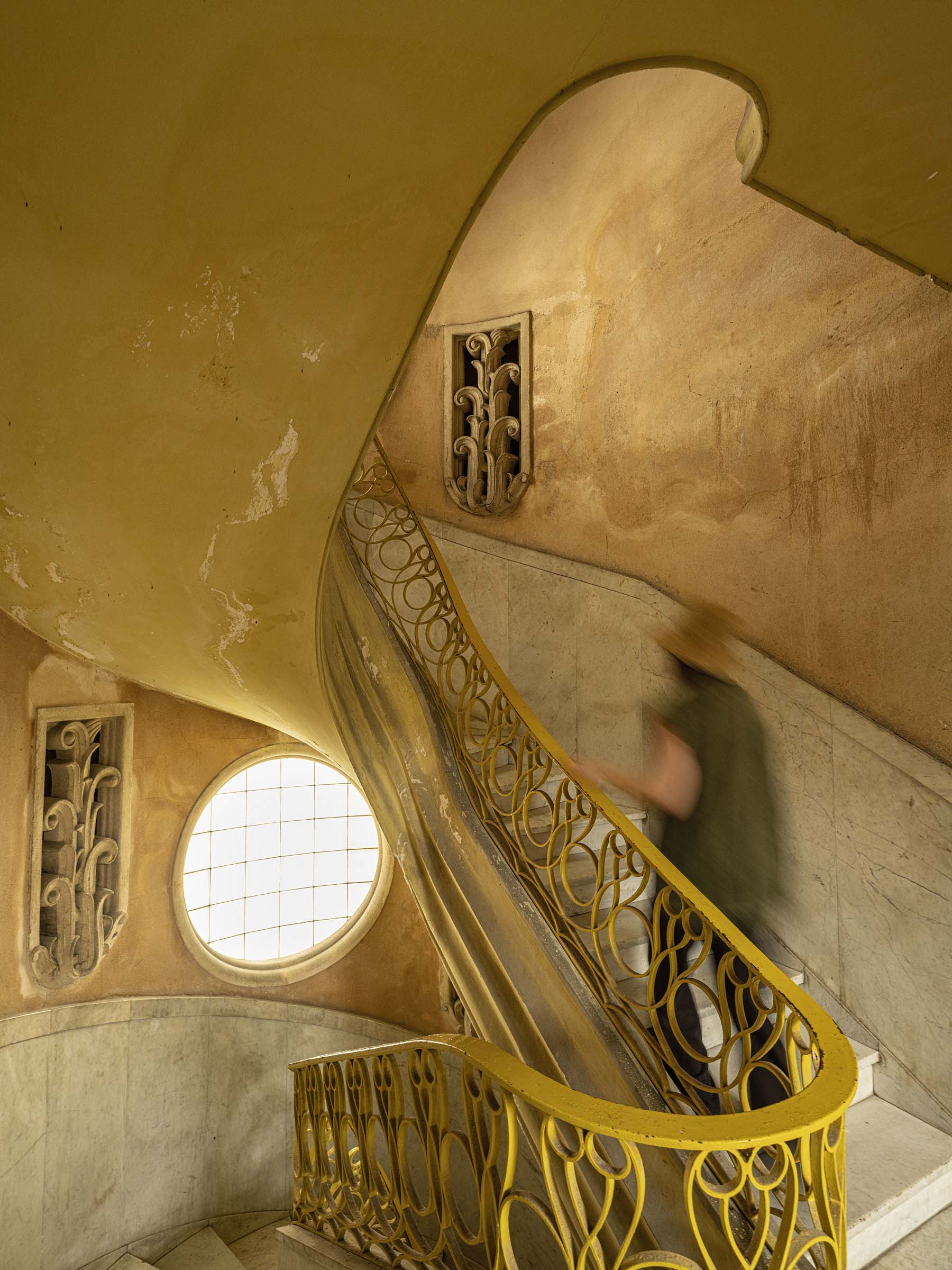
Interior view of an art deco style apartment building.
As we continued to wander we found ourselves in front of the El Floridita which was a popular hangout for the American author Ernest Hemingway prior to the revolution. Hemingway’s apparently loved their Papa Doble cocktail which was a daiquiri with a shot of rum. I, of course, couldn’t pass up the opportunity to try this drink.
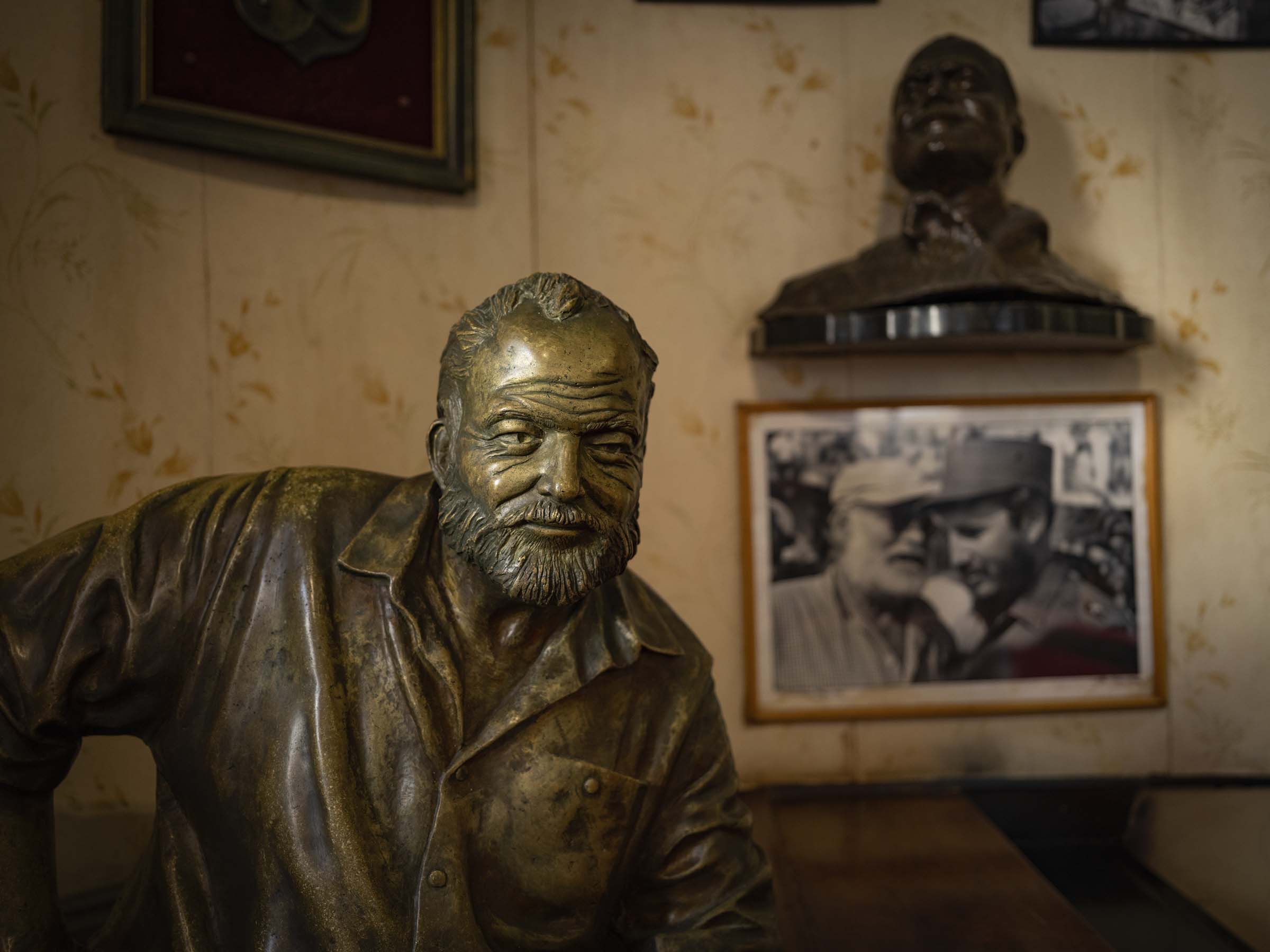
A statue of American author Ernest Hemingway stands comfortably at the bar in the La Floridita in Havana.
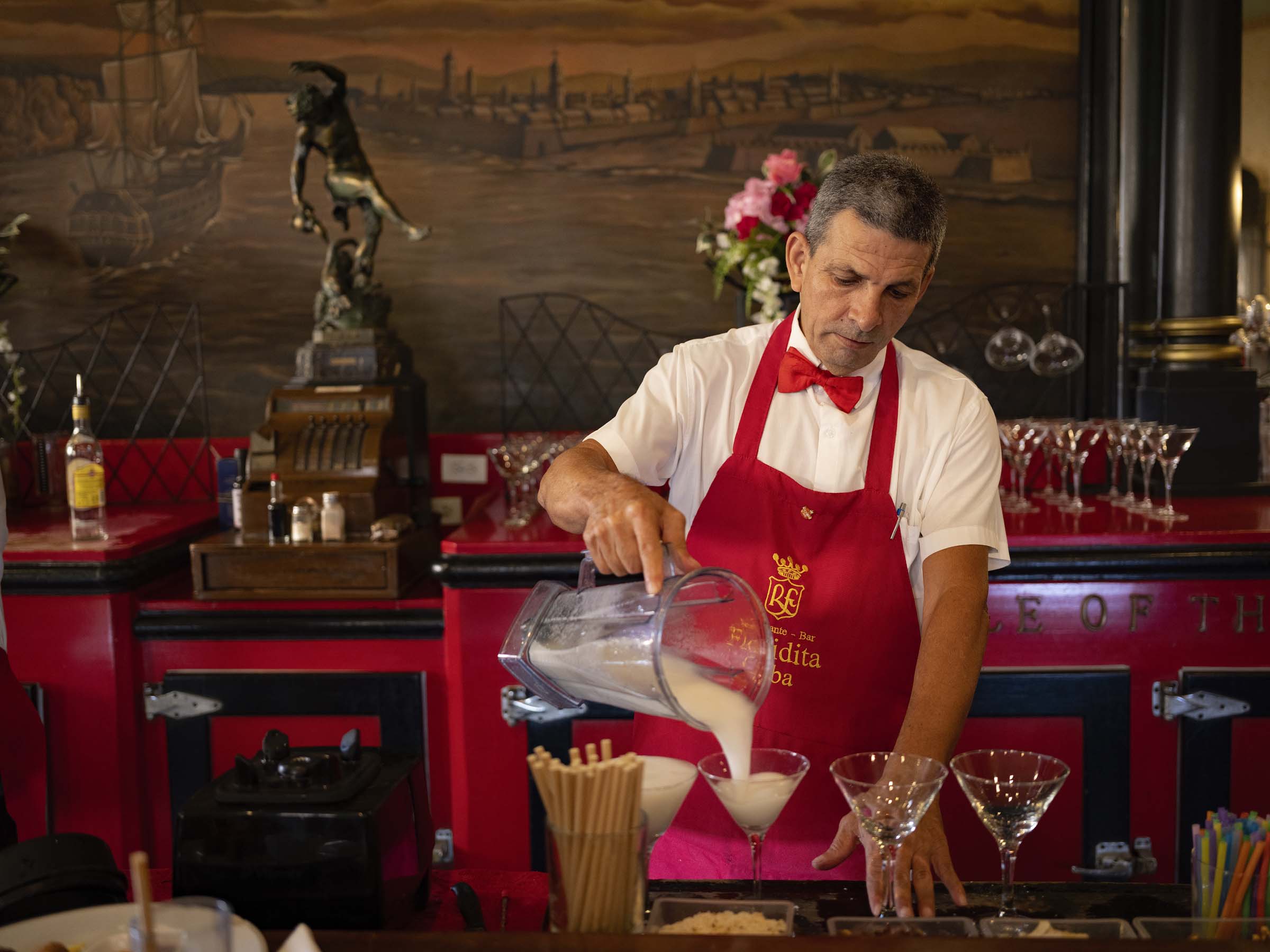
A bartender in the La Floridita pours a round of Papa Dobles, the bar’s signature cocktail.
Next on our itinerary was a road trip to the city of Trinidad which about 300 kilometers east of Havana. Along the way we stopped at the village of Pepito Te where we visited a government run ration store. Every Cuban has a ration book which allows them to collect a set amount of staples such rice, beans, coffee, and sugar. The store was simple and like many buildings in Cuba in decay. The walls were painted with the portraits of historical Communist figures such as Ernesto “Che” Guevara, Karl Marx, and other figures of the revolution.
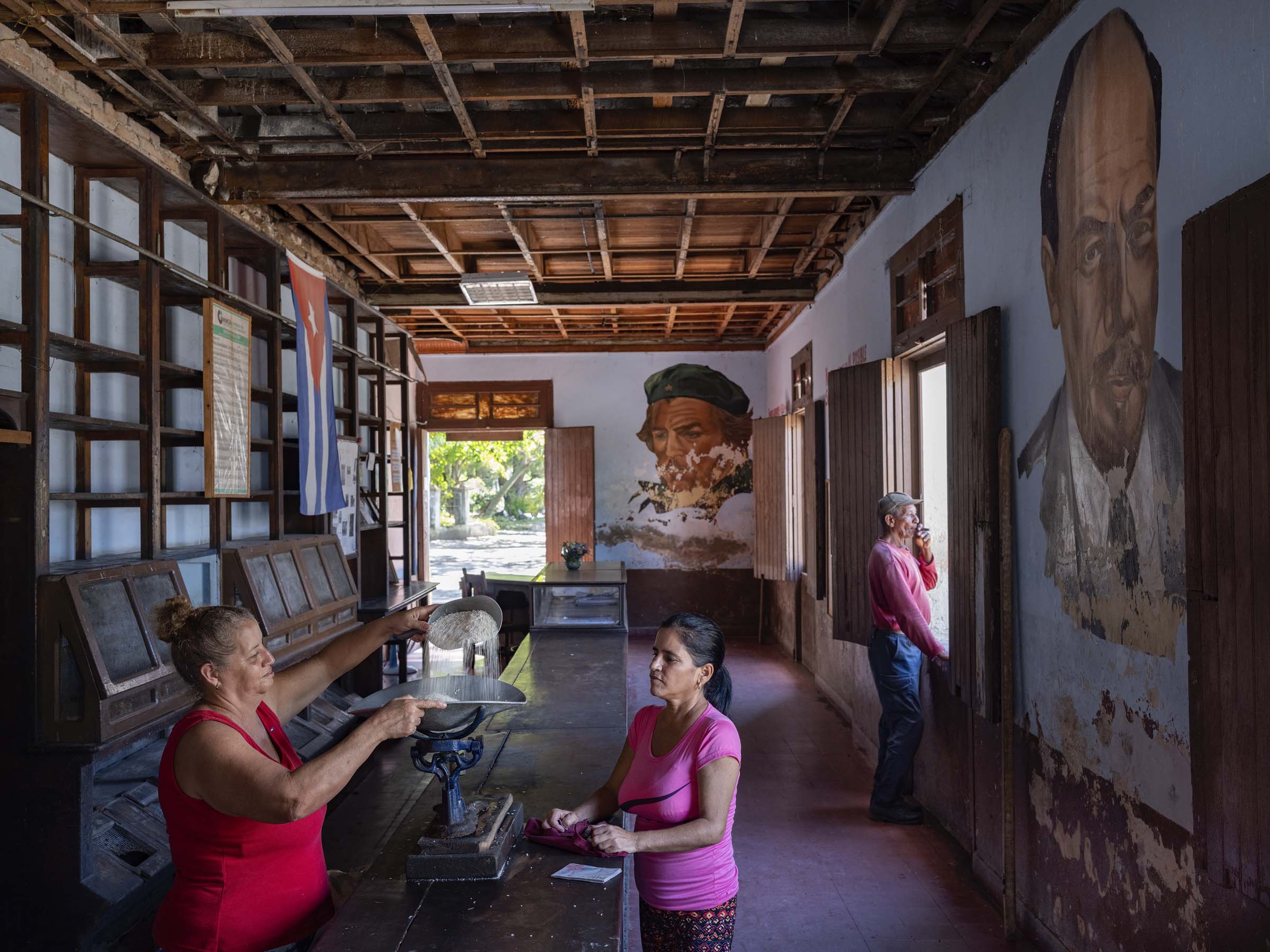
Government run ration store in the small village of Pepito Te.
When we finally reached Trinidad I was anxious to begin wandering this historical city which is a Unesco World Heritage Site. The city is considered to be one of the best preserved from when it served as an important trading center for the sugar cane industry during the 18th and 19th centuries. Being a Unesco Heritage Site has allowed the city to develop its tourism industry so is a popular destination for foreign visitors. Fortunately development has not destroyed the beauty of the city and visitors can still feel a bit of the old world by walking the narrow streets and chatting with the locals.
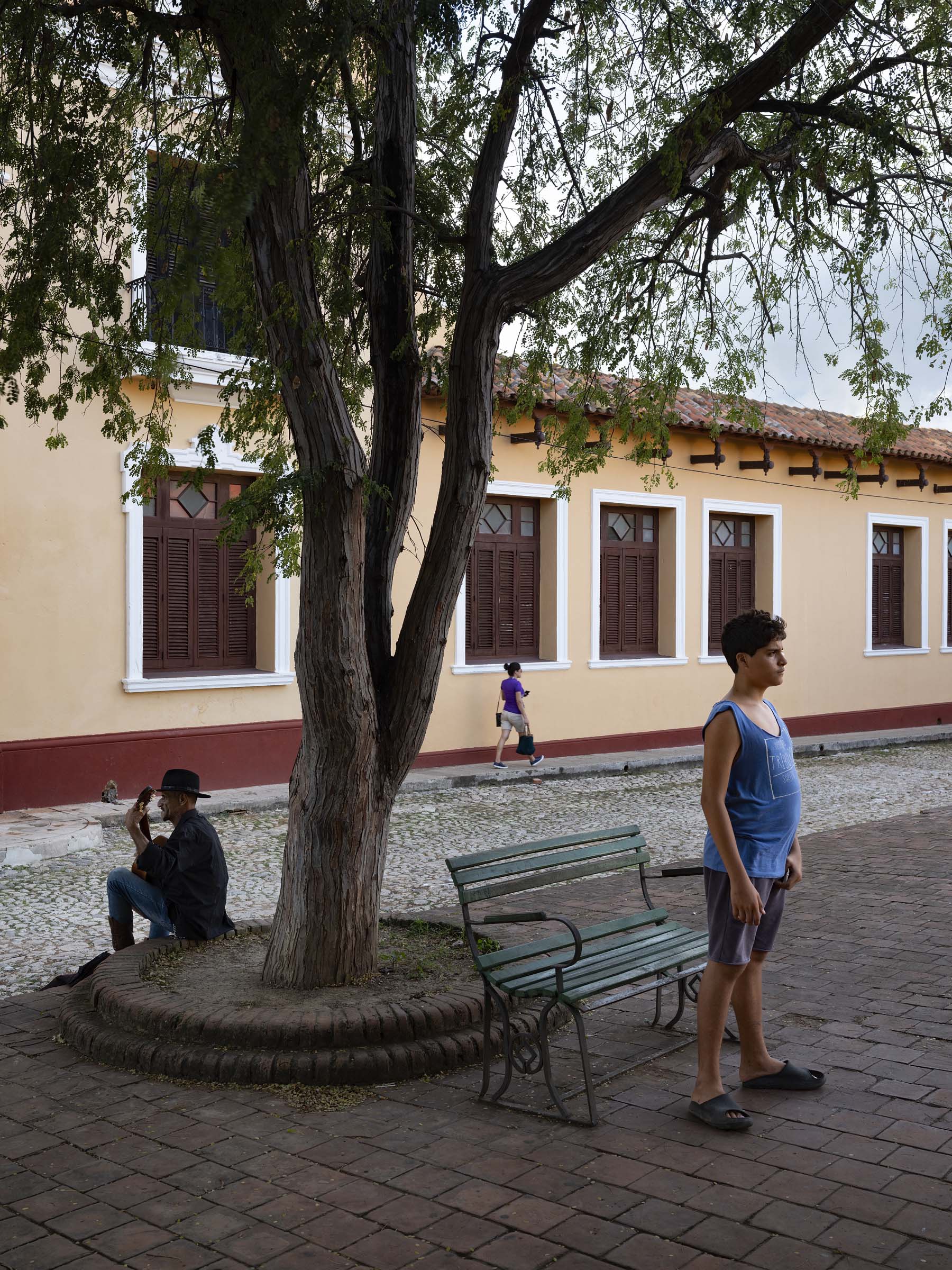
Park scene in downtown Trinidad.
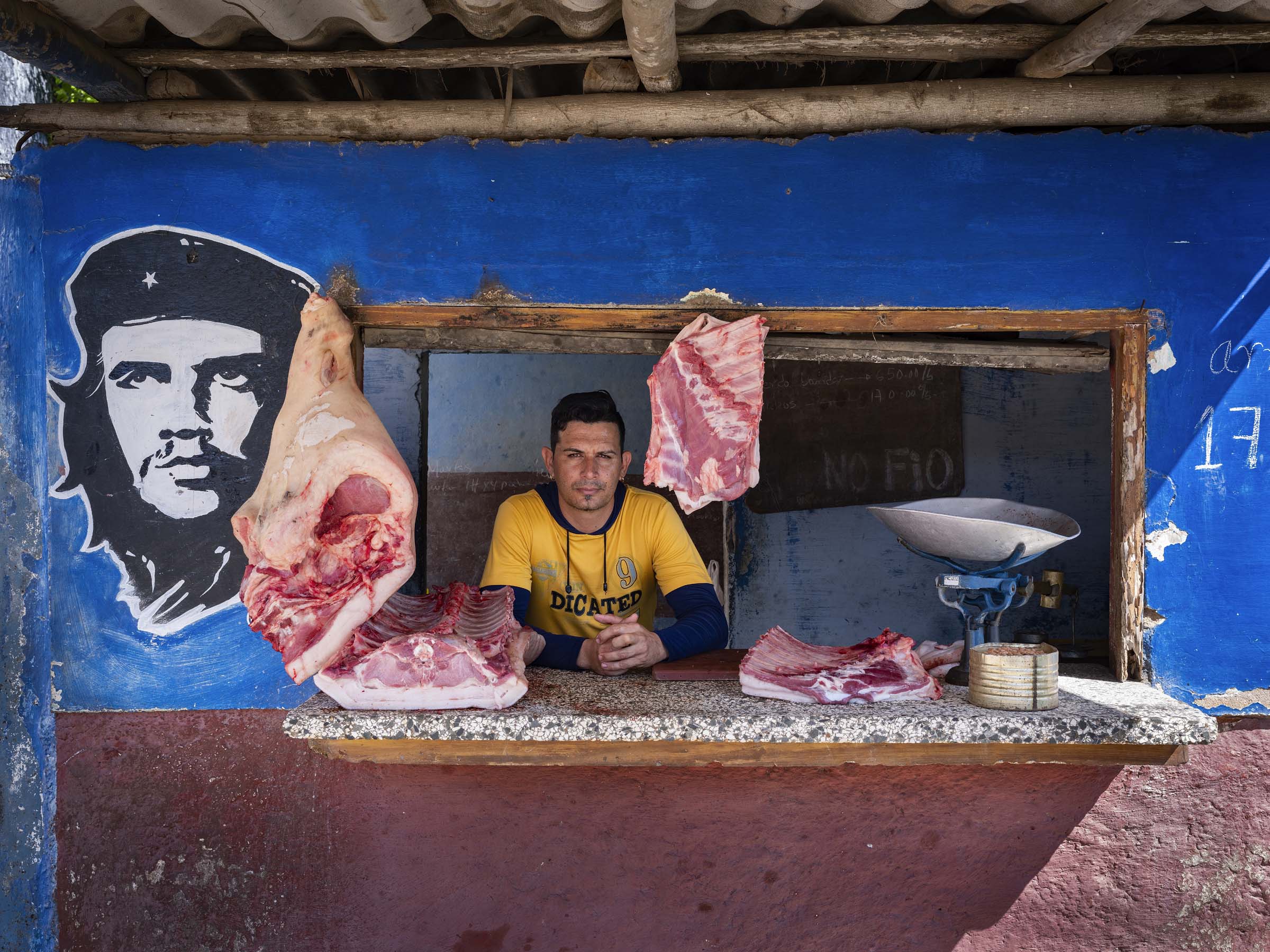
Butcher shop in Trinidad.
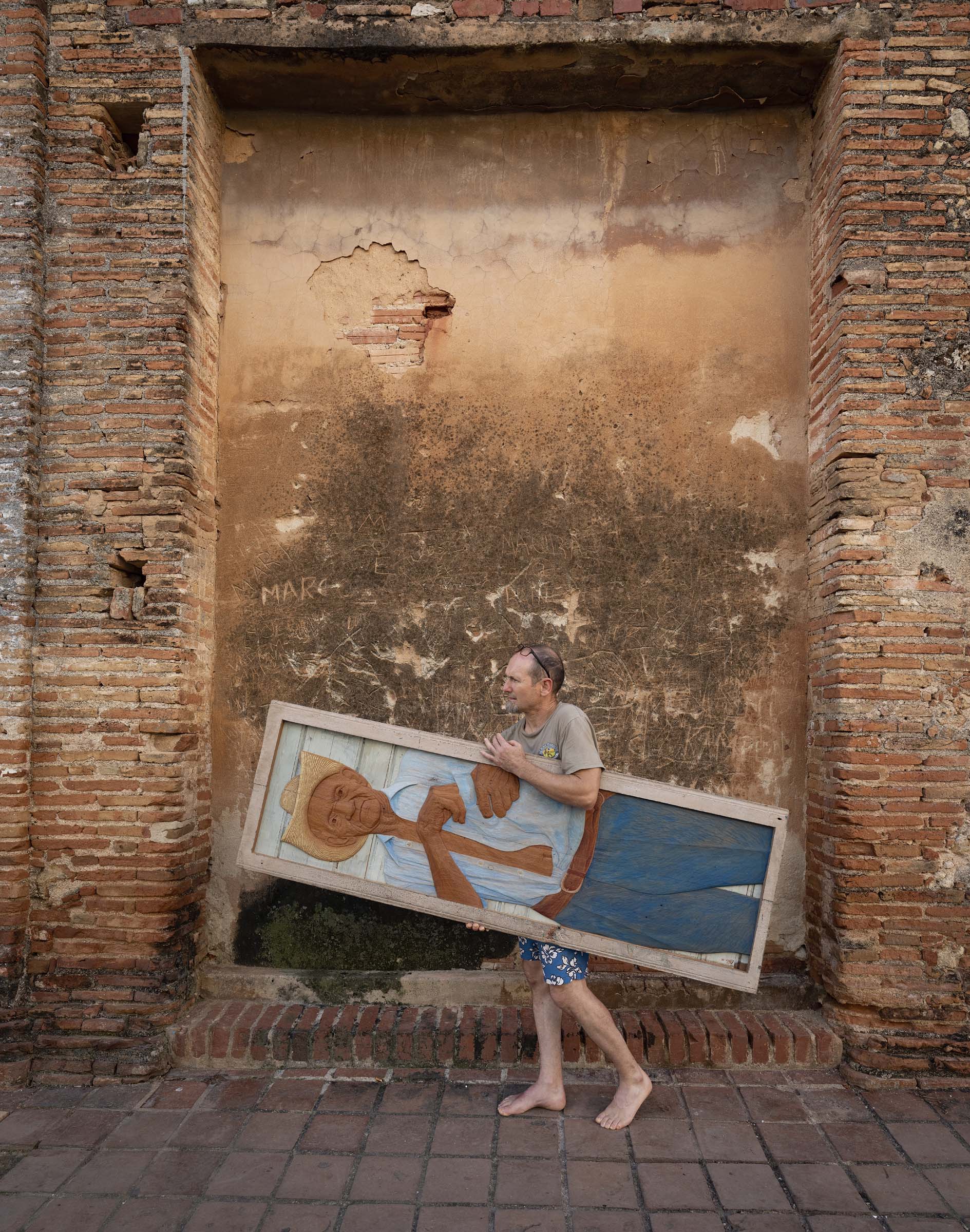
Trinidad artist Lazaro Niebla Castro outside his studio with one of his wood sculptures.
One morning we got up before sunrise to walk the city. Calm and quiet with only our footsteps making sounds as we walked along the aging brick lined streets. The only activity taking place were people gathering at a bus station to catch an early morning ride out of town.
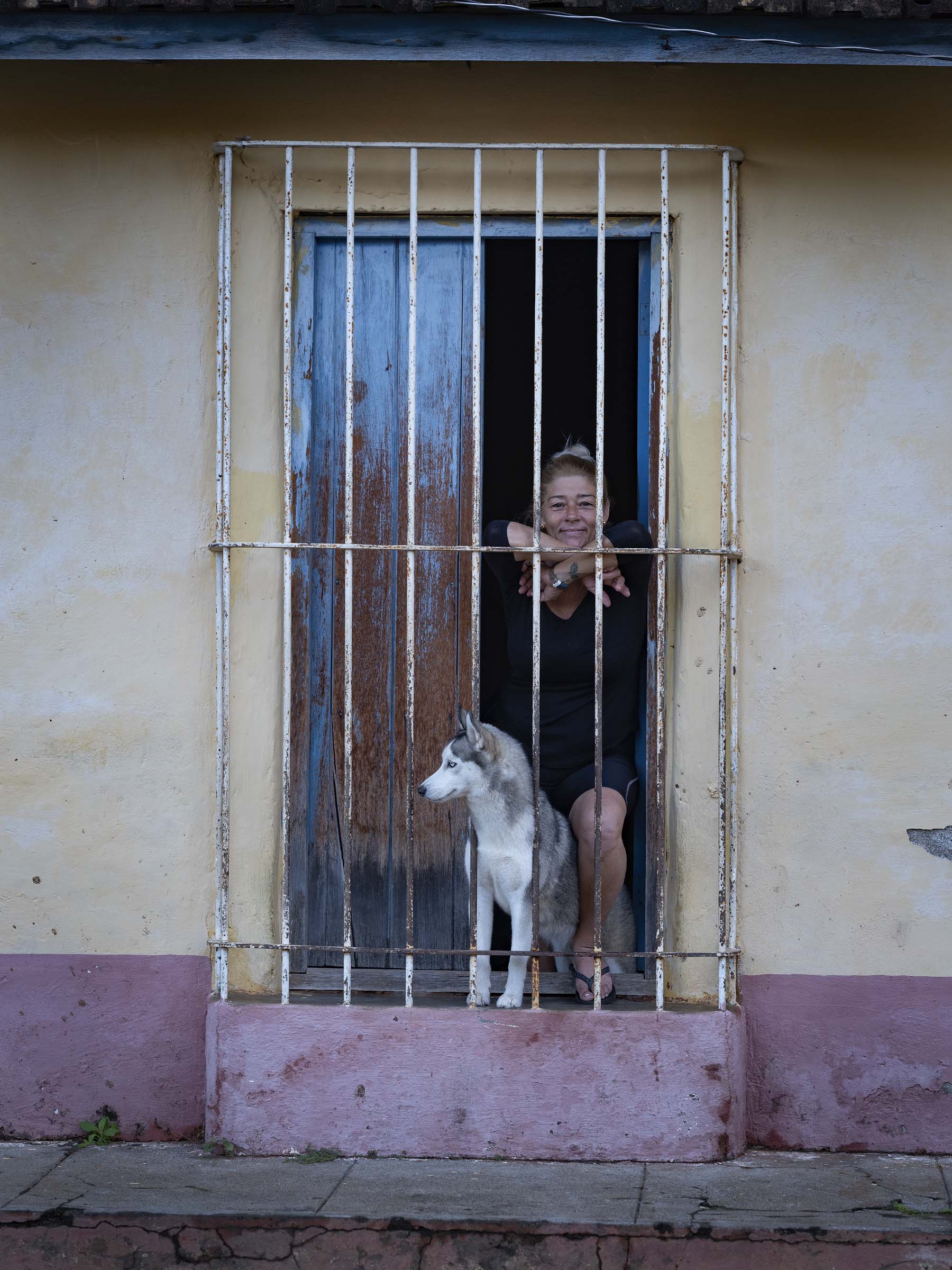
As the sun came up and began to warm the city we found ourselves approaching the outer edges of the city. Here people lived in one or two story buildings. I love making portraits of people and was happy that the people in this neighborhood were so welcoming.
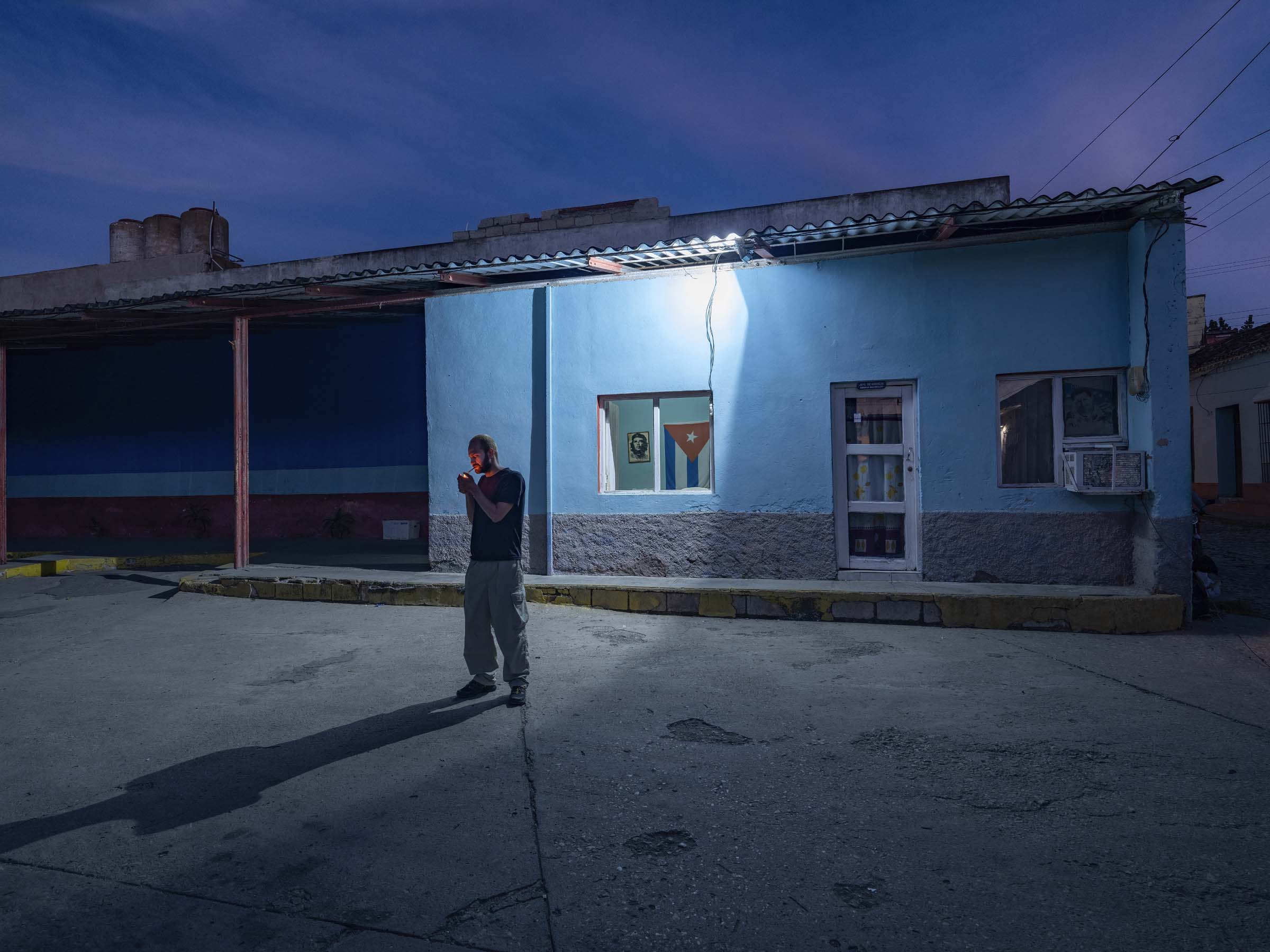
A traveler waits at the bus station for his early morning departure in Trinidad.
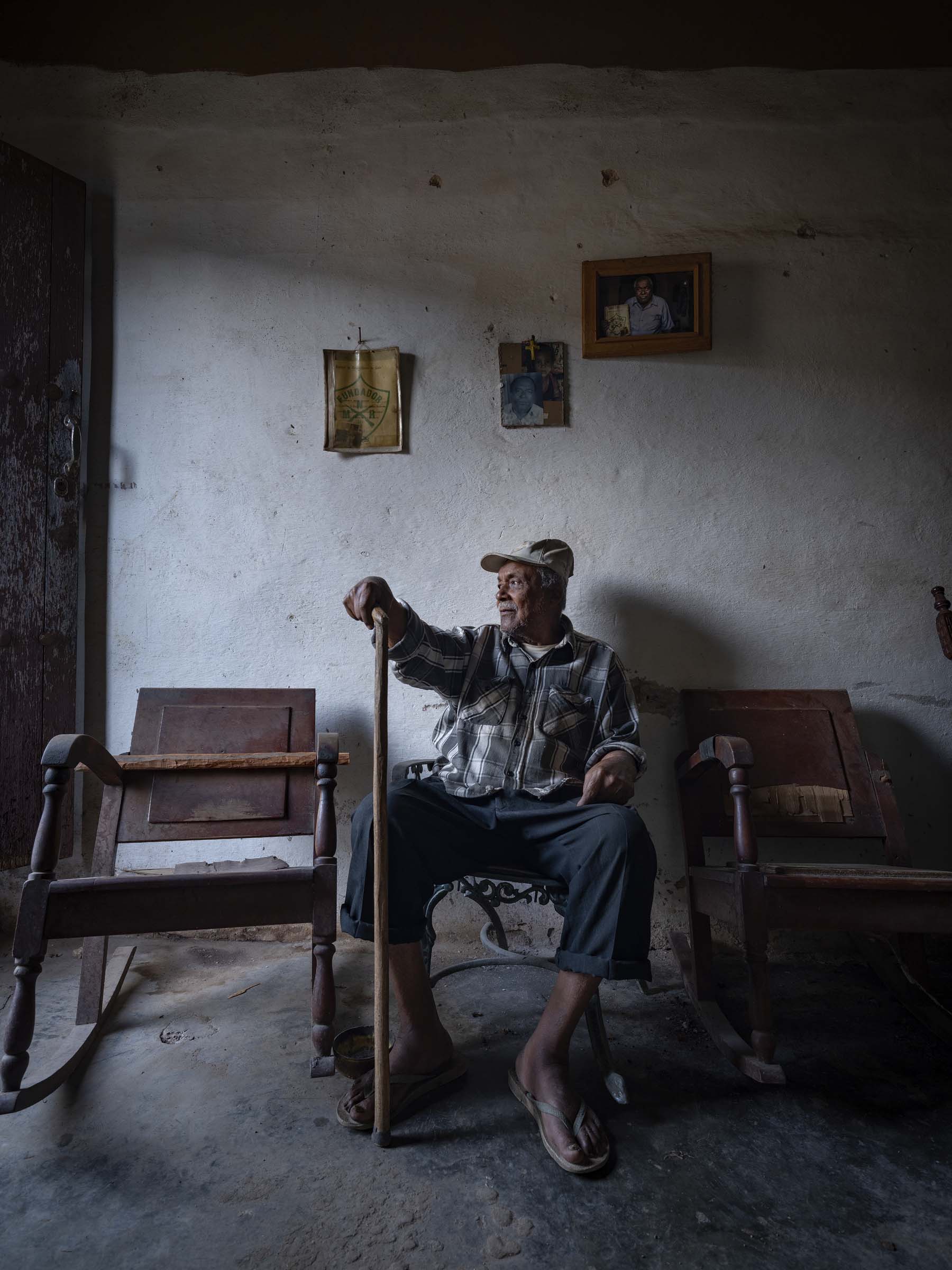
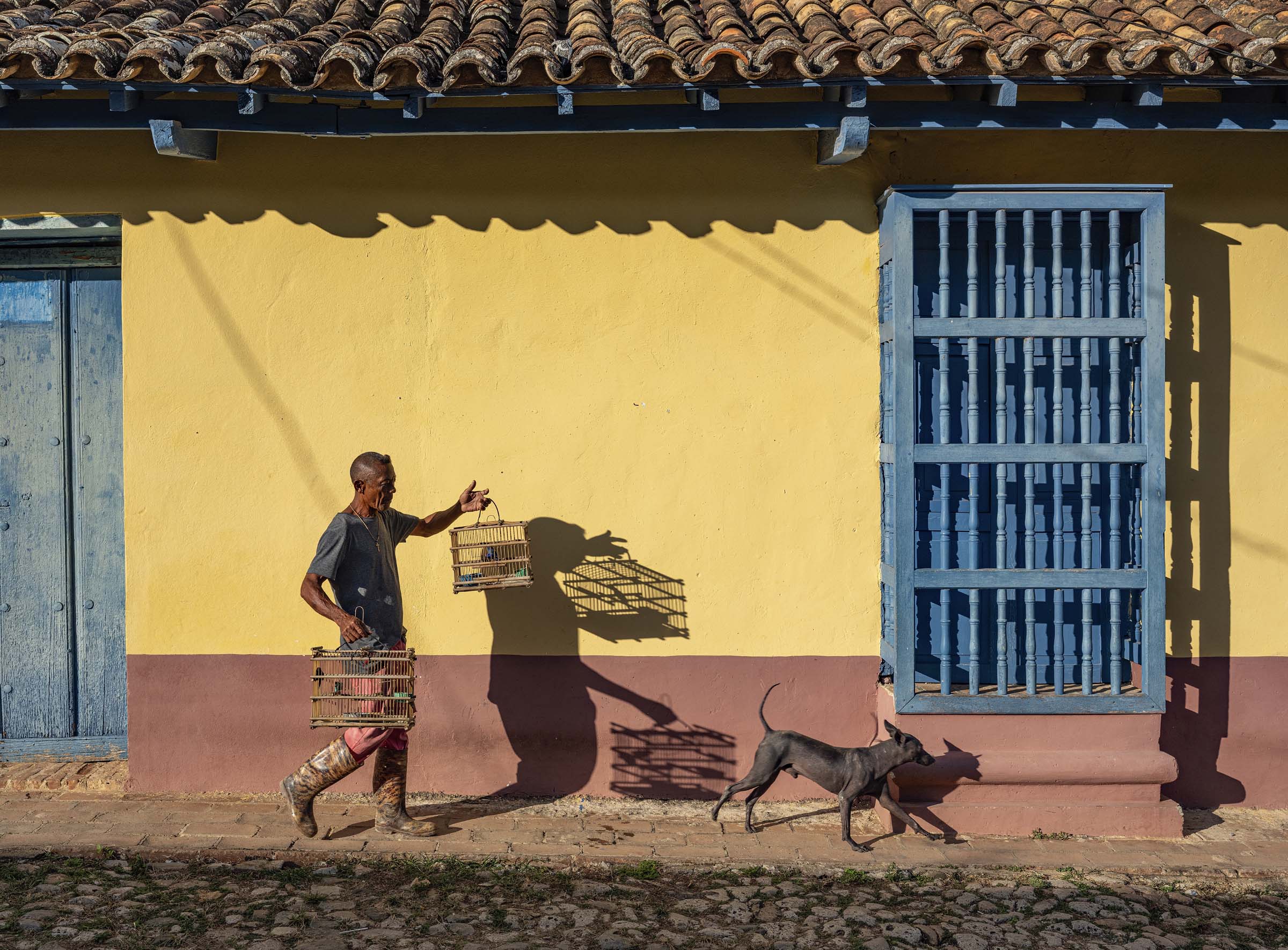
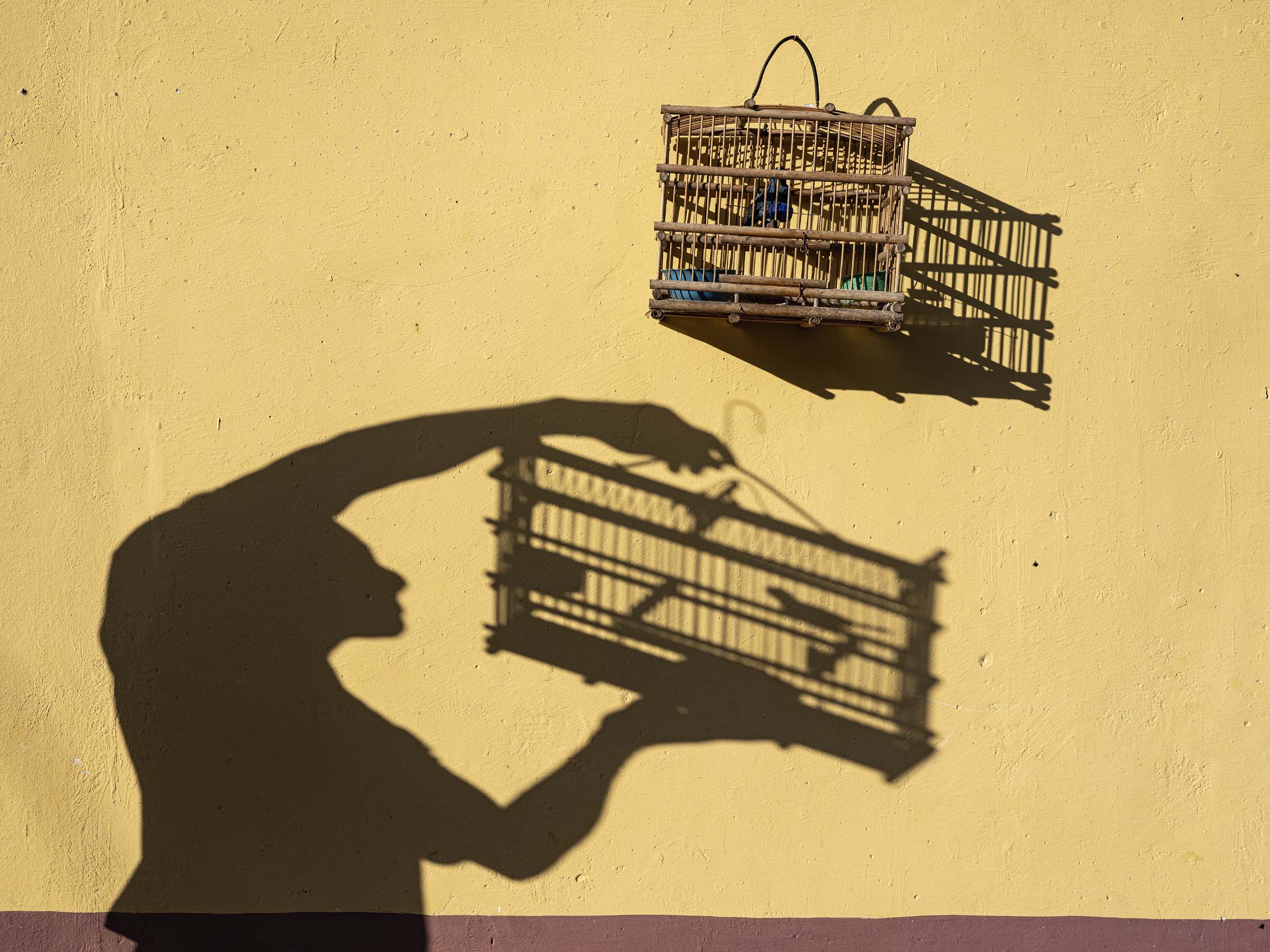
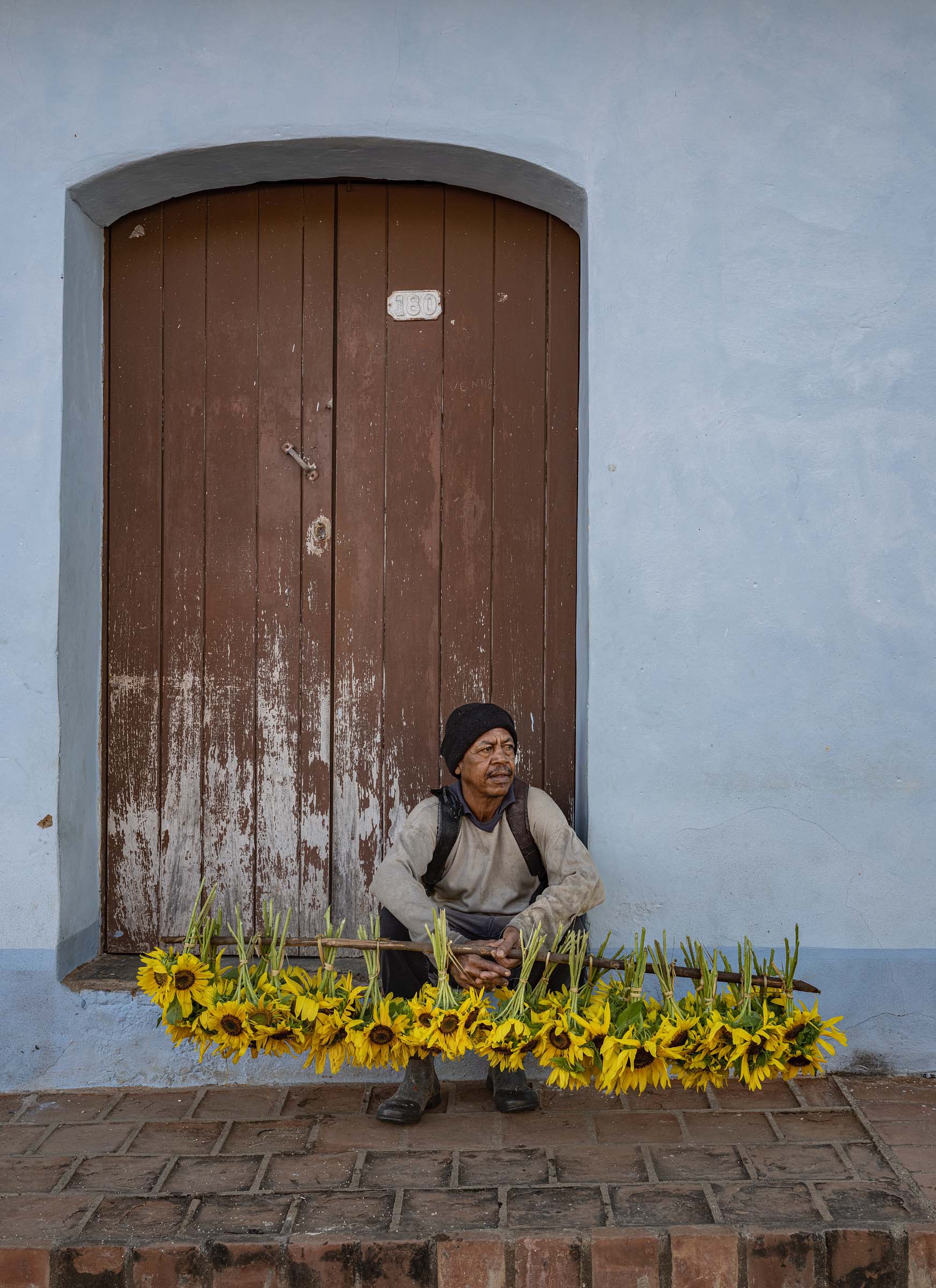
While in Trinidad we decided to head out of town to one of the old plantation homes which is now a museum. We met up with a guide named Dayanis who was dressed in period costume and generously offered her time to pose for a few photos.
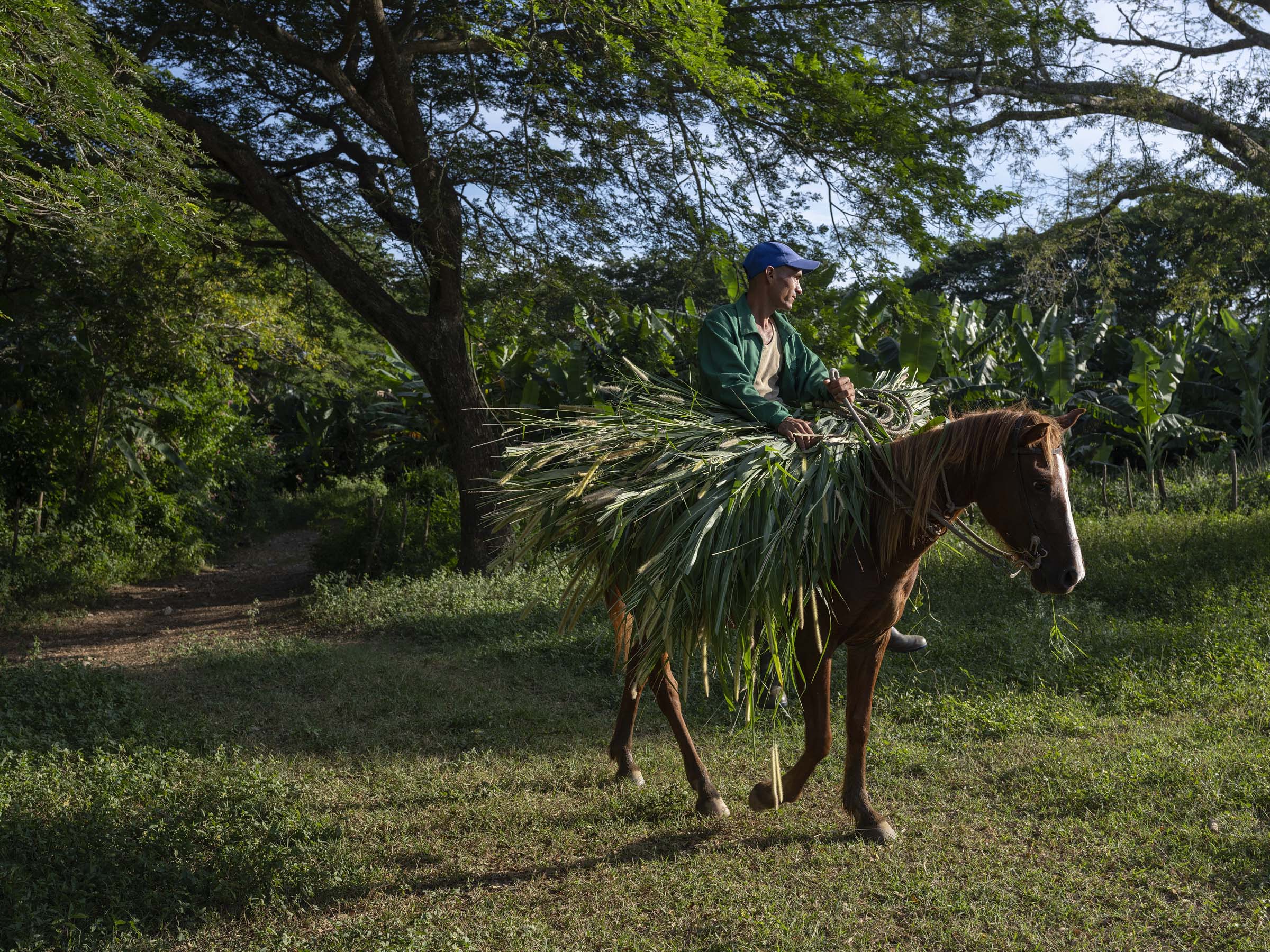
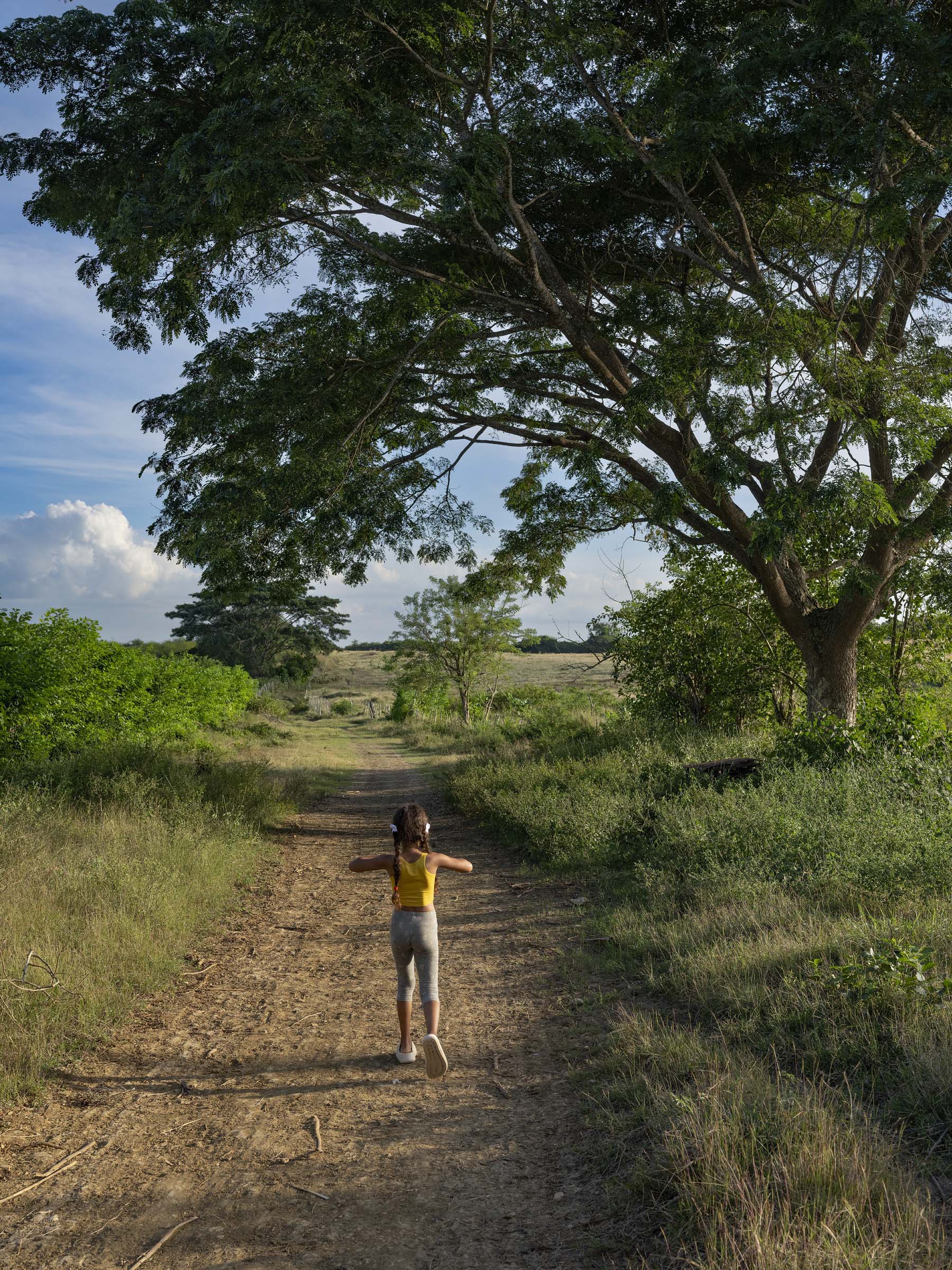
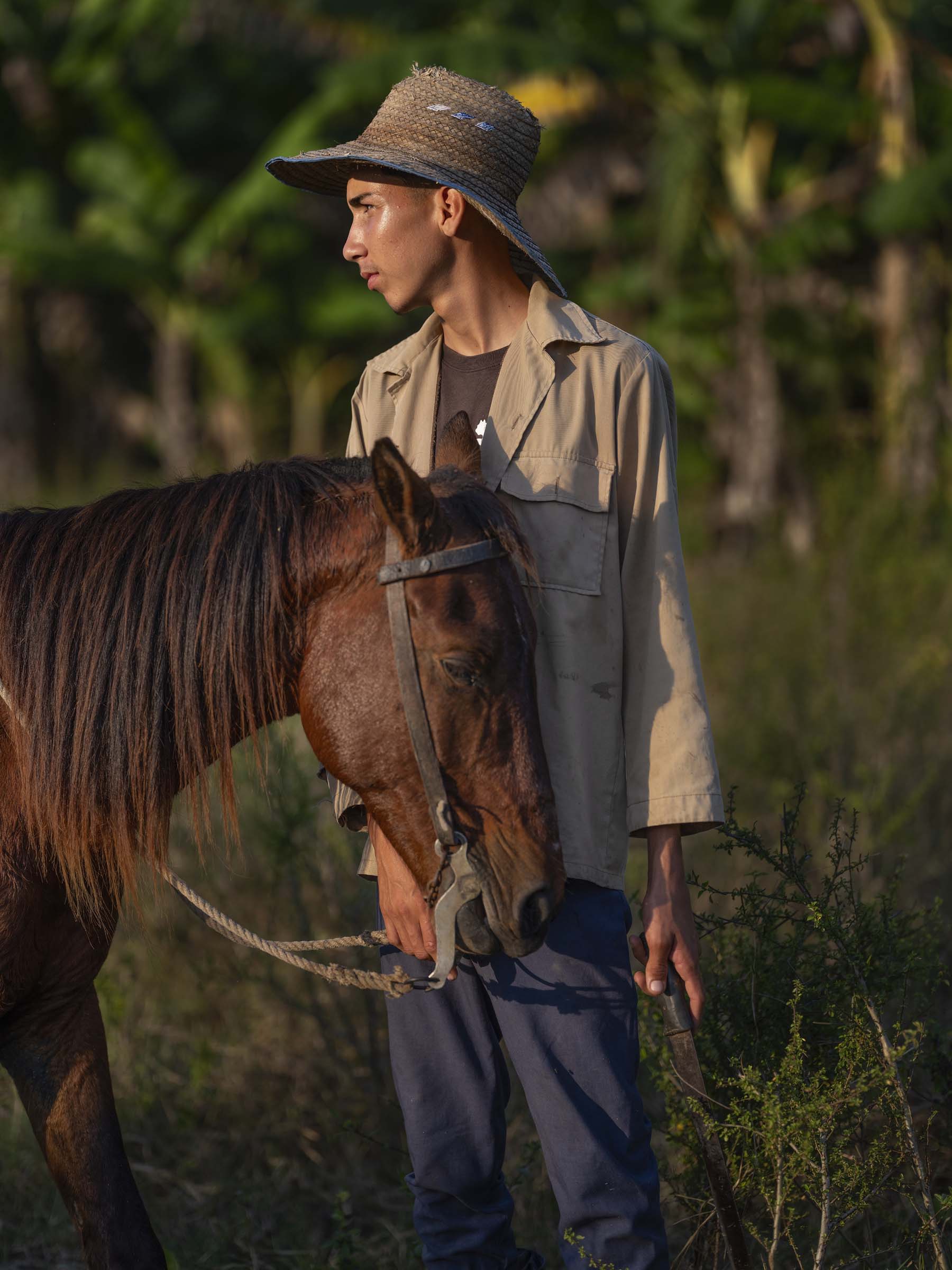
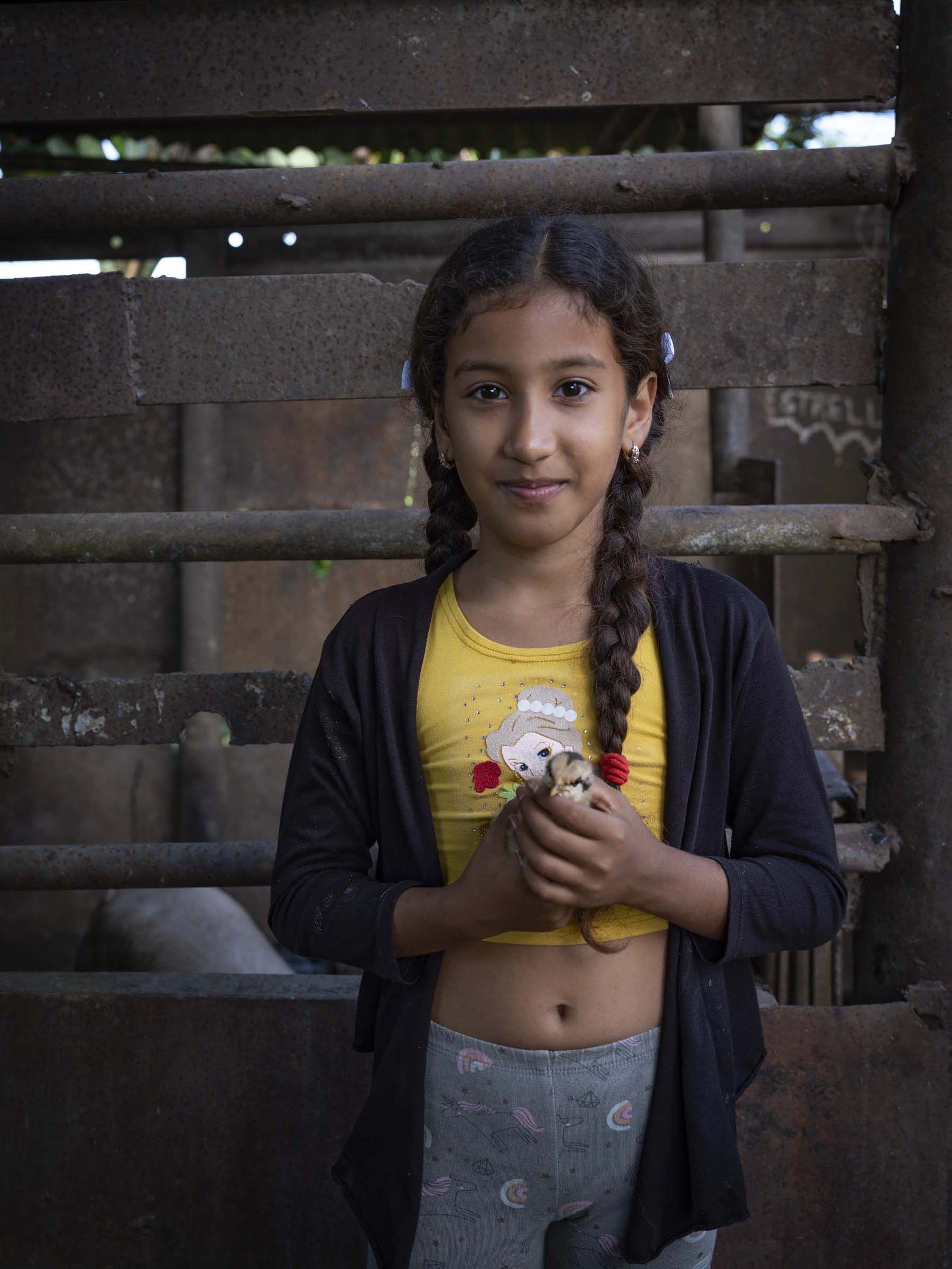
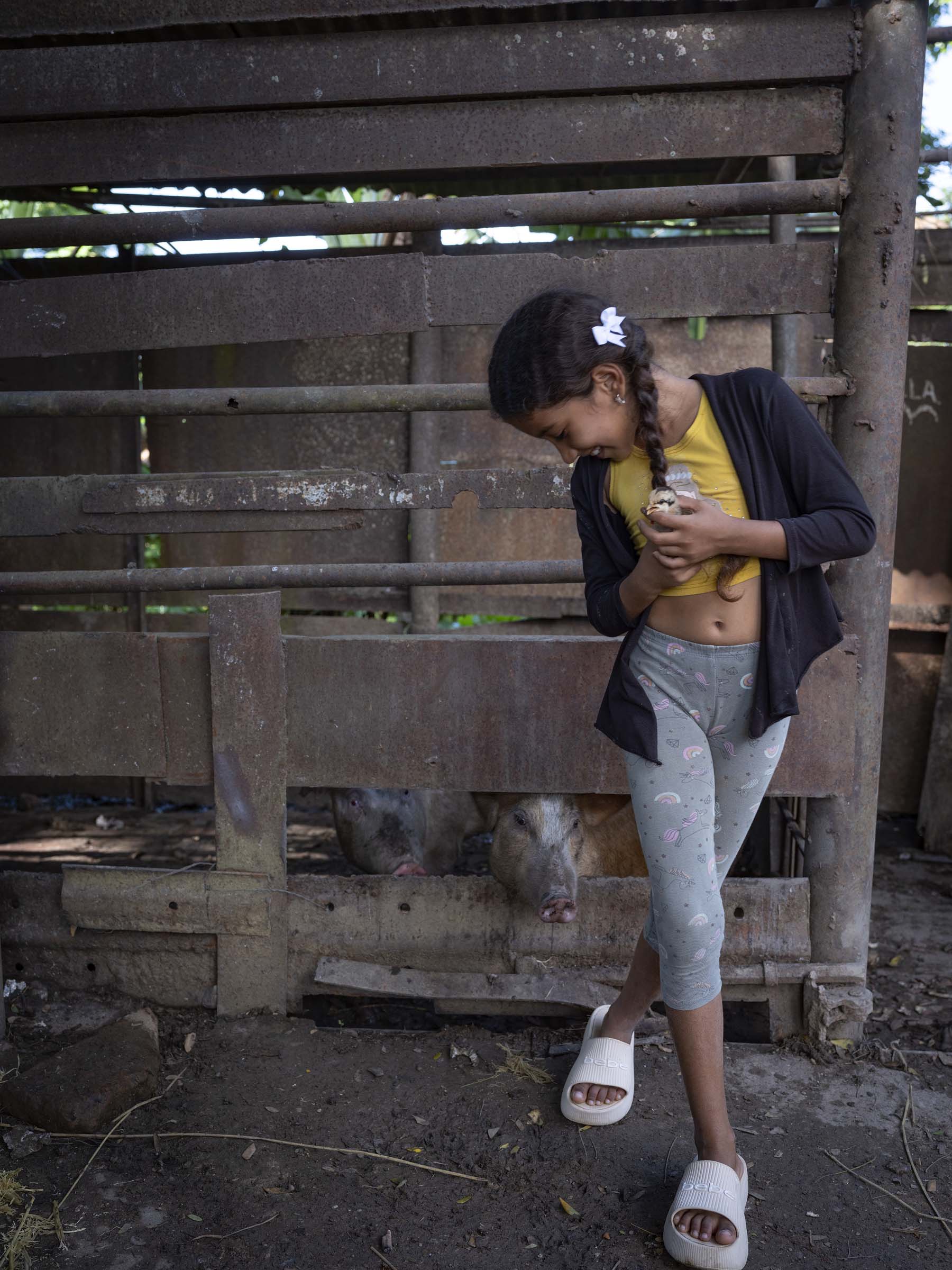
Nearby the plantation house we met a family where we had a nice lunch and explored family’s farm and nearby sugarcane fields.
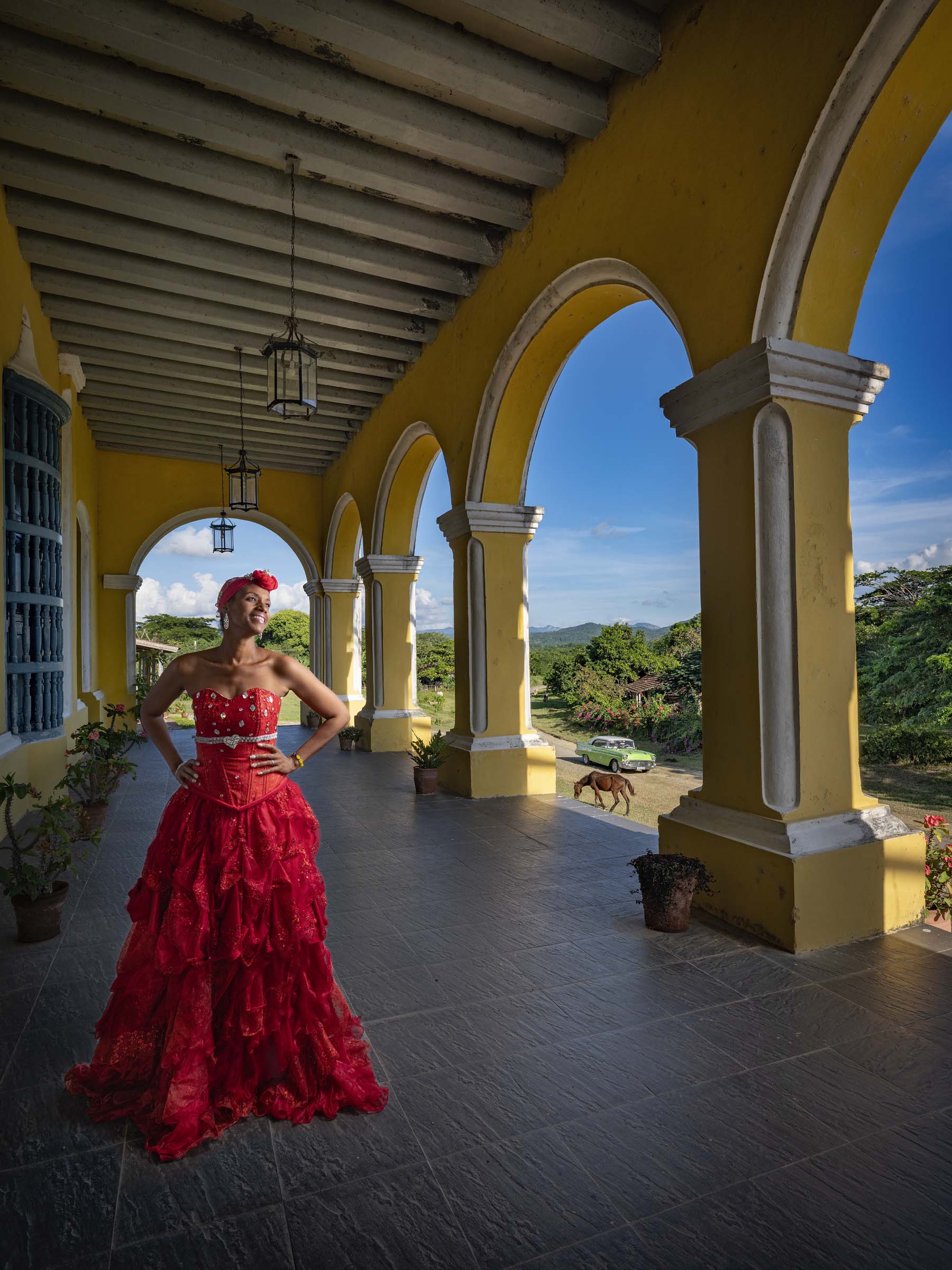
Dayanis Brunet, dressed in period costume at Hacienda Guaimaro, a historic sugar plantation home and museum.
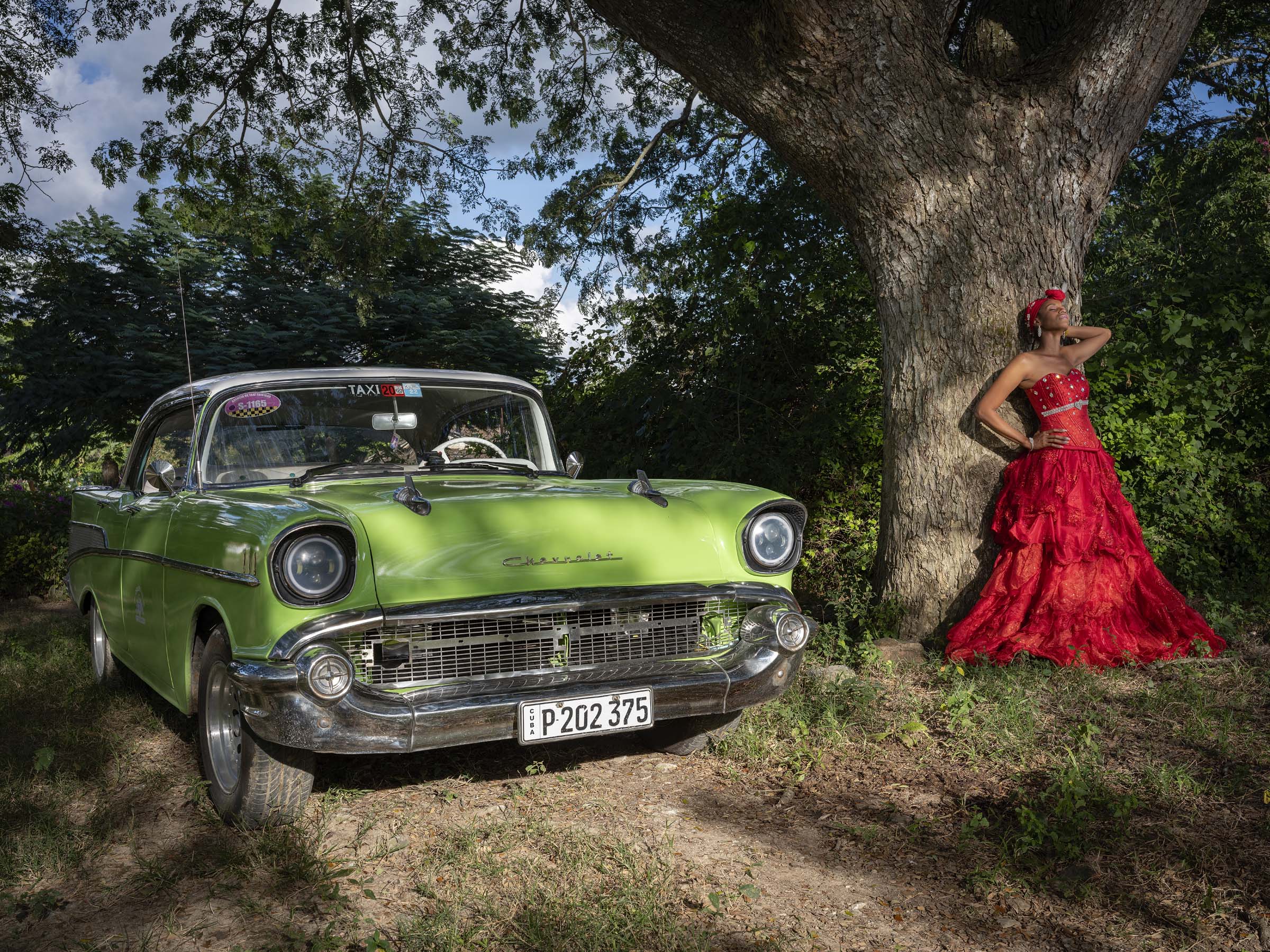
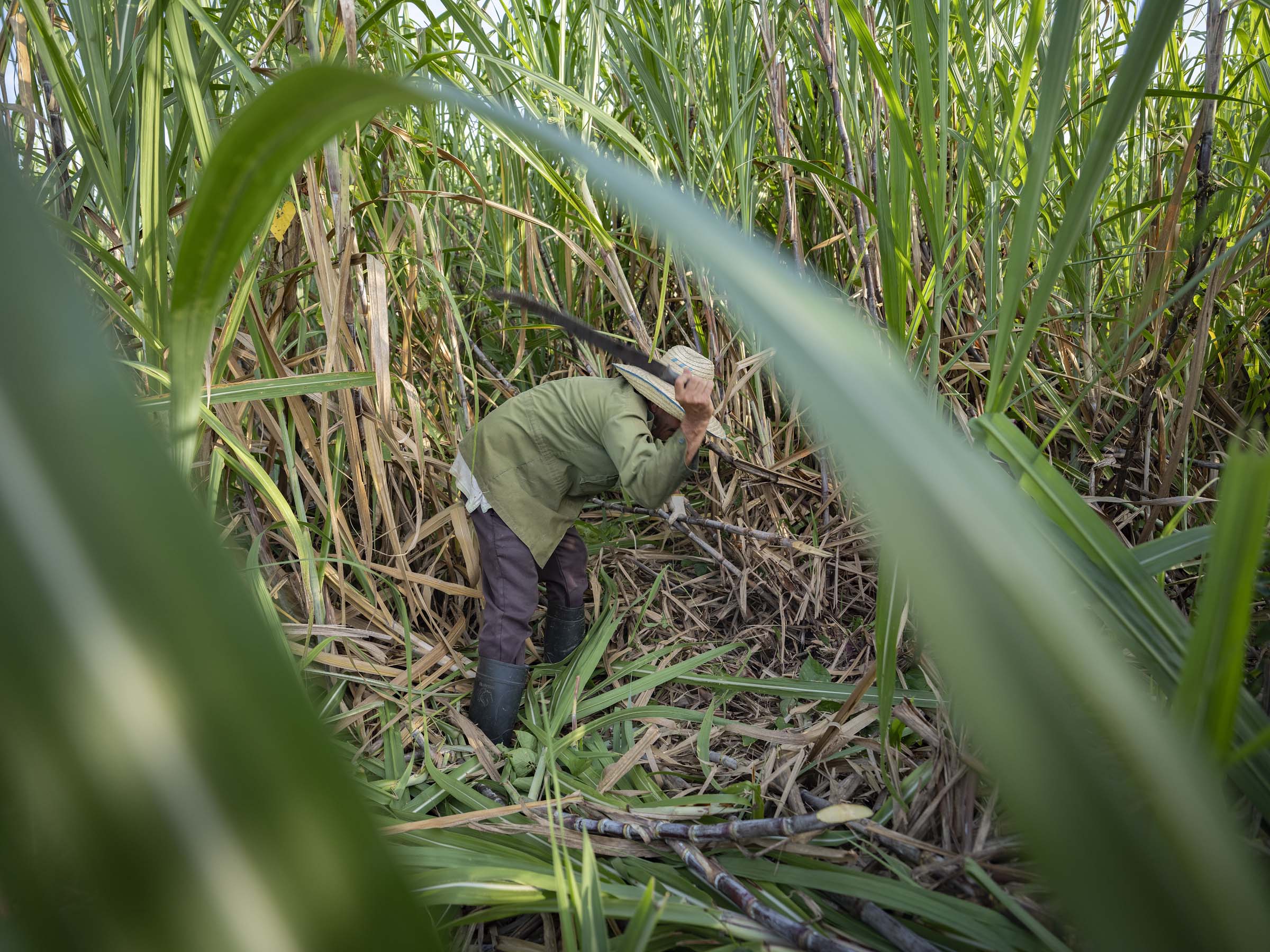
Sugarcane harvest.
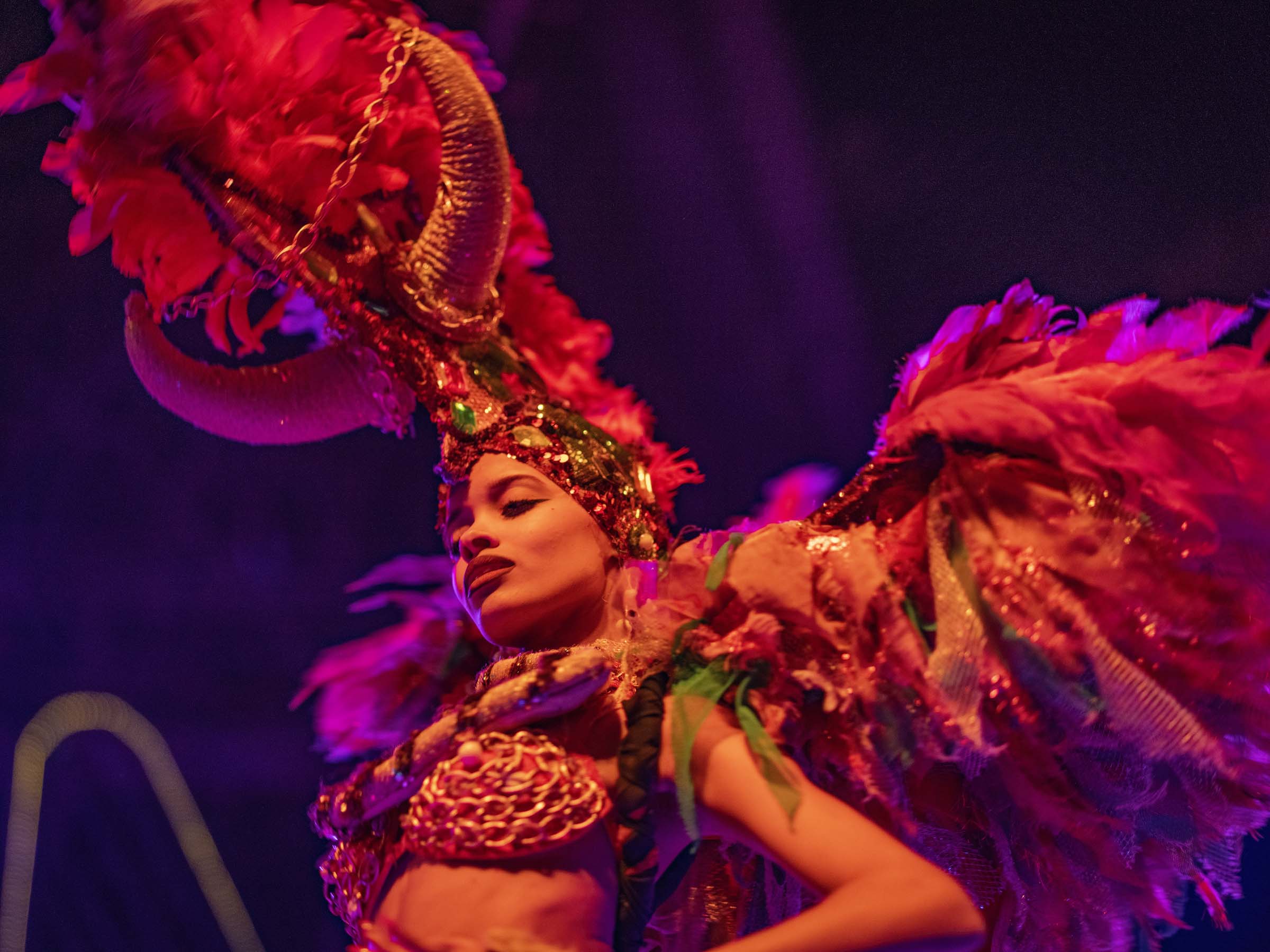
With time running out we headed back to Havana where we were invited to attend the famous Tropicana Cabaret. With a cast of over 200 dancers, singers, and other performers the historic show dates back to the late 1930s. The colorful costumes and Afro-Cuban dancing provides for an evening of sensory overload.
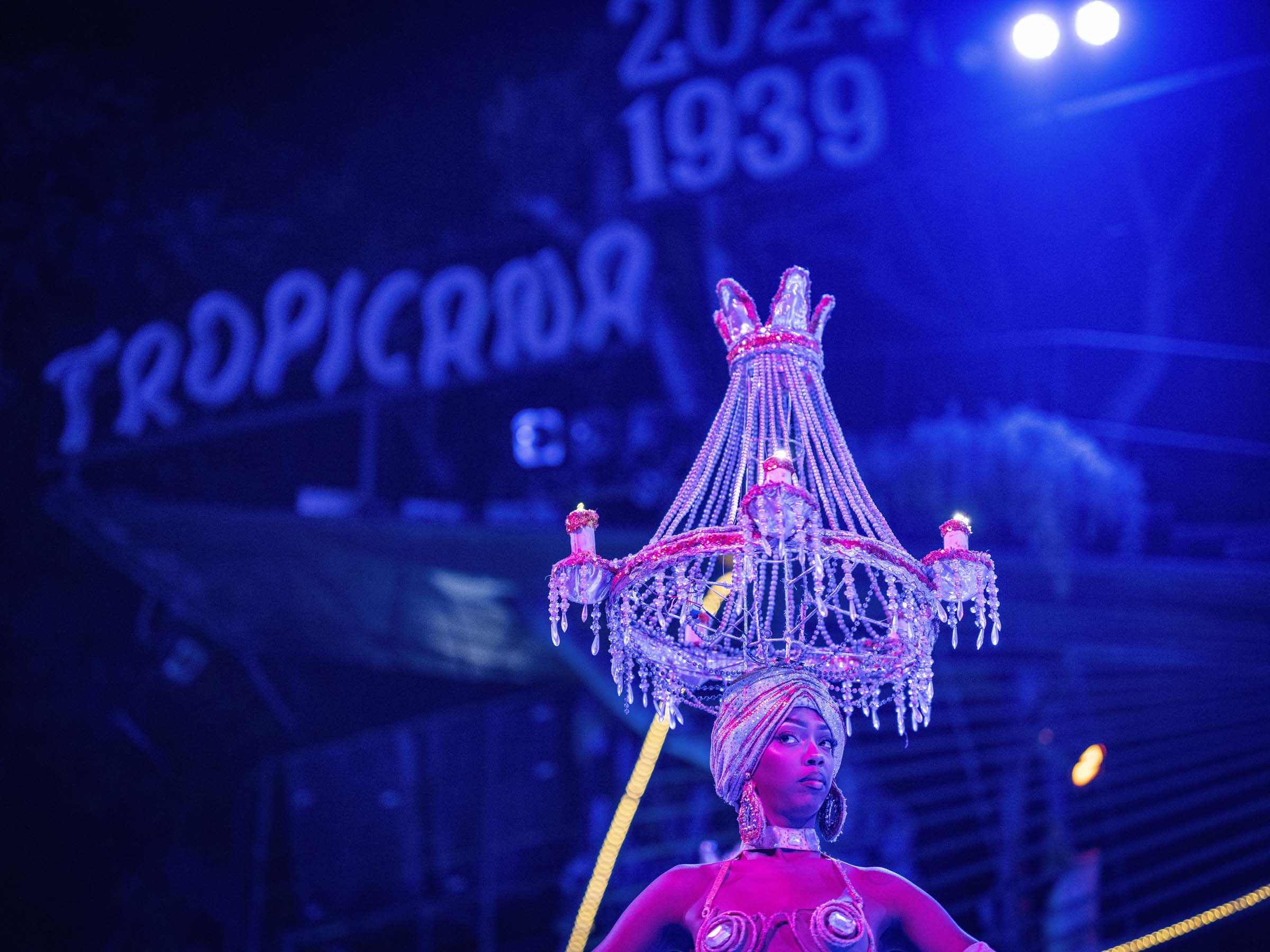
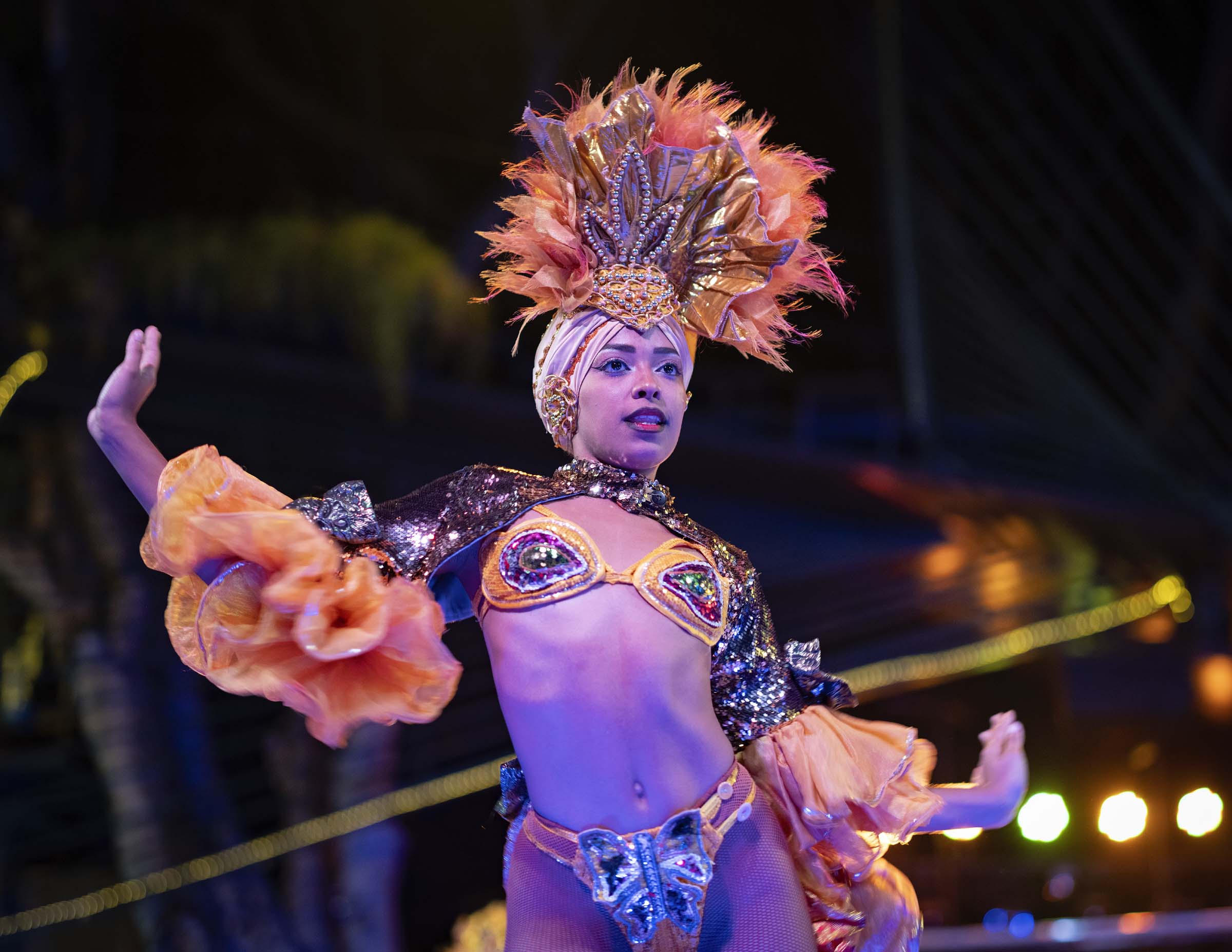
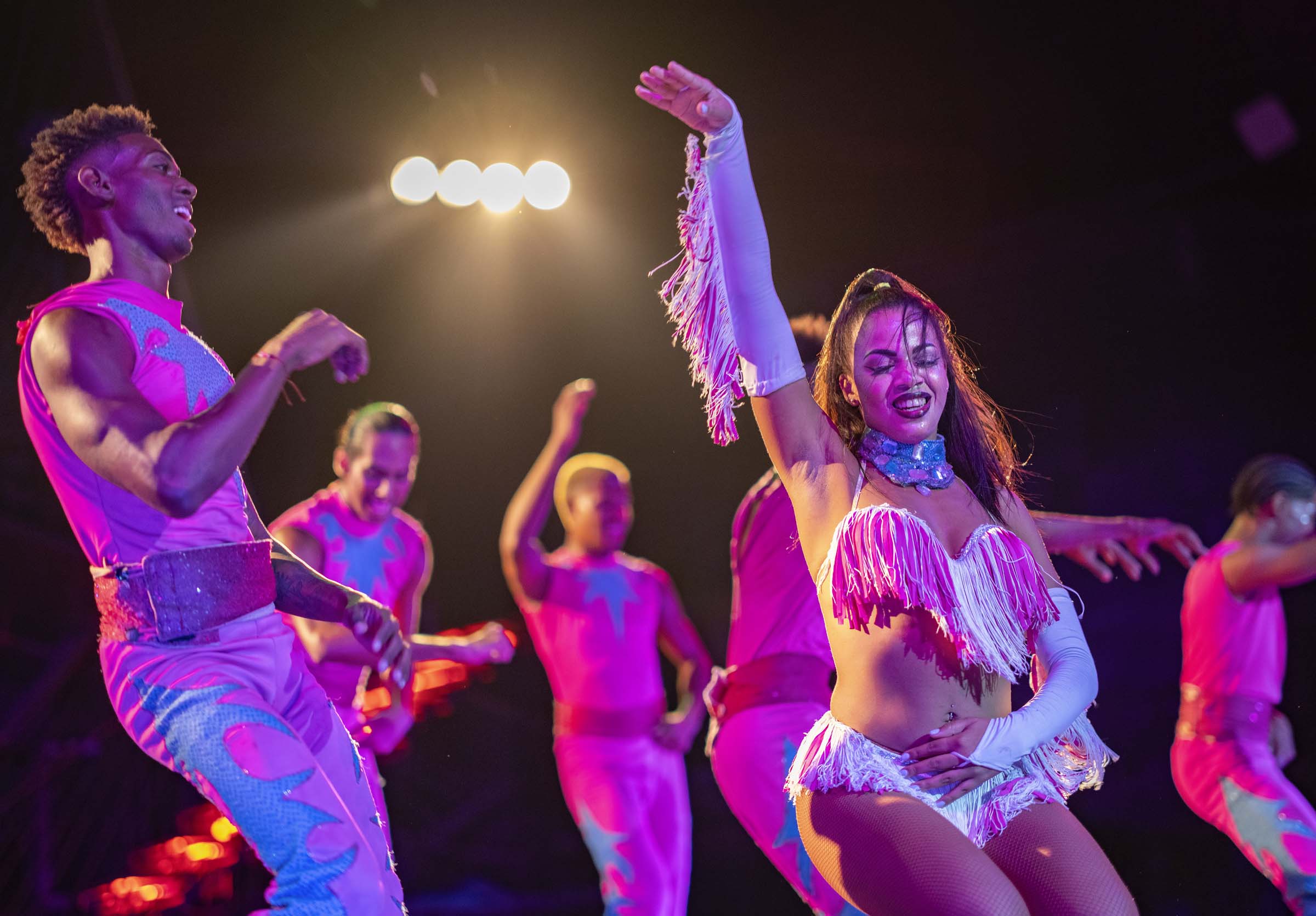
An evening at The Tropicana is a celebration of Cuban dance.
On our last evening in Havana I took one last walk along the Malecon which is an eight kilometer stretch of road with a seawall on one side and beautiful old decaying buildings on the other side. In any other city in the world this would be prime real estate worth unimaginable prices.
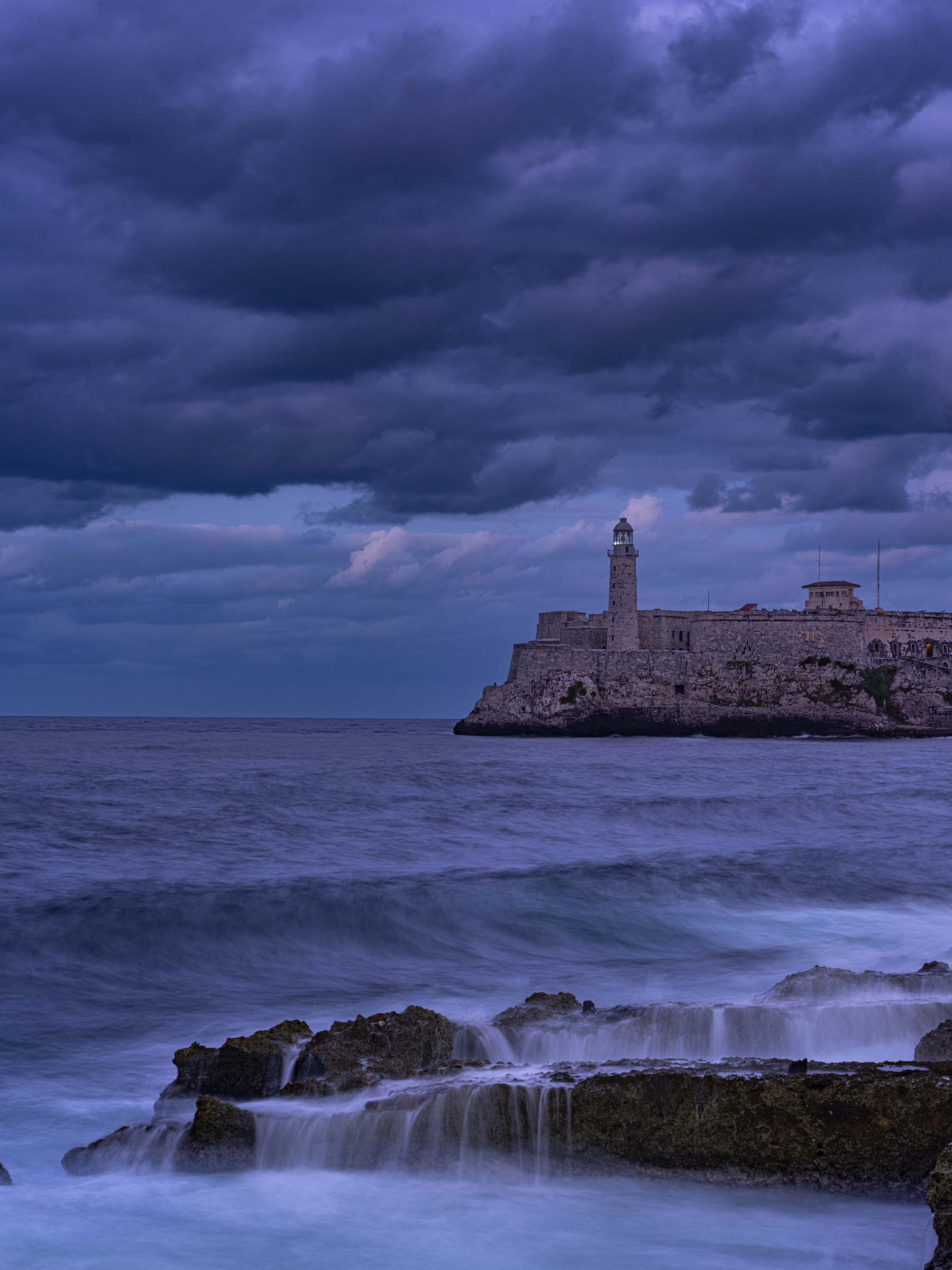
View of the lighthouse beside the old fort known as Faro del Castillo de los Tres Reyes del Morro.
As dusk approached I set up my tripod to make a photograph of the sea and the distant lighthouse Faro del Castillo de los Tres Reyes del Morro. Storm clouds were coming in the sea was churning. While I like to see myself as an optimist I couldn’t help but feel the foreboding future this image may represent.

EXCELLENT!!!
While looking at your images, and reading your text, I felt as if I were with you…